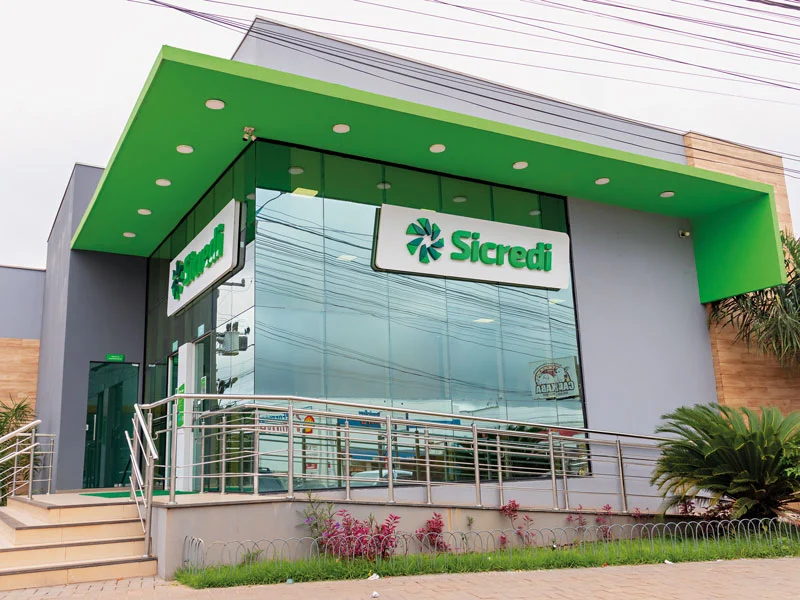
In an era defined by the escalating realities of climate change, persistent social disparities, and pervasive economic volatility, the fundamental purpose of financial institutions is undergoing a profound reevaluation. The traditional emphasis on pure profitability is increasingly being challenged by a burgeoning demand for models that can generate enduring value while simultaneously confronting critical environmental and societal challenges. Within this evolving landscape, the credit union system has emerged as a robust and scalable paradigm for change. By harmonizing financial acumen with an unwavering dedication to local development, cooperatives are uniquely equipped to direct capital in ways that foster greater inclusivity and achieve more meaningful impact. This inherent model demonstrates significant potency when implemented at scale, a fact powerfully illustrated by Sicredi, one of Brazil’s preeminent cooperative financial institutions. With a membership exceeding 10 million individuals, an expansive network of over 3,000 branches, and a presence reaching more than 2,200 municipalities, Sicredi exemplifies the transformative potential of this approach.
This consistent and far-reaching influence has recently garnered significant recognition, notably at the prestigious World Finance awards, where Sicredi was honored with the distinction of "Outstanding Contribution to Sustainable Finance by a Cooperative (LatAm)." This accolade underscores the achievements of institutions that are not merely advancing the discourse on sustainable finance but are actively reshaping the very way financial systems contribute to the creation of development pathways that are both inclusive and inherently low-carbon.
Cultivating Long-Term Development Through Integrated Strategies
At the foundational level of Sicredi’s operational ethos lies the systematic integration of environmental and social criteria into its credit assessment processes. This strategic imperative ensures that every financial solution deployed actively contributes to the realization of sustainable, long-term development objectives. This proactive stance has catalyzed a substantial expansion of its green credit portfolio, which reached an impressive $17.8 billion in 2025, a testament to a sustained and dedicated effort to align robust financial performance with demonstrable sustainability outcomes. The integrity of this green credit portfolio is underpinned by a sophisticated classification framework. This framework meticulously combines sectoral considerations, specifically designated eligible credit lines, and clearly articulated environmental and social benefits. Sicredi adheres to the sustainability taxonomy advanced by the Brazilian Banking Federation (Febraban), a framework that itself is harmonized with globally recognized standards such as those set forth by the Climate Bonds Initiative, the European Union’s taxonomy for sustainable activities, and the Social Bond Principles.
In practical application, financial operations are categorized as "green" when they demonstrably support activities that contribute to the critical transition towards a low-carbon economy, bolster climate adaptation and resilience strategies, promote sustainable land management practices, facilitate the generation of renewable energy, enhance resource efficiency, support biodiversity conservation efforts, or foster social inclusion within vulnerable territories. Beyond merely evaluating the intended purpose of the financed activity, credit decisions at Sicredi also incorporate rigorous social, environmental, and climate risk assessments. This comprehensive approach guarantees a fundamental alignment between desired sustainability outcomes, the financial soundness of the enterprise, and the overarching goal of achieving sustainable, long-term development.
Within this strategically defined framework, a significant allocation of $1.9 billion was specifically directed towards low-carbon agricultural initiatives. Concurrently, Sicredi has solidified its position as a leading financial partner for the renewable energy sector, boasting a portfolio that has swelled to $4.3 billion. A substantial portion of these investments has been channeled into supporting the burgeoning expansion of distributed solar generation capacity. These vital investments empower agricultural producers to implement cutting-edge techniques such as crop rotation, optimize water usage, and actively engage in biodiversity conservation, thereby simultaneously strengthening environmental stewardship and enhancing the inherent resilience of agricultural systems. Sicredi’s positive impact, however, extends far beyond its direct environmental initiatives. Through its extensive operations in smaller municipalities, remote rural areas, and regions historically underserved by traditional financial institutions, the cooperative plays an indispensable role in broadening financial inclusion and actively fostering localized economic development. As a direct consequence of this strategic presence, an impressive $5 billion was channeled into micro and small enterprises strategically located in municipalities characterized by Human Development Index (HDI) levels below the national average.
Driving Economic Empowerment Through Inclusive Finance
Furthermore, the cooperative model adopted by Sicredi plays a pivotal role in championing and supporting under-represented demographic groups. Its dedicated portfolio focused on businesses led by women reached $1.8 billion in 2025, underscoring the critical role of expanded access to credit as a potent catalyst for economic empowerment, enhanced income generation, and profound social inclusion. The impact of these initiatives is further amplified through the establishment of strategic partnerships. Collaborations with esteemed international entities, such as the International Finance Corporation (IFC), facilitate the crucial mobilization of global capital for deployment into vital local initiatives. This synergistic approach effectively merges essential financial resources with invaluable, on-the-ground territorial knowledge, thereby significantly enhancing the capacity to deliver scalable and demonstrably measurable impact across a diverse spectrum of regions.
Collectively, these interwoven elements unequivocally demonstrate that Environmental, Social, and Governance (ESG) considerations at Sicredi are not relegated to a peripheral agenda or merely employed as a superficial layer for reputational enhancement. Instead, they are intrinsically woven into the very essence of the institution’s identity and are considered an integral component of its fundamental business model, and indeed, of the cooperative system itself. The systematic integration of social, environmental, and governance criteria now serves as the guiding principle for strategic decision-making, the allocation of credit, the meticulous management of risks, and the cultivation of robust relationships with both its members and the wider communities it serves.
As the imperative for sustainability becomes increasingly central to the architecture of global financial systems, Sicredi stands as a compelling exemplar, illustrating that the credit union model is not only capable of adapting but can actively assume a transformative role in shaping an economy that is both more inclusive and demonstrably more resilient. By purposefully aligning robust financial performance with tangible social and environmental impact, the cooperative model offers a profoundly encouraging and viable pathway towards sustainable development – not solely within the Brazilian context, but as a potent and valuable reference point for financial systems operating on a global scale.