The global financial landscape witnessed a watershed moment this past week as major U.S. indices shattered previous records, signaling a robust transformation in investor sentiment and market fundamentals. The S&P 500 and the Dow Jones Industrial Average both notched unprecedented closing highs, driven by a rare alignment of monetary clarity, technological optimism, and a domestic economy that continues to defy gravity. This surge was not merely a localized rally but a reflection of a broader systemic shift that has re-anchored expectations for the fiscal year ahead. As market participants recalibrate their portfolios, three primary catalysts have emerged as the architects of this historic performance, offering a blueprint for understanding the current trajectory of global capital.
At the heart of this bullish momentum lies a significant recalibration of U.S. Federal Reserve policy. After a protracted period of aggressive interest rate hikes designed to curb post-pandemic inflation, the central bank has signaled a decisive pivot toward a more accommodative stance. This shift from a restrictive posture to one of cautious easing has effectively removed a primary "wall of worry" for equity investors. The realization that the Fed is no longer solely focused on price stability, but is now equally attentive to the health of the labor market, has created a "Goldilocks" environment. In this scenario, inflation continues its descent toward the 2% target without triggering the severe contraction many economists had feared. The reduction in the cost of capital is particularly impactful for growth-oriented sectors and small-cap companies, which are more sensitive to borrowing costs, leading to a noticeable broadening of the market rally beyond the traditional tech heavyweights.
The second pillar of this record-setting week is the relentless acceleration of the Artificial Intelligence (AI) supercycle. While the initial wave of AI enthusiasm was characterized by speculative fervor, the current phase is defined by tangible infrastructure investment and verifiable earnings growth. Leading semiconductor firms and "hyperscale" cloud providers have reported capital expenditure plans that exceed even the most optimistic analyst projections, suggesting that the demand for AI processing power is far from saturated. However, the narrative has evolved; investors are now looking past the hardware providers to the "second-tier" beneficiaries of AI integration. This includes software firms, energy providers needed to power massive data centers, and industrial companies providing the cooling and electrical infrastructure required for the next generation of computing. This "AI halo effect" has injected a renewed sense of vigor into sectors that were previously considered defensive or stagnant, contributing significantly to the indices’ upward trajectory.
Complementing these factors is the surprising and sustained resilience of the American consumer and the broader labor market. Despite years of elevated interest rates and inflationary pressures, household balance sheets remain remarkably healthy, and unemployment figures continue to hover at historic lows. This economic durability has fostered a "soft landing" narrative that has moved from a hopeful theory to a baseline assumption for many institutional desks. Retail sales data released during the week exceeded expectations, underscoring the fact that consumer spending—the engine of the U.S. economy—remains firing on all cylinders. This fundamental strength provides a crucial safety net for corporate earnings, ensuring that the high valuations currently seen in the equity markets are supported by actual revenue growth rather than just multiple expansion.
The international context further amplifies the significance of Wall Street’s performance. As the U.S. markets hit record highs, they have acted as a vacuum for global capital, drawing investment away from regions struggling with stagnant growth or geopolitical uncertainty. While European markets have faced headwinds from energy volatility and industrial slowing, and Asian markets navigate complex regulatory environments and demographic shifts, the U.S. remains the primary destination for "risk-on" capital. This influx of foreign direct investment has bolstered the U.S. dollar, which in turn has influenced global trade dynamics and reinforced the dominance of American equities in global portfolios. The divergence between the U.S. and other major economies has rarely been this pronounced, highlighting the unique structural advantages currently enjoyed by the domestic market.
Institutional analysts have noted that the "breadth" of the recent rally is perhaps its most encouraging feature. In previous months, gains were largely concentrated in a handful of mega-cap technology stocks, often referred to as the "Magnificent Seven." However, the past week saw a significant rotation into cyclical sectors, such as financials, industrials, and materials. This rotation suggests that investors are gaining confidence in the longevity of the economic cycle. When banks and manufacturers participate in a rally, it typically indicates a belief that the underlying economy is healthy and that growth is becoming more democratized across various industries. This broadening participation reduces the risk of a localized bubble in any single sector and provides a more stable foundation for future gains.
From a technical perspective, the breach of key psychological levels—such as the S&P 500 crossing the 5,800 threshold—has triggered a wave of algorithmic and momentum-based buying. Systematic funds, which trade based on mathematical models and trend following, have been forced to increase their equity exposure to avoid missing out on the upward trend. This "Fear Of Missing Out" (FOMO) among institutional players has created a self-reinforcing loop of buying pressure. Furthermore, the low volatility environment, as measured by the VIX (the market’s "fear gauge"), has encouraged "carry trades" and other leveraged strategies that further amplify the market’s ascent. While some contrarians warn that such extreme optimism can lead to overbought conditions, the prevailing technical indicators suggest that the "path of least resistance" remains higher.
Expert insights from leading investment banks suggest that we are entering a new era of "productivity-led growth." By leveraging AI and other digital transformations, corporations are finding ways to maintain high profit margins even in the face of rising labor costs. This efficiency gain is a critical component of the current economic analysis, as it allows for non-inflationary growth—the holy grail of macroeconomics. If companies can produce more with less, they can afford to pay higher wages without passing those costs onto consumers, thereby sustaining the current expansion for a longer period than historical cycles would suggest.
However, the path forward is not without potential pitfalls. Economic historians often point out that record-breaking weeks can sometimes precede periods of consolidation or correction. Geopolitical tensions in the Middle East and Eastern Europe remain a significant "black swan" risk that could disrupt global energy markets and reignite inflationary pressures. Additionally, the upcoming fiscal debates and political cycles in the U.S. introduce a layer of uncertainty regarding future tax policies and regulatory environments. Investors are also keeping a close eye on the "sticky" components of inflation, such as housing and services, which have proven more difficult to cool than goods and energy.
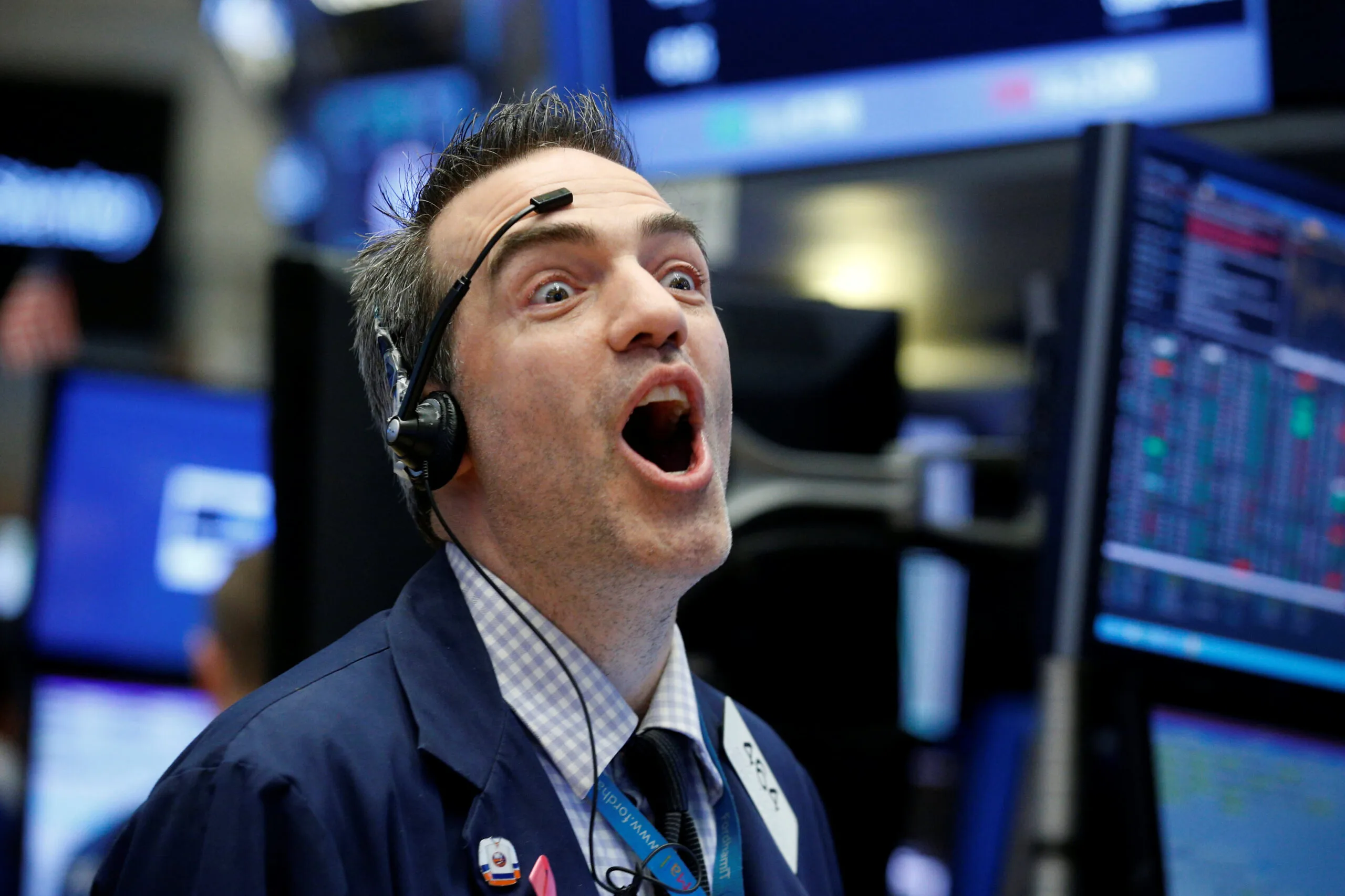
Despite these latent risks, the sentiment on trading floors remains overwhelmingly positive. The convergence of a supportive central bank, a transformational technological shift, and a robust consumer base has created a potent cocktail for asset appreciation. As the week concluded, the sense among market participants was not just one of relief that the volatility of the past year had subsided, but of genuine excitement for what this new market regime represents. The record highs of today are being viewed not as a peak, but as a new baseline from which the next phase of global economic expansion will be measured.
In summary, the remarkable performance of Wall Street this week is a testament to the adaptive nature of the U.S. economy and the strategic foresight of its corporate leaders. By successfully navigating the transition from a high-inflation environment to a period of stable growth and technological innovation, the markets have validated the "resilience" narrative that has been building for months. As capital continues to flow into U.S. equities, the implications for global wealth, pension funds, and international trade are profound. The three forces of monetary easing, AI-driven productivity, and consumer strength have not only driven a record-setting week but have likely set the stage for a new chapter in financial history, characterized by a more diverse and durable bull market.