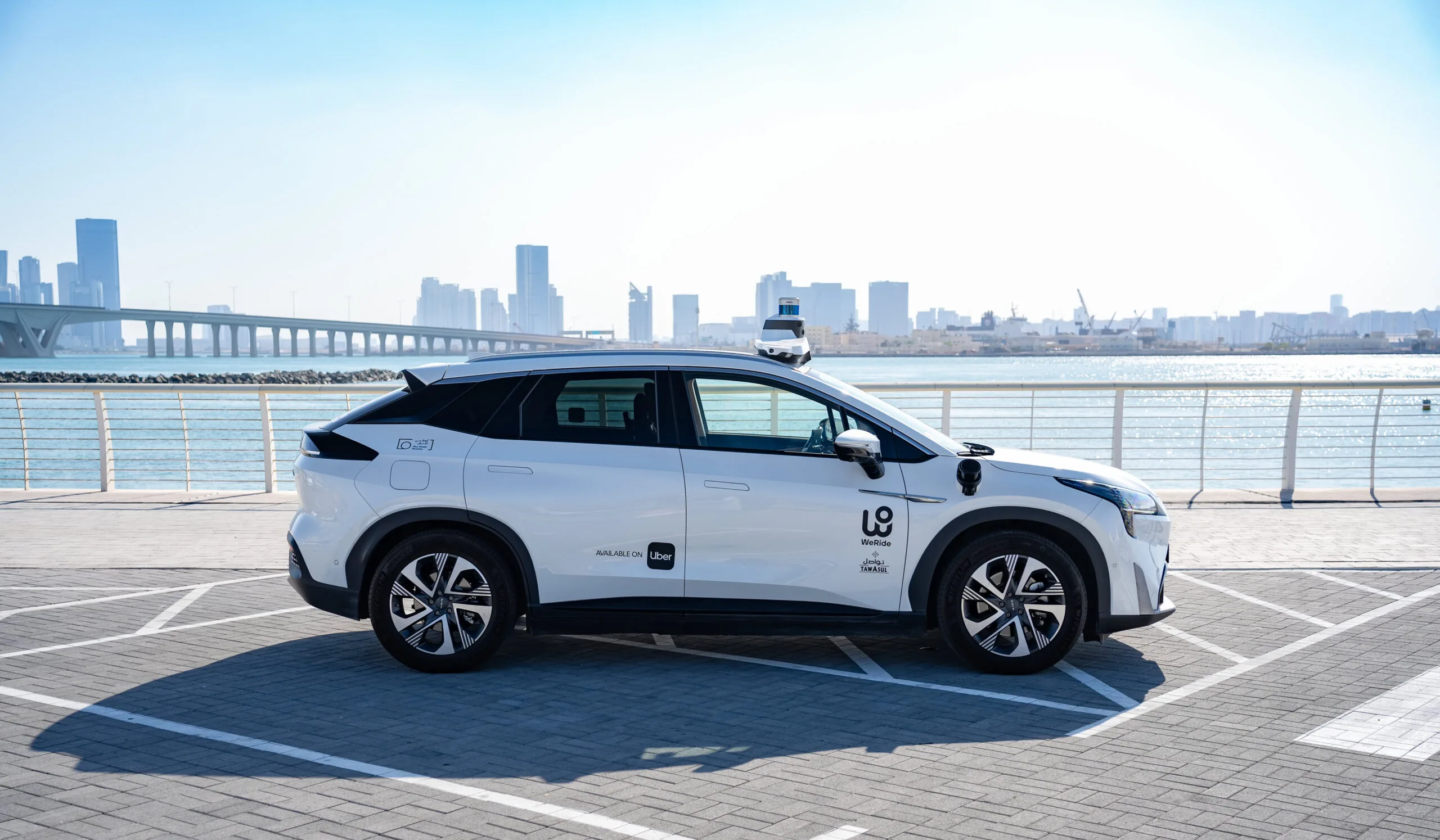
The silent hum of electric drivetrains and the precise rotations of rooftop LiDAR sensors are becoming increasingly common sights on the sun-drenched boulevards of Abu Dhabi and Dubai. In a significant shift for the global autonomous vehicle (AV) industry, China’s leading robotaxi operators are aggressively pivoting toward the Middle East, viewing the United Arab Emirates (UAE) as a critical laboratory for commercializing Level 4 autonomous technology. This strategic migration comes at a time when regional geopolitical tensions, including the ongoing instability involving Iran, have prompted some international investors to exercise caution. However, for Chinese tech titans like Didi, WeRide, and Pony.ai, the allure of the UAE’s tech-forward regulatory environment and its appetite for massive infrastructure investment appears to outweigh the risks of regional volatility.
The momentum of this expansion was underscored recently at the UAE-China Business Cooperation Forum in Beijing. During the high-profile summit, which coincided with the state visit of Abu Dhabi Crown Prince Sheikh Khaled bin Mohamed bin Zayed Al Nahyan to meet Chinese President Xi Jinping, Didi Global announced its intention to begin autonomous driving tests in the UAE later this year. Zhang Bo, co-founder of Didi and head of its autonomous driving division, framed the move as a cornerstone of the company’s international growth strategy. For Didi, which has historically dominated the Chinese ride-hailing market despite regulatory headwinds at home, the UAE represents a "Goldilocks" zone: a market with high per-capita income, modern urban planning, and a government explicitly committed to becoming a global hub for the "economy of the future."
The UAE’s appeal is not merely anecdotal; it is rooted in a deliberate national strategy to diversify its economy away from hydrocarbons. The Dubai Autonomous Transportation Strategy, for instance, aims to transform 25% of all transportation trips in the city to autonomous modes by 2030. This initiative is expected to generate approximately $6 billion in annual economic returns by reducing transportation costs, carbon emissions, and traffic accidents. For Chinese companies, which face an increasingly crowded and price-sensitive market domestically, the UAE offers a chance to deploy their technology in a region where capital is abundant and the regulatory path to commercialization is often clearer than in the United States or Europe.

WeRide, the Guangzhou-based unicorn, has already moved beyond the testing phase to active commercial operations. Earlier this month, the company launched a fully driverless, fare-charging robotaxi service in Dubai’s high-traffic Jumeirah and Umm Suqeim districts. In a move that signals a rare bridge between Chinese hardware and Western consumer platforms, WeRide has integrated its fleet with the Uber app, allowing residents and tourists to hail a driverless car through a familiar interface. This partnership is a masterclass in market entry, combining China’s edge in AI-driven mobility with Uber’s massive global user base and local operational expertise.
The commercialization of these services is being met with robust competition. Pony.ai, another major player in the Chinese AV space, is currently navigating the final stages of securing a commercial license in Dubai. Despite the shadow of regional conflict, Pony.ai CEO James Peng has remained steadfast, dismissing the impact of the Iran-Israel tensions on the company’s long-term roadmap. In late March, Peng characterized the regional instability as a short-term hurdle that does not fundamentally alter the trajectory of the UAE’s infrastructure development. Having received a testing permit from Dubai’s Roads and Transport Authority (RTA) in September, Pony.ai is positioning itself to be a primary provider for the emirate’s ambitious goal of deploying over 1,000 robotaxis in the coming years.
Baidu’s Apollo Go, which operates the world’s largest robotaxi fleet in China, has also joined the fray. On April 1, the company commenced fully driverless commercial operations in Dubai in partnership with the Dubai Taxi Company. The initial rollout of 50 vehicles serves as a pilot program for a much larger ecosystem. For Baidu, the Middle East represents a strategic hedge against the technical and political barriers it faces in North America. By establishing a foothold in the Gulf, Baidu and its peers are effectively exporting Chinese technical standards for autonomous driving—ranging from mapping protocols to V2X (Vehicle-to-Everything) communication frameworks—to the "Global South."
The economic impact of this technological influx is profound. Beyond the immediate convenience of driverless rides, the arrival of Chinese AV firms is stimulating a broader ecosystem of high-tech job creation and data infrastructure. The UAE’s sovereign wealth funds, including Mubadala and the Abu Dhabi Investment Authority (ADIA), have shown a keen interest in funding the next generation of mobility. This creates a virtuous cycle where Chinese technical expertise is fueled by Emirati capital, resulting in a localized version of the "Digital Silk Road."

However, the expansion is not without its complexities. The global autonomous vehicle sector is currently a theater of intense geopolitical competition. While Waymo, backed by Alphabet, continues to dominate the U.S. market and has begun cautious expansions into London and Japan, Chinese firms are moving with a speed and risk tolerance that is characteristic of the "China speed" business philosophy. The UAE finds itself in a delicate balancing act, maintaining its security relationship with the U.S. while embracing the cutting-edge civilian technology offered by Beijing. Concerns regarding data sovereignty and the security of AI algorithms are often discussed behind closed doors, yet the tangible benefits of Chinese investment currently seem to be the priority for Gulf leadership.
The technological advantages of the UAE for robotaxi deployment cannot be overstated. The region’s arid climate and clear visibility are ideal for LiDAR and camera-based systems, which can struggle in the heavy rain or snow typical of Northern Europe or the American Midwest. Furthermore, the "smart city" infrastructure in places like Masdar City and the newer districts of Dubai provides a controlled environment that is far more conducive to Level 4 autonomy than the chaotic, centuries-old streets of many global capitals.
From a market data perspective, the global robotaxi industry is projected to reach a valuation of nearly $40 billion by 2030, with a compound annual growth rate (CAGR) exceeding 60% over the next decade. Analysts suggest that the Middle East will account for a disproportionately large share of this growth due to its rapid urbanization and high density of "premium" commuters. By establishing themselves early, Didi, WeRide, and Pony.ai are not just seeking immediate revenue; they are collecting millions of miles of diverse driving data that will refine their algorithms for global application.
As the UAE continues to position itself as a neutral ground for global innovation, the success of these Chinese ventures will serve as a litmus test for the viability of autonomous transport on a global scale. The integration of these vehicles into the daily lives of UAE residents suggests that the "future of mobility" is no longer a distant vision found only in Silicon Valley white papers. Instead, it is being built in real-time in the heart of the Middle East, driven by Chinese engineering and Emirati ambition. Whether the regional geopolitical landscape remains stable or faces further tremors, the momentum of the robotaxi industry appears to have reached a point of no return, moving forward with the relentless precision of the algorithms that guide them.