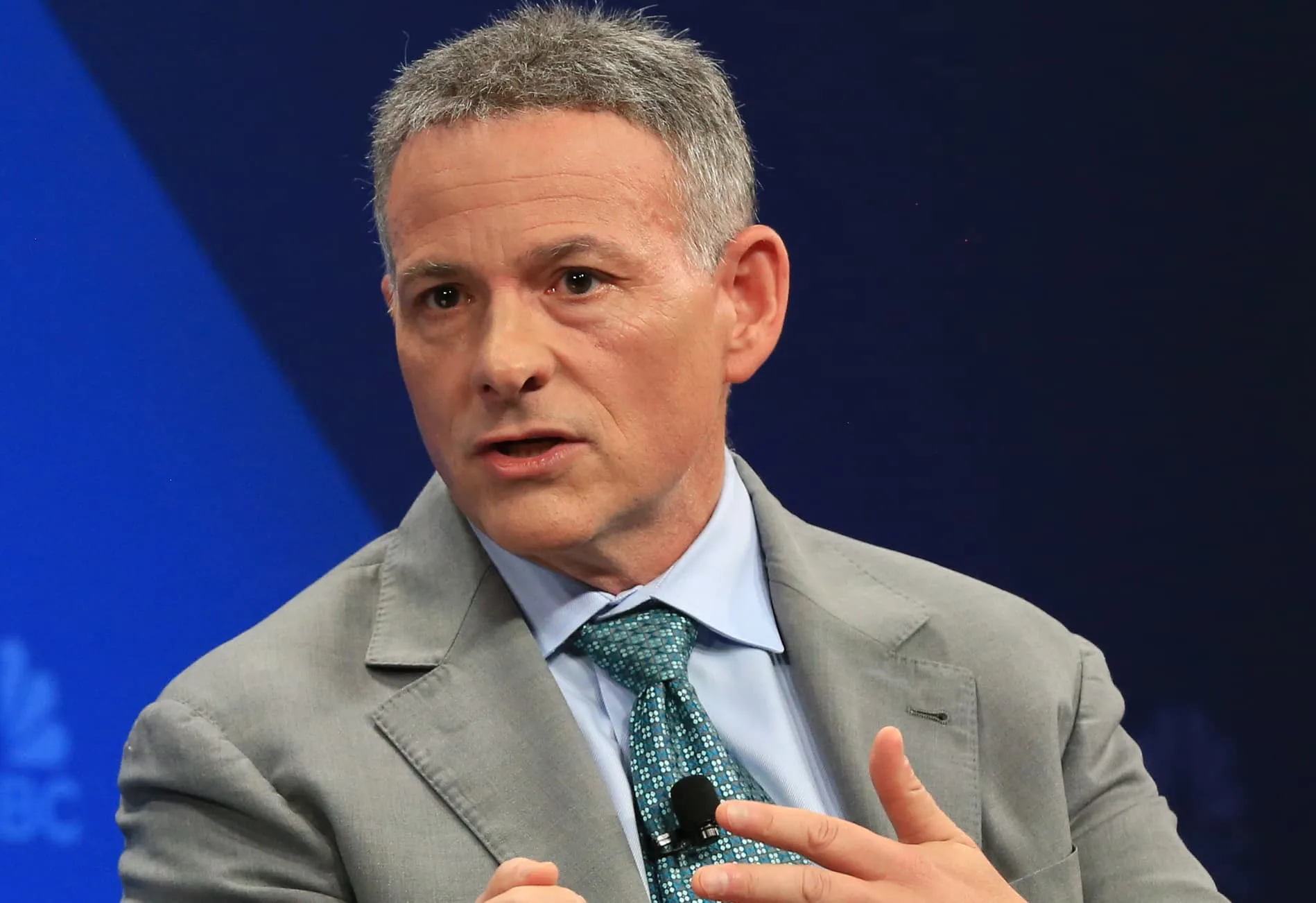
The global financial landscape is currently defined by a striking paradox: while major indices show remarkable resilience in the face of escalating geopolitical friction, some of the world’s most seasoned value investors are retreating to the sidelines. David Einhorn, the President of Greenlight Capital, has emerged as a prominent voice of caution in this environment, signaling that his firm is prioritizing capital preservation over the pursuit of aggressive growth. In a period marked by "violent" market rebounds and a collective shrug toward diplomatic breakdowns in the Middle East, Einhorn’s latest communications suggest that the investment community may be dangerously underestimating the potential for a significant correction.
This shift toward a defensive posture comes at a time when the S&P 500 has demonstrated an almost uncanny ability to absorb shocks. Despite the onset of hostilities involving Iran and the subsequent collapse of high-stakes negotiations over the weekend, U.S. equities have managed to erase nearly all losses associated with the conflict. To many observers, this represents a "wall of worry" that the market is successfully climbing. To Einhorn, however, it represents a mispricing of risk. The Greenlight founder noted that with so little downside currently reflected in asset prices, the risk-reward calculus has tilted unfavorably. He expressed a strategic willingness to miss the early stages of a potential recovery in exchange for the liquidity and stability required to "play offense" should a more bearish scenario eventually materialize.
The psychological state of the current market is perhaps best captured by Einhorn’s evocative metaphor: a "Sammy Hagar-inspired mentality" where investors operate with "one foot on the brake and one on the gas." This duality reflects a deep-seated fear of missing out (FOMO) on a V-shaped or "checkmark" recovery, even as fundamental economic indicators and geopolitical realities suggest reason for pause. This hesitation to fully commit—or fully retreat—has created a market characterized by high valuations and low conviction, a combination that historically precedes periods of heightened volatility.
Greenlight Capital’s performance during the first quarter of the year underscores the efficacy of this cautious approach. While the S&P 500 saw a decline of 4.4% during a tumultuous start to the year, Greenlight’s funds returned a robust 6.5%. This outperformance was not the result of speculative bets on high-flying technology stocks, but rather a disciplined adherence to value principles and a strategic reduction in exposure. By maintaining low gross and net exposure, Einhorn has effectively insulated his portfolio from the broader market’s fluctuations, focusing instead on idiosyncratic opportunities and hard-asset hedges.
Central to Greenlight’s defensive strategy has been a renewed focus on gold. As a traditional hedge against both inflation and geopolitical instability, gold has served as a primary performance driver for the firm. The precious metal’s role in a modern portfolio is often debated, but in an era where international diplomatic norms are being tested and central bank policies remain in flux, its utility as a store of value remains a cornerstone of the Greenlight philosophy. Alongside gold, the firm saw significant gains from its holdings in Acadia Healthcare and DHT Holdings. The latter, an independent crude oil tanker company, has likely benefited from the logistical complexities and increased ton-mile demand created by shifts in global energy trade routes—a direct consequence of the very geopolitical tensions the broader market seems to be discounting.
Energy remains a focal point for Einhorn, though his approach here is notably measured. Greenlight maintains a long position in October oil futures, a bet predicated on the potential for supply disruptions. Interestingly, this position has only seen modest gains, as the prevailing market consensus assumes that any interruption to Middle Eastern oil flows will be transitory. By positioning himself in the futures market, Einhorn is essentially buying insurance against a scenario where the "temporary" disruptions prove to be more systemic or prolonged. This aligns with his broader thesis: the market is priced for perfection, leaving it vulnerable to any news that deviates from the "transitory" narrative.
The firm’s equity selections also reveal a preference for companies with specific catalysts or resilient business models. Among the notable contributors to Greenlight’s quarterly performance was Core Natural Resources, reflecting a continued interest in the commodities and materials space. Furthermore, the firm has initiated several new positions, including a medium-sized stake in Versant Media Group. This move into the media sector, alongside smaller entries into Crocs and SLM Corp (widely known as Sallie Mae), suggests a tactical diversification into consumer-facing and financial services companies that may be undervalued relative to their cash-flow generation or market position.
The inclusion of Crocs in the portfolio is particularly telling. In a high-inflation environment where discretionary spending is often the first to be cut, the footwear brand represents a "value-consumer" play. The company has demonstrated significant brand loyalty and an ability to maintain margins despite macroeconomic headwinds. Similarly, the stake in SLM Corp suggests a calculated bet on the credit markets and the enduring demand for education financing, regardless of the broader economic cooling.
However, these long positions are balanced against a backdrop of deep skepticism regarding overall market valuations. Einhorn has frequently pointed out that the current investment environment is one of the most challenging in recent memory for value investors. The traditional metrics of price-to-earnings and price-to-book have been overshadowed by a momentum-driven market that favors large-cap growth and "AI-adjacent" narratives. In such a climate, the discipline to remain under-invested—or to "keep the powder dry"—is often the hardest strategy to maintain, yet it is the one Einhorn believes is most necessary today.
From a global economic perspective, the caution expressed by Greenlight mirrors a growing divide between institutional "smart money" and retail sentiment. While retail investors have been buoyed by the prospect of interest rate cuts and a "soft landing" for the U.S. economy, many hedge fund managers are looking at the mounting debt levels and the persistent "sticky" nature of inflation. If the Federal Reserve is forced to keep rates higher for longer to combat inflationary pressures, the "stretched valuations" Einhorn warns of could face a painful de-rating.
Furthermore, the geopolitical dimension cannot be overstated. The breakdown of negotiations between major powers regarding regional conflicts often has a lagging effect on the markets. While the initial "shock" of a conflict may be digested quickly, the long-term implications for global supply chains, defense spending, and international trade are more profound. Greenlight’s strategy of "capital protection" is designed to survive the secondary and tertiary shocks that follow the initial headlines.
As the second half of the year approaches, the tension between market optimism and macro-economic reality is likely to reach a breaking point. Investors will be forced to reconcile the "Sammy Hagar" approach with the reality of either a sustained recovery or a significant downturn. For David Einhorn and Greenlight Capital, the choice has already been made. By prioritizing the integrity of their capital over the volatility of the current rally, they are positioning themselves not just to survive a potential downturn, but to capitalize on the opportunities that such a correction invariably creates.
In the final analysis, Einhorn’s message to his investors is one of patient vigilance. In a world where the "V-shaped recovery" has become an article of faith for many, Greenlight is betting on the importance of the margin of safety. Whether the market eventually vindicates this caution remains to be seen, but for now, the firm stands as a sentinel, watching for the cracks in the facade of geopolitical optimism. By keeping one foot firmly on the brake, Einhorn ensures that when the time comes to hit the gas, he will have the resources and the clarity to do so with conviction.