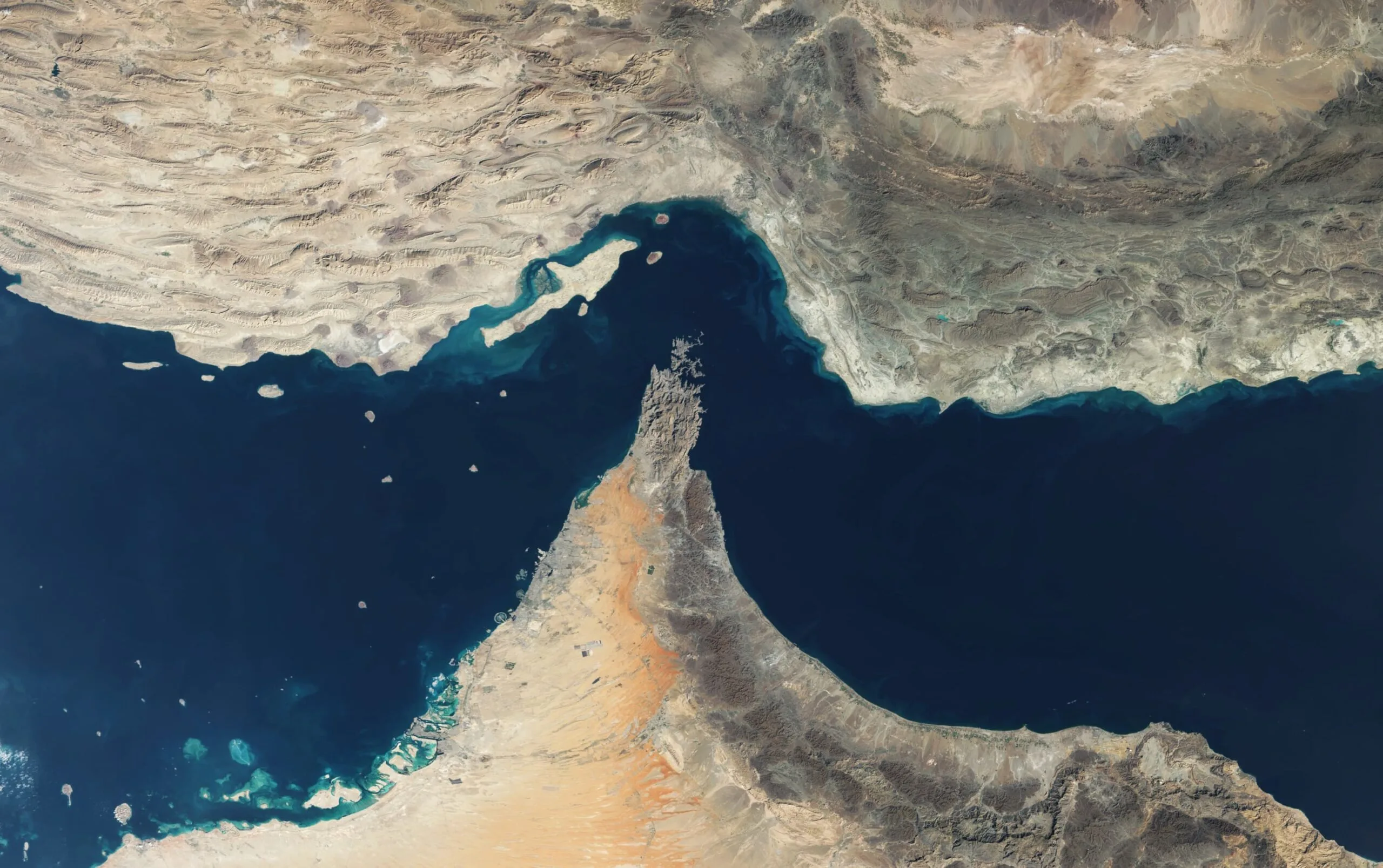
The geopolitical chessboard of the Middle East has long been defined by the narrow, 21-mile-wide stretch of water known as the Strait of Hormuz. As the primary artery for the world’s petroleum supply, any tremor in its stability sends shockwaves through global commodities markets, triggering immediate spikes in crude futures and frantic reassessments of energy security from Washington to Beijing. However, a recent and unconventional investigation into the actual traffic flowing through this maritime chokepoint suggests that the narrative of a total blockade—a scenario often priced into the market as a "doomsday" event—may be far more nuanced and complex than satellite imagery or official government communiqués suggest.
While institutional investors typically rely on high-frequency satellite data and Automatic Identification System (AIS) tracking to monitor global shipping, these tools have limitations in a high-friction conflict zone. In an era where electronic warfare and "dark" shipping are becoming the norm, some market participants are reverting to old-school intelligence gathering. Citrini Research, a firm known for its contrarian stances and deep-dive analysis, recently bypassed traditional data streams by deploying an analyst directly to the Musandam Peninsula in Oman. This rugged, mountainous enclave overlooks the narrowest point of the Strait, providing a literal "boots-on-the-ground" vantage point that challenges the prevailing market consensus of a paralyzed waterway.
The findings from this field mission indicate that while the Strait is certainly not operating at its pre-conflict capacity, it is far from closed. On-the-ground observations revealed a steady, albeit reduced, flow of maritime traffic, with approximately 15 vessels per day transiting the waters. This figure is significantly higher than what is currently being reflected in official transponder data. The discrepancy is largely attributed to "dark" transits, where tankers disable their AIS to avoid detection or targeting. This tactical invisibility suggests that a significant portion of the global oil trade is continuing under the radar, literally and figuratively, creating a gap between perceived supply disruptions and the physical reality of oil movement.
This "shadow traffic" is not merely a sign of desperation but part of a sophisticated, informal system of passage. Interviews with local fishermen, regional maritime officials, and even the illicit smuggling networks that have long operated in the Musandam region point toward a "functional checkpoint" model rather than a traditional military blockade. In this environment, Iran appears to be exercising a selective veto over who passes, requiring certain tankers to secure informal or formal clearances before entering the Qeshm channel. This distinction is critical for economists: a blockade implies a zero-sum halt to trade, whereas a checkpoint implies a tax—both in time and risk—on the flow of goods. The latter embeds a "permanent risk premium" into the price of oil, rather than a temporary spike that dissipates once a conflict subsides.
To understand the economic gravity of these findings, one must look at the sheer volume of energy that traverses this corridor. Roughly 20% to 30% of the world’s total liquid petroleum consumption passes through the Strait of Hormuz daily, including nearly 17 million barrels of crude oil and a significant portion of the world’s liquefied natural gas (LNG), particularly from Qatar. For major Asian economies like China, India, Japan, and South Korea, the Strait is a lifeline; any prolonged disruption threatens not just energy prices, but industrial productivity and national security.
The shift in market behavior following these "on-the-water" reports highlights a pivot in how traders are hedging against Middle Eastern instability. Rather than betting on a short-term "parabolic" move in front-month crude prices—which assumes a sudden and total shutdown—sophisticated investors are increasingly favoring long-dated exposure. For instance, there is a growing preference for December 2026 West Texas Intermediate (WTI) contracts. This strategy suggests a belief that the current friction is not a fleeting crisis but the beginning of a "new normal" for the energy markets. In this scenario, the risk is not a one-time shock, but a structural increase in the cost of doing business in the Persian Gulf that will persist for years.
This structural shift has profound implications for global inflation and central bank policy. If the Strait remains a functional checkpoint for the foreseeable future, the cost of insurance for maritime vessels, the wages for "war-zone" crews, and the logistical delays of dark transits will all be passed down to the consumer. This creates a floor for oil prices that may remain stubbornly high even if global demand softens. It effectively decouples oil prices from traditional supply-and-demand fundamentals and ties them more closely to the "geopolitical friction" of the region.
Furthermore, the role of Oman in this crisis cannot be overstated. As a traditional mediator in the region, Oman’s Musandam Peninsula serves as a silent witness to the tension. The proximity of Iranian territory to Omani waters means that any maritime enforcement by Tehran occurs within a stone’s throw of a key Western ally. The analyst’s report from the peninsula suggests that the local economy—dependent on both legal shipping and the grey-market smuggling of electronics and consumer goods—is adapting to the presence of naval patrols and increased surveillance. This adaptability of local networks often serves as a leading indicator of how global trade routes will eventually circumvent formal sanctions or military barriers.
Comparisons to historical maritime conflicts, such as the "Tanker War" of the 1980s during the Iran-Iraq conflict, provide a sobering context. During that era, over 500 ships were attacked, yet the oil continued to flow, albeit at a higher cost and with significant naval escorting from the United States and its allies. The current situation mirrors this resilience but with a 21st-century twist: the use of drone technology, cyber interference with navigation systems, and the sophisticated use of the "dark fleet"—a global network of aging tankers with opaque ownership that exist solely to move sanctioned oil.
The economic impact analysis of a "partial disruption" suggests a bifurcated world for energy consumers. While the United States, now a net exporter of petroleum, is somewhat insulated from the physical supply shock, it remains highly vulnerable to the global price contagion. Europe, already reeling from the loss of Russian pipeline gas, finds itself in an even more precarious position, as it relies on LNG from the Gulf to fill the void. The "functional checkpoint" in the Strait of Hormuz effectively gives regional powers a dial with which they can adjust the intensity of global economic pain, turning it up or down to suit diplomatic objectives.
As the market processes these ground-level insights, the consensus is shifting away from a "binary" outcome. The question is no longer "is the Strait open or closed?" but rather "at what cost is the Strait operating?" The emergence of a permanent risk premium suggests that the era of cheap, friction-less energy transit through the Persian Gulf may be over. For analysts and investors, the lesson is clear: in an increasingly volatile world, the most valuable data may not come from a satellite orbiting the earth, but from a small boat bobbing in the swells of the Musandam Peninsula, watching the tankers go dark as they slip through the world’s most dangerous needle-eye.
Ultimately, the revelation that shipping volumes are accelerating despite the conflict suggests that the global appetite for energy is currently outweighing the immediate fear of military engagement. However, the "new normal" of 15 ships a day—versus the dozens that once transited freely—is a stark reminder of the fragility of the globalized economy. It is a world where the flow of oil is no longer guaranteed by international law or naval dominance, but negotiated day-by-day through a gauntlet of checkpoints, dark transponders, and shadow diplomacy. For the global economy, the cost of this uncertainty is a tax that everyone, from the industrial manufacturer in Germany to the commuter in California, will eventually have to pay.