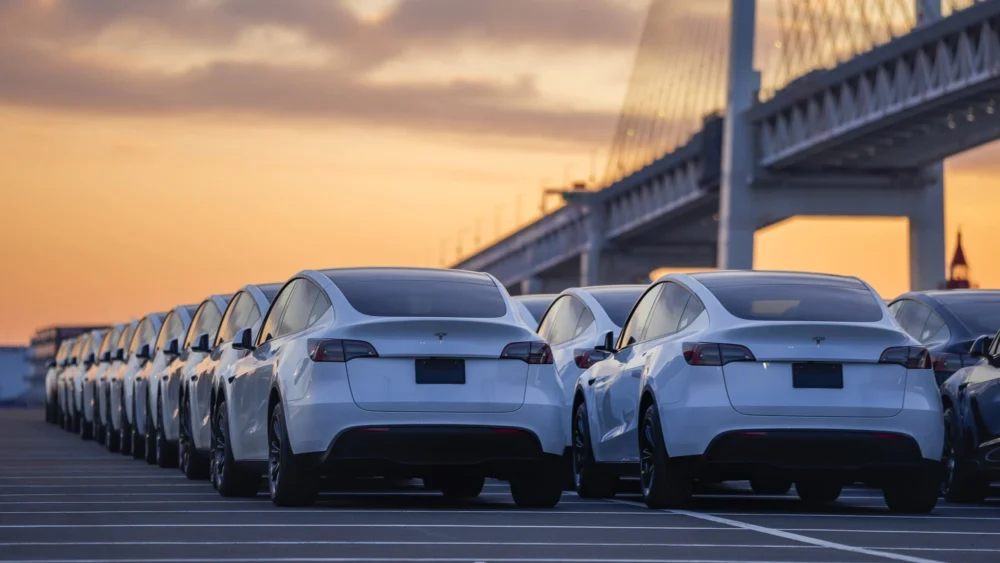
The global automotive landscape reached a historic inflection point in the final quarter of 2023, marking a symbolic and structural shift that few analysts would have predicted a decade ago. For the first time in the history of the modern electric vehicle (EV) era, the American pioneer Tesla was surpassed in quarterly sales by the Chinese conglomerate BYD. This transition represents more than just a change in leaderboard rankings; it signifies the maturation of China’s industrial policy and a fundamental realignment of the global manufacturing hierarchy. While Tesla has long been the face of the electric revolution, BYD’s rise to the top spot as the world’s leading seller of battery electric vehicles (BEVs) underscores a new reality where vertical integration, diverse product portfolios, and aggressive pricing strategies are the primary drivers of market share.
During the fourth quarter of 2023, BYD delivered a record 526,407 fully electric vehicles, eclipsing Tesla’s delivery count of 484,507. Although Tesla maintained its lead on a full-year basis—delivering 1.81 million vehicles compared to BYD’s 1.57 million BEVs—the momentum clearly favors the Shenzhen-based challenger. When including plug-in hybrids, a category in which BYD is also a dominant force, the Chinese company’s total production exceeded 3 million units for the year. This surge is the culmination of a decades-long strategy initiated by BYD founder Wang Chuanfu, who transitioned the company from a mobile phone battery manufacturer into an automotive powerhouse with the early backing of Berkshire Hathaway’s Warren Buffett.
The divergence in the two companies’ trajectories can be attributed to their fundamentally different approaches to the mass market. Tesla, under the leadership of Elon Musk, has historically positioned itself as a high-tech, premium brand. Its lineup is relatively lean, centered primarily on the Model 3 sedan and the Model Y crossover, which together account for the vast majority of its sales volume. While this strategy allowed for unprecedented manufacturing efficiency and high margins in previous years, it has also left the company vulnerable to market saturation and a lack of fresh options for consumers. In contrast, BYD offers a dizzying array of models across every conceivable price point. From the budget-friendly Seagull, which retails for approximately $11,000 in China, to the luxury Yangwang brand with vehicles priced well over $150,000, BYD has successfully captured the entire spectrum of the consumer demographic.
A critical component of BYD’s competitive advantage lies in its radical vertical integration. Unlike traditional automakers that rely on a complex web of global Tier 1 suppliers, BYD produces almost every component of its vehicles in-house, including the seats, the semiconductors, and most importantly, the batteries. As the world’s second-largest producer of EV batteries, BYD utilizes its proprietary "Blade Battery" technology—a lithium-iron-phosphate (LFP) chemistry that is widely regarded for its safety, longevity, and lower production costs compared to the nickel-cobalt-manganese (NCM) cells often used by Western competitors. By controlling its own supply chain, BYD has insulated itself from the inflationary pressures and logistics bottlenecks that have plagued the rest of the industry, allowing it to maintain aggressive pricing even as global economic conditions tightened.
The shift in leadership also highlights the cooling of the American EV market relative to the explosive growth in China. The Chinese government has spent the better part of fifteen years nurturing its domestic EV ecosystem through a combination of generous consumer subsidies, state-funded charging infrastructure, and preferential treatment for local manufacturers. This "New Energy Vehicle" (NEV) mandate has transformed China into the world’s largest and most competitive EV market, where domestic brands now command over 50% of the total market share. Tesla, which once enjoyed a dominant position in China, now finds itself embroiled in a brutal price war that it largely initiated in early 2023 to stimulate demand. While these price cuts initially boosted volume, they have significantly eroded Tesla’s industry-leading margins, which fell from over 25% in 2022 to the mid-teens by late 2023.
Economically, the rise of BYD presents a significant challenge to the established automotive orders in Europe and North America. In the European Union, policymakers are increasingly concerned that a "flood" of inexpensive Chinese EVs could decimate the domestic car industry, which employs millions and serves as a cornerstone of the German and French economies. This anxiety prompted the European Commission to launch an anti-subsidy investigation into Chinese EV imports, a move that could eventually lead to the imposition of punitive tariffs. However, BYD is already moving to circumvent such barriers by announcing plans to build its first European assembly plant in Hungary, effectively embedding itself within the EU’s borders to avoid trade restrictions.
In the United States, the geopolitical tensions are even more pronounced. The Inflation Reduction Act (IRA), signed by the Biden administration, was designed specifically to decouple the American EV supply chain from China by offering tax credits only to vehicles with high levels of North American or "friendly" nation content. As a result, BYD has largely avoided the U.S. passenger car market, focusing instead on electric buses and commercial vehicles. Nevertheless, the company is rapidly expanding its footprint in "neutral" territories like Southeast Asia, Latin America, and the Middle East. In markets like Thailand and Brazil, BYD has quickly become the top-selling EV brand, leveraging its affordability to win over middle-class consumers for whom a Tesla remains financially out of reach.
The investor sentiment surrounding these two giants reflects a debate over whether the future of the industry belongs to "software-defined vehicles" or "manufacturing-scale masters." Tesla bulls argue that the company is not merely a carmaker but an artificial intelligence and robotics firm. They point to Tesla’s Full Self-Driving (FSD) beta software, its Optimus humanoid robot project, and its sprawling Supercharger network as moats that BYD cannot easily replicate. For these investors, Tesla’s temporary loss of the sales crown is a secondary concern to its potential to dominate the future of autonomous mobility. However, more pragmatic market analysts suggest that as EVs move from early adopters to the mass market, the "commodity" aspects of car building—price, reliability, and variety—will become the decisive factors. In this arena, BYD’s manufacturing prowess and cost structure give it a formidable edge.
Furthermore, the macroeconomic environment has played into BYD’s hands. High interest rates in the United States and Europe have made the monthly payments on a $45,000 Tesla significantly more expensive for the average consumer. In response, Tesla has been forced to emphasize its financing deals and lower its MSRPs multiple times. BYD, however, operates in a Chinese economy characterized by low inflation and even deflationary risks, allowing it to keep production costs down while benefiting from a government that is eager to see its "national champions" succeed on the global stage.
Looking ahead to 2024 and beyond, the competition is expected to intensify as the "EV plateau" becomes a reality in several Western markets. Many traditional giants, such as Volkswagen, Ford, and General Motors, have recently scaled back their EV ambitions due to slowing demand and technical hurdles. This retreat by the "Old Guard" creates a vacuum that BYD and other Chinese firms like Geely and Xiaomi are eager to fill. Tesla’s response to this pressure remains the industry’s biggest question mark. The recent launch of the Cybertruck, while a feat of engineering, is unlikely to contribute significant volume in the near term due to its complex manufacturing process. The long-rumored "Model 2"—a $25,000 mass-market vehicle—is seen by many as Tesla’s only viable path to reclaiming its undisputed title, but it remains years away from high-volume production.
Ultimately, BYD’s ascent to the top of the EV sales charts is a testament to the shifting tectonic plates of global trade. It marks the end of the era where Western brands could rely on technological superiority to maintain market dominance. As the world transitions toward a decarbonized transport sector, the battle for the driveway is no longer just about who has the fastest car or the best touchscreen; it is about who can build the most affordable, efficient, and scalable electric ecosystem. For the moment, the crown has moved from Silicon Valley to Shenzhen, and the global automotive industry will never be the same.