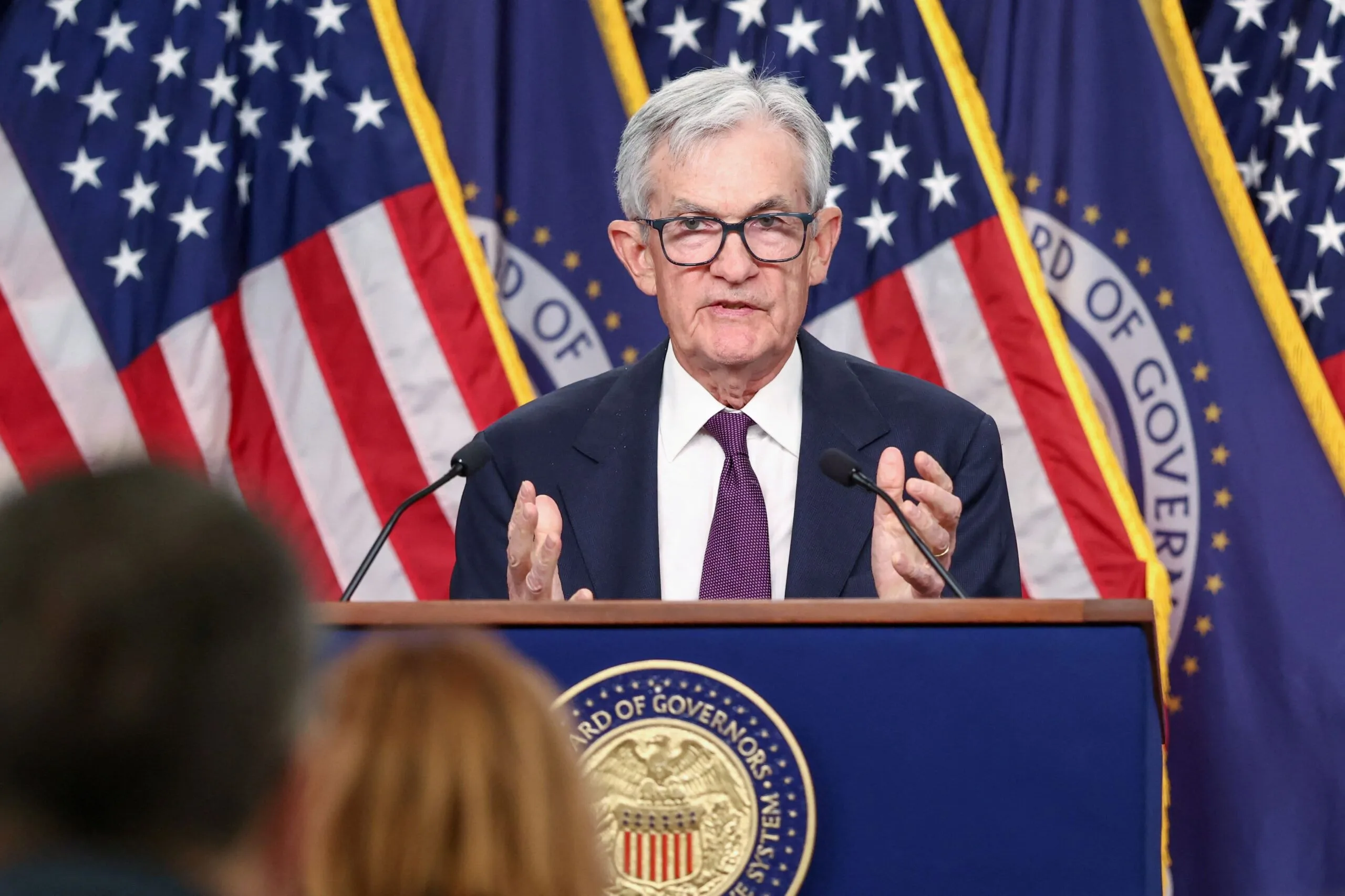
The Federal Open Market Committee (FOMC) concluded its March proceedings this week against a backdrop of geopolitical volatility and domestic economic anxiety, leaving investors with a message defined more by what was absent than what was declared. In an era where central bank transparency is often treated as a panacea for market volatility, Chair Jerome Powell delivered a masterclass in strategic ambiguity. Faced with the dual pressures of an active military conflict involving Iran and a persistent inflationary cycle that has defied traditional modeling for half a decade, the Federal Reserve opted for a defensive posture, holding interest rates steady while signaling a deeply divided internal outlook for the remainder of the year.
The primary catalyst for this pervasive sense of caution is the ongoing conflict between the United States and Iran. For modern central banking, which relies heavily on predictable data flows and historical precedents, a state of war introduces "black swan" variables that are nearly impossible to quantify. Powell’s rhetoric during the post-meeting press conference reflected this struggle, as he invoked the word “uncertain” with rhythmic frequency. The conflict has transformed the global energy landscape, sending crude oil prices into a volatile spiral that threatens to unanchor inflation expectations just as the Fed hoped to bring the Consumer Price Index (CPI) back toward its 2% target.
The economic implications of the oil shock are particularly thorny for a committee tasked with maintaining price stability. Energy costs serve as a foundational input for almost every sector of the American economy, from transportation and logistics to the production of petrochemicals and consumer goods. When oil prices spike due to regional instability in the Middle East, it acts as a regressive tax on consumers, stifling discretionary spending while simultaneously driving up the cost of living. Powell’s admission—that "nobody knows" the full magnitude of these effects—highlights the limitations of the Fed’s current toolkit. Traditional interest rate adjustments are blunt instruments that can curb demand, but they cannot secure shipping lanes or stabilize global supply chains disrupted by kinetic warfare.
This external chaos has mirrored an internal fracturing within the Fed itself, evidenced by the latest Summary of Economic Projections, colloquially known as the "dot plot." While the median projection still suggests one interest rate cut in 2026 and another in 2027, the distribution of individual forecasts resembles a scatterplot of disagreement rather than a cohesive policy roadmap. The lack of consensus on the FOMC is striking: for the 2027 outlook, the committee is split across seven different rate levels, ranging from a hawkish contingent advocating for a rate hike to a lone dove—speculated to be Governor Stephen Miran—calling for as many as five cuts. This divergence suggests that the "unanimous" facade often maintained by the Fed is crumbling under the weight of conflicting data points.
Market analysts have noted that this lack of internal cohesion creates a "credibility gap" for the central bank. If the officials tasked with steering the economy cannot agree on the basic direction of policy eighteen months out, the forward guidance provided to banks, corporations, and mortgage lenders becomes significantly less effective. This internal friction is compounded by a sluggish labor market. While the headline unemployment rate remains historically low, the pace of hiring has become anemic. This "jobless stability" presents a paradox: the economy isn’t shedding workers in mass layoffs, but it isn’t creating the opportunities necessary to absorb new entrants into the workforce, leading to a stagnation in real wage growth when adjusted for five years of elevated inflation.

The specter of "stagflation"—the toxic combination of stagnant economic growth and high inflation—loomed large over the week’s discussions. For months, critics have pointed to the 1970s as a cautionary tale, a period when the Fed failed to aggressively tackle inflation, leading to a decade of economic malaise. Powell, however, has been adamant in rejecting this comparison. He argued that the current structural integrity of the U.S. economy, characterized by resilient consumer spending and a robust financial sector, bears little resemblance to the systemic failures of the Volcker era. By reserving the term "stagflation" for the specific nightmare of the 70s, Powell is attempting to manage the narrative and prevent a psychological shift in the markets that could lead to a self-fulfilling prophecy of economic decline.
However, the Chair’s optimism is being met with skepticism by those who point to the "dual mandate" pressure. The Fed is legally obligated to pursue both maximum employment and stable prices. When these two goals come into conflict—as they do when inflation is driven by supply-side shocks like war—the Fed is often forced to choose the lesser of two evils. To fight the oil-driven inflation, they must keep rates high, which risks tipping the anemic hiring rate into a full-blown recession. Conversely, cutting rates to stimulate the labor market could pour gasoline on the inflationary fire. This "policy trap" is perhaps the most significant challenge of Powell’s tenure.
Adding to the complexity is the looming leadership transition at the Eccles Building. Powell’s term as Chair is nearing its conclusion, and the political theater surrounding his successor has introduced a layer of institutional instability. While former Governor Kevin Warsh has been tipped as the likely successor, his confirmation remains stalled in a divided Senate. Powell’s declaration that he will remain as a "chair pro tem" until a successor is confirmed—and notably, until an ongoing investigation into his conduct is resolved—suggests a period of "lame duck" leadership. This transition period is particularly sensitive; markets generally prefer a clear hand at the tiller during times of war, and any perception of a power vacuum at the Fed could lead to increased volatility in the Treasury markets.
Global markets are watching the Fed’s paralysis with growing concern. As the world’s reserve currency, the U.S. dollar’s valuation is intrinsically tied to the Fed’s interest rate decisions. A "higher for longer" stance by the FOMC continues to draw capital into the United States, strengthening the dollar but placing immense pressure on emerging markets that hold debt denominated in greenbacks. European and Asian central banks, facing their own inflationary pressures and energy crises, find themselves unable to diverge too far from the Fed’s path without risking a total collapse of their currency values. This creates a global synchronization of high interest rates that could inadvertently trigger a synchronized global slowdown.
The sentiment among institutional investors is one of forced patience. There is a growing realization that the Fed is no longer the primary driver of the economic narrative; instead, it is a passenger to geopolitical events it cannot control. The decision to remain stationary this week was a tactical retreat—a move to preserve flexibility in an environment where any aggressive action could be rendered obsolete by the next headline from the Middle East. As one analyst noted, the Fed is comfortable waiting because it has no other choice.
As the meeting adjourned, the takeaway for the broader economy was clear: the era of "easy money" and predictable policy is firmly in the rearview mirror. The "new normal" is characterized by a "wait and watch" philosophy that prioritizes institutional survival and narrative control over decisive economic intervention. For the American consumer, this means that the relief of lower interest rates remains a distant and uncertain prospect, tied more to the resolution of a distant war than to the calculations of the Federal Reserve’s spreadsheets. The path forward is no longer a straight line, but a maze of geopolitical risk, internal dissent, and the persistent, nagging shadow of an inflationary cycle that refuses to break.