The pre-market hours of the global financial capital are typically characterized by a predictable, if subdued, rhythm of liquidity as institutional algorithms and early-rising traders prepare for the opening bell. However, on a recent Monday morning, this tranquility was shattered by a series of high-volume trades that have since become the focal point of intense scrutiny among market analysts, regulators, and transparency advocates. Approximately fifteen minutes before a major policy announcement was broadcast via social media by President Donald Trump, the futures markets for both U.S. equities and crude oil experienced an extraordinary surge in activity—a phenomenon that has raised difficult questions regarding information asymmetry and the security of sensitive geopolitical data.
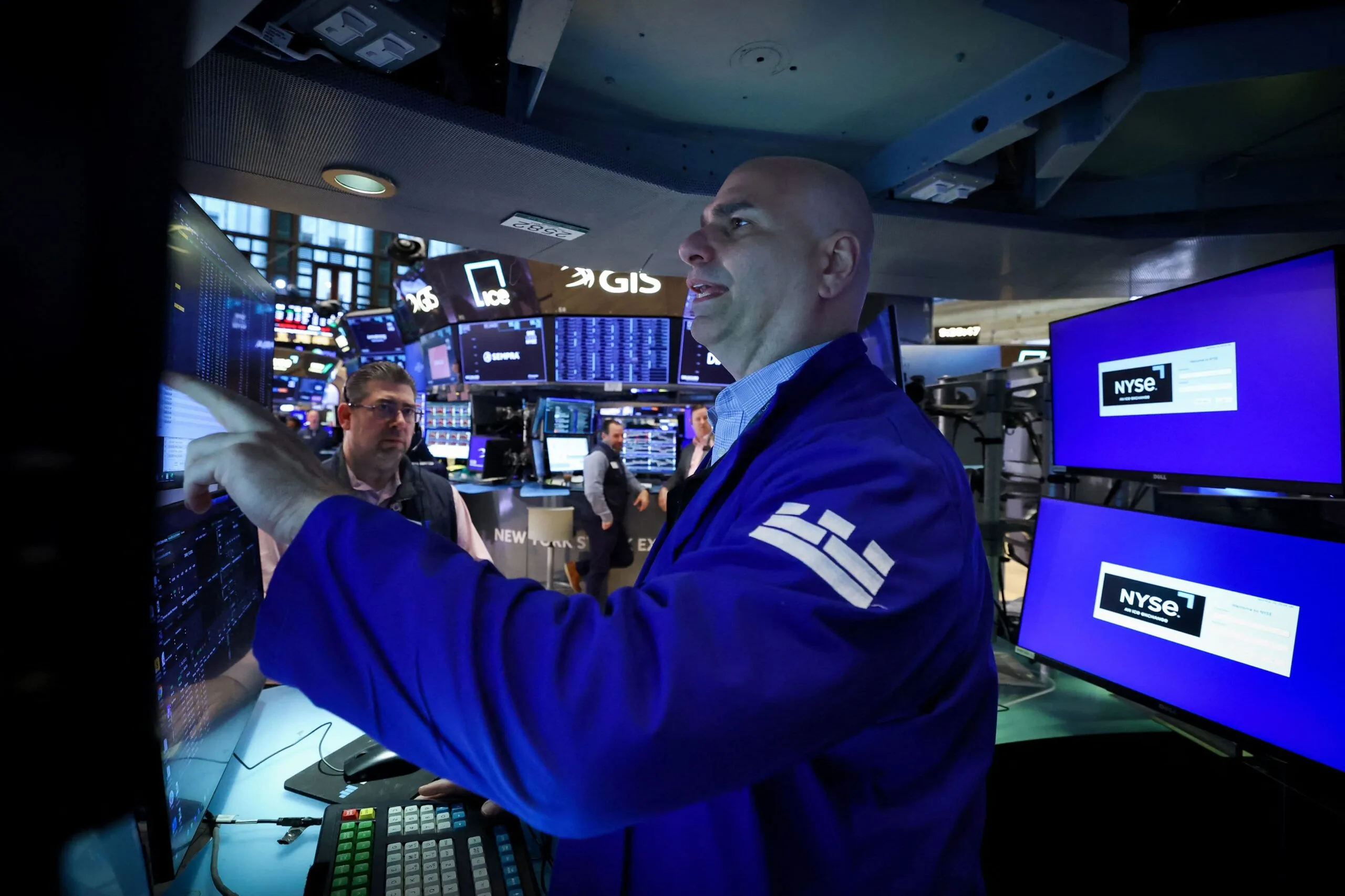
At precisely 6:50 a.m. in New York, the S&P 500 e-Mini futures, trading on the Chicago Mercantile Exchange (CME), registered a sudden and isolated spike in volume. Under normal circumstances, the pre-7:00 a.m. window is one of the thinnest periods for liquidity, making large-scale transactions both conspicuous and potentially disruptive. Yet, in this instance, a massive influx of buy orders hit the tape, signaling a aggressive bet on a market rally. Simultaneously, the energy markets mirrored this volatility. West Texas Intermediate (WTI) crude oil futures for May delivery saw a corresponding burst of selling pressure, as traders moved to short the commodity or exit long positions with unusual urgency.
The catalyst for these movements remained invisible to the general public for another quarter of an hour. It was not until 7:05 a.m. that President Trump issued a statement on Truth Social, revealing that the United States and Iran had engaged in successful high-level discussions. The President further announced that he was rescinding previous orders for military strikes targeted at Iranian power plants and critical energy infrastructure. The impact on global asset prices was instantaneous and profound. S&P 500 futures, already buoyed by the mysterious early buying, surged more than 2.5% in a matter of minutes. Conversely, WTI crude futures plummeted nearly 6%, as the immediate threat of a supply disruption in the Persian Gulf evaporated, taking the "geopolitical risk premium" with it.
The Mechanics of Informed Trading and Market Microstructure
The fifteen-minute gap between the volume spike and the public announcement is more than a statistical curiosity; it represents a significant window during which an immense amount of capital was positioned to capitalize on a non-public event. In the world of high-frequency trading and macro-arbitrage, fifteen minutes is an eternity. For a trader holding a leveraged position in S&P 500 futures, a 2.5% move in such a short duration can yield returns measured in the tens of millions of dollars. Similarly, the 6% collapse in oil prices provided a windfall for those who had initiated short positions at 6:50 a.m.
Market microstructure experts point out that the lack of an obvious catalyst at the time of the trades is what makes this event particularly "noisy." While algorithmic strategies often trigger trades based on satellite imagery, sentiment analysis of minor news wires, or even changes in diplomatic flight patterns, the specificity and timing of these moves suggest a level of certainty that is rarely achieved through public-data scraping alone. The CME Group and the Securities and Exchange Commission (SEC) have historically monitored such "lead-lag" relationships to determine if "informed trading"—the legal term for trading based on non-public, material information—has occurred. While both entities have declined to comment on this specific incident, the pattern has already drawn comparisons to previous instances where markets appeared to "sniff out" major policy shifts before they were codified.
Geopolitical De-escalation and the Energy Risk Premium
To understand why the markets reacted with such violence, one must consider the broader economic stakes of the U.S.-Iran relationship. For weeks, the energy sector had been pricing in the possibility of a kinetic conflict that could jeopardize the Strait of Hormuz, a narrow waterway through which roughly one-fifth of the world’s total oil consumption passes. Any strike on Iranian energy infrastructure would likely have triggered a retaliatory cycle, potentially taking millions of barrels of oil off the market and sending global prices toward the $100-per-barrel mark.
The President’s decision to halt these strikes represented a fundamental shift from a "war footing" to a "diplomatic footing." For the equity markets, this was viewed as a "risk-on" signal. Lower energy prices act as a de facto tax cut for consumers and reduce input costs for manufacturers, thereby easing inflationary pressures that have bedeviled the Federal Reserve’s monetary policy. The S&P 500’s 2.5% jump reflected a collective sigh of relief from investors who had been hedging against a regional war. However, the fact that some participants were able to breathe that sigh of relief fifteen minutes before everyone else has left a bitter taste in the mouths of retail investors and smaller institutional players.
The Evolution of "Social Media Diplomacy"
This incident highlights a broader trend in the modern financial landscape: the migration of market-moving intelligence from traditional news wires to decentralized social media platforms. In previous decades, a change in military orders would have been disseminated through a formal White House press briefing or a coordinated release to major news agencies. In the current era, policy is often "made" and "announced" in real-time via short-form posts.
This shift has created a new set of challenges for market integrity. Traditional news outlets operate under strict embargoes and security protocols to ensure that information is released to all participants simultaneously. Social media platforms, by their very nature, are susceptible to "latency advantages" and the potential for leaks. If a staffer, a diplomat, or a high-ranking official shares the contents of a post even seconds before it goes live, the digital nature of today’s exchanges allows that information to be monetized instantly. The 6:50 a.m. spike suggests that the circle of people aware of the de-escalation may have been wider than the public record currently indicates.
Economic Implications and Regulatory Challenges
The economic fallout of such market anomalies extends beyond the immediate gains of a few traders. When the perception takes hold that the "game is rigged," it can lead to a withdrawal of liquidity from the markets during sensitive times. If market makers believe they are consistently on the wrong side of "toxic flow"—trades originating from participants with superior, non-public information—they will widen their bid-ask spreads to compensate for the risk. This, in turn, increases the cost of capital for all participants and reduces the efficiency of the price discovery process.
Furthermore, the role of algorithmic trading cannot be ignored. Many modern "black box" strategies are designed to follow unusual volume. It is possible that a single large, informed trade at 6:50 a.m. acted as a "pebble in a pond," triggering a cascade of automated buying and selling as other algorithms detected the momentum and piled in, even without knowing the underlying reason. This "momentum ignition" can amplify small moves into major market shifts, creating a feedback loop that benefits the first mover while punishing those who arrive even seconds later.
As the SEC and the Commodity Futures Trading Commission (CFTC) continue to refine their surveillance tools, they face an uphill battle against the speed of modern communications. The "Trump Trade" has always been characterized by high volatility and a reliance on direct-to-consumer messaging, but the 15-minute gap observed on Monday represents a significant escalation in the disconnect between private knowledge and public disclosure.
Toward a More Transparent Framework
The events of Monday morning serve as a stark reminder of the fragile nature of market trust. In an era where a single post can wipe out or create billions of dollars in market value, the protocols surrounding the release of sensitive geopolitical information have never been more critical. Financial analysts are now calling for a more rigorous "lock-up" procedure for market-moving social media announcements, similar to the way the Department of Labor handles sensitive employment data.
Until such measures are implemented, the pre-market hours will likely remain a "Wild West" for those with the tools to detect—or the connections to receive—early signals. For the average investor, the lesson is clear: in a market governed by headlines and hashtags, the most valuable commodity is not oil or equities, but the time it takes for a message to travel from a screen to the exchange. On this particular Monday, that time was worth a fortune to those who moved first.