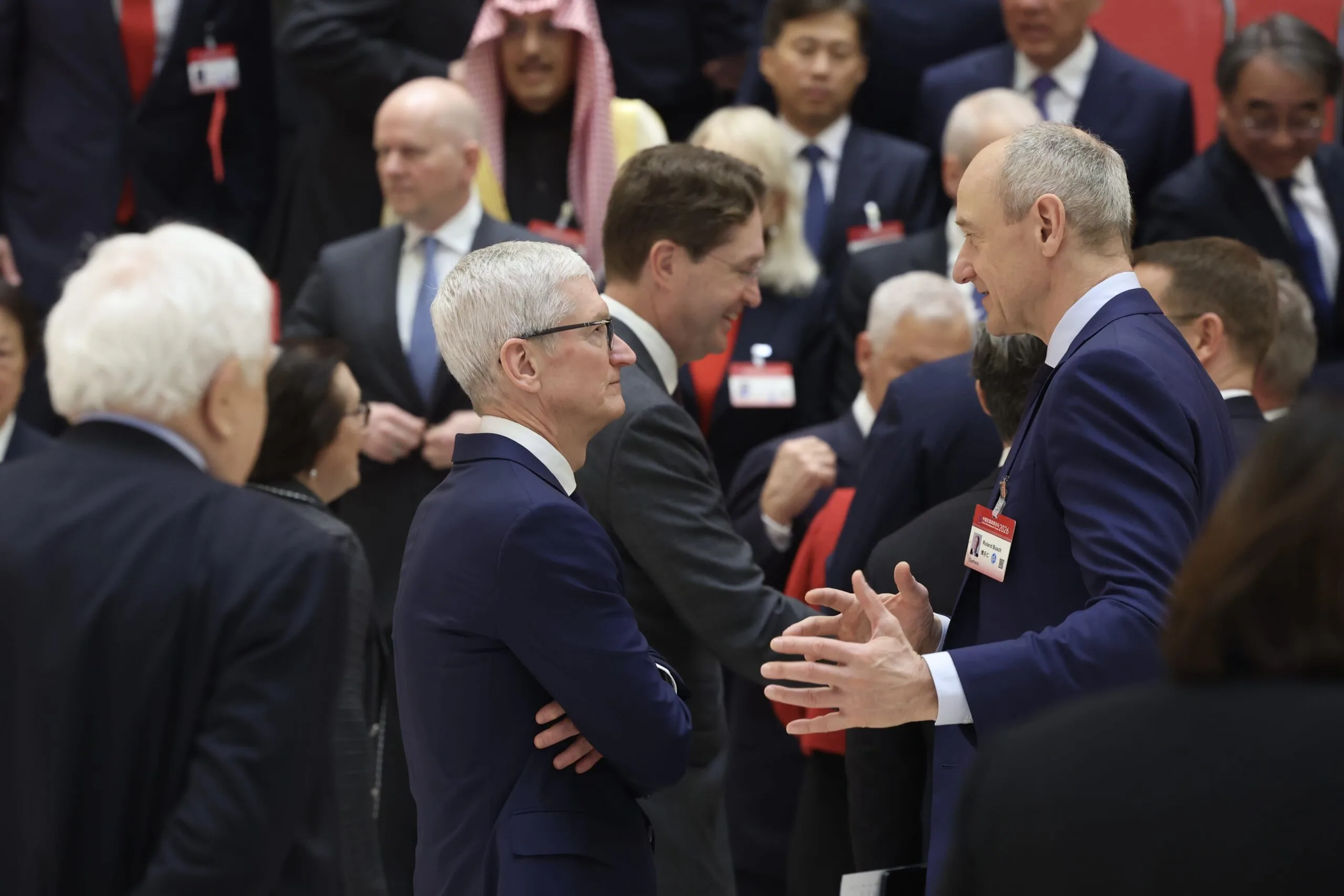
The manicured grounds of the Diaoyutai State Guesthouse in Beijing served this week as the unlikely backdrop for a high-stakes display of economic pragmatism. Against a volatile horizon of trade disputes, cooling diplomatic relations, and shifting supply chains, more than 80 of the world’s most influential chief executives gathered for the annual China Development Forum (CDF). The assembly, which included leaders from Apple, Eli Lilly, Siemens, and Volkswagen, signaled a calculated effort by global capital to double down on the world’s second-largest economy, even as their home governments in Washington and Brussels advocate for "de-risking."
For these multinational corporations, the allure of the Chinese market remains a powerful gravity well that outweighs the friction of geopolitical rivalry. The sentiment at this year’s forum was one of cautious optimism, characterized by a pivot toward capturing the evolving Chinese consumer and integrating more deeply into the country’s high-tech manufacturing ecosystem. After years of disruption fueled by the pandemic and the subsequent "China Plus One" strategy—where firms seek to diversify manufacturing away from the mainland—the rhetoric in Beijing suggested that for many, there is simply no substitute for the scale and sophistication of the Chinese industrial machine.
Apple CEO Tim Cook emerged as the most visible symbol of this renewed engagement. His presence in Beijing followed a period of intense scrutiny regarding Apple’s reliance on Chinese assembly lines and a challenging competitive environment for the iPhone. However, the data suggests a resilient recovery. Despite a broader 4% contraction in China’s smartphone market, Apple’s sales surged 23% year-on-year in the first nine weeks of 2024, largely on the strength of the iPhone 17 cycle.
Cook’s address to the forum, which followed a keynote by Chinese Premier Li Qiang, was a masterclass in corporate diplomacy. He praised the "extraordinary" pace of China’s technological evolution, specifically highlighting the country’s leadership in factory automation and smart manufacturing. By noting that over 90% of Apple’s production within China is now powered by clean energy, Cook aligned the company’s environmental, social, and governance (ESG) goals with Beijing’s state-mandated transition toward a "Green Economy." This alignment is critical as Apple navigates local pressures, including ongoing debates regarding App Store fees and the need to maintain its 18% revenue share derived from the Greater China region.

While tech remains the traditional centerpiece of the U.S.-China economic relationship, the healthcare sector is rapidly emerging as a primary frontier for foreign investment. David A. Ricks, CEO of Eli Lilly, utilized the forum to outline a massive $3 billion investment plan spanning the next decade. This capital injection is aimed at tapping into China’s burgeoning middle class and its growing demand for chronic disease management.
The strategic focus for Eli Lilly is the obesity and diabetes market, specifically its GLP-1 drug, Mounjaro. With China’s state-run health insurance system recently adding the weight-loss medication to its national reimbursement list, the barriers to entry are falling. Ricks’ emphasis on "significant" potential underscores a broader trend: as China’s population ages and lifestyle-related illnesses rise, the pharmaceutical industry sees a multi-decade growth runway that is largely insulated from the "chip wars" and security-related trade restrictions affecting the semiconductor and AI sectors.
The forum also provided a platform for Chinese officials to offer reassurances to a skeptical international business community. Premier Li Qiang’s remarks were designed to project an image of a China that is "open for business," promising easier access to the services sector and increased procurement of foreign healthcare and digital technology products. Li took the opportunity to push back against the "overcapacity" narrative championed by Western regulators, arguing that Chinese industrial subsidies are not the primary drivers of its tech dominance. He framed the relationship as mutually beneficial, noting that profits from foreign-owned factories in China continue to flow back to international investors.
However, the backdrop to these promises is a complex macroeconomic reality. China is currently operating under its 15th Five-Year Development Plan, a blueprint that prioritizes technological self-sufficiency and a transition toward domestic demand-led growth. While the government has introduced trade-in subsidies and incremental social welfare increases to spur consumption, the transition has been slow. The country’s record trade surplus in 2025 serves as a reminder that China remains, for now, an export powerhouse first and a consumer hub second.
The geopolitical dimension of the forum was impossible to ignore. A fragile trade truce reached in October has kept effective tariff rates below the 50% threshold for a one-year period, but the expiration of this agreement looms. The uncertainty is compounded by the postponement of U.S. President Donald Trump’s planned visit to Beijing, delayed by escalating tensions in the Middle East. For executives, this creates a "wait-and-see" environment where long-term capital expenditures must be weighed against the possibility of a renewed trade war or stricter controls on critical materials, such as rare earth elements.

The European perspective was equally prominent, led by Volkswagen CEO Oliver Blume. The German automaker’s "In China, for China" strategy is a response to an 8% drop in passenger car sales last year, a decline driven by the aggressive rise of domestic electric vehicle (EV) manufacturers like BYD and Xiaomi. Blume’s presence—his second visit to Beijing in a month—highlights the existential stakes for European industry. To remain relevant, Volkswagen is launching 20 new models in the Chinese market this year, betting that local manufacturing and tech partnerships can stave off the pressure from local competitors who enjoy shorter development cycles and more integrated supply chains.
Blume’s call for "stable framework conditions" and "fair competition" reflects a broader anxiety among foreign firms. As China seeks to build its own national champions in the EV and green tech sectors, foreign players are finding that the "red carpet" treatment of previous decades is being replaced by a more competitive, and sometimes protectionist, landscape.
Despite the air of cooperation at the Diaoyutai State Guesthouse, some notable absences hinted at the limits of the forum’s openness. Stephen Roach, the prominent Yale economist and former chairman of Morgan Stanley Asia, was notably excluded this year after a quarter-century of attendance. Roach has been a vocal proponent of China’s need to rebalance toward a consumer-led economy—a shift the government has now officially embraced in its latest five-year plan. His exclusion suggests that while Beijing is eager for corporate investment, it remains less receptive to external critique regarding the pace and transparency of its structural reforms.
The 2026 China Development Forum ultimately illustrated a decoupling of corporate interests from political rhetoric. While policymakers in Washington and Beijing trade barbs over national security and industrial policy, the leaders of the world’s largest companies are doubling down on their physical and financial footprints in China. They are betting that the sheer size of the Chinese market—and its increasingly sophisticated manufacturing base—makes the "China risk" a necessity rather than an option.
As the forum concluded, the takeaway for the global markets was clear: the economic integration between the West and China is far more deeply rooted than the current "de-risking" narrative suggests. Whether it is Apple’s automated factories, Eli Lilly’s clinical investments, or Volkswagen’s desperate push to regain market share, the world’s corporate giants are not leaving. Instead, they are evolving, attempting to navigate a new era where business success in China requires a delicate balance of local compliance, technological contribution, and geopolitical agility. The road ahead remains fraught with regulatory hurdles and the threat of renewed tariffs, but for the 80 executives who gathered in Beijing, the cost of being absent from the Chinese market remains far higher than the cost of staying.