The global economic landscape of 2026 has opened with a striking juxtaposition of domestic recovery and external volatility for the world’s second-largest economy. In the first two months of the year, China’s economic engine demonstrated an unexpected degree of vigor, propelled by a surge in Lunar New Year consumption and a robust recovery in industrial output. However, as Beijing navigates this early momentum, the specter of a widening conflict in the Middle East—specifically the threat of a full-scale war involving Iran—presents a complex set of headwinds that could test China’s energy security and export-led growth model.
Official data released on Monday by the National Bureau of Statistics (NBS) paints a picture of a nation attempting to pivot toward high-quality growth while managing deep-seated structural issues. Retail sales, a primary barometer of domestic demand, rose 2.8% year-over-year for the January-February period. While this figure represents a deceleration from the 4% growth recorded during the same timeframe in 2025, it notably outperformed the consensus forecast of 2.5%. This uptick was largely attributed to the "holiday effect" of the Lunar New Year, which fell in mid-February this year. The festive season triggered a significant release of pent-up demand, particularly in the services and luxury sectors.
Spending patterns during the extended holiday revealed a consumer base that, while cautious, remains willing to spend on experiential and value-retaining assets. Sales of tobacco and alcohol saw marked gains as social gatherings returned to pre-pandemic norms, while the gold and jewelry sector emerged as a significant winner. The latter reflects a broader trend among Chinese households to seek "safe-haven" assets amid a prolonged downturn in the domestic property market. Travel and hospitality also provided a much-needed lift, with hotel bookings and duty-free shopping in hubs like Hainan reporting steady growth. This consumption pulse has, for the time being, tempered expectations that the People’s Bank of China (PBOC) would need to deploy aggressive, large-scale stimulus measures in the immediate term.
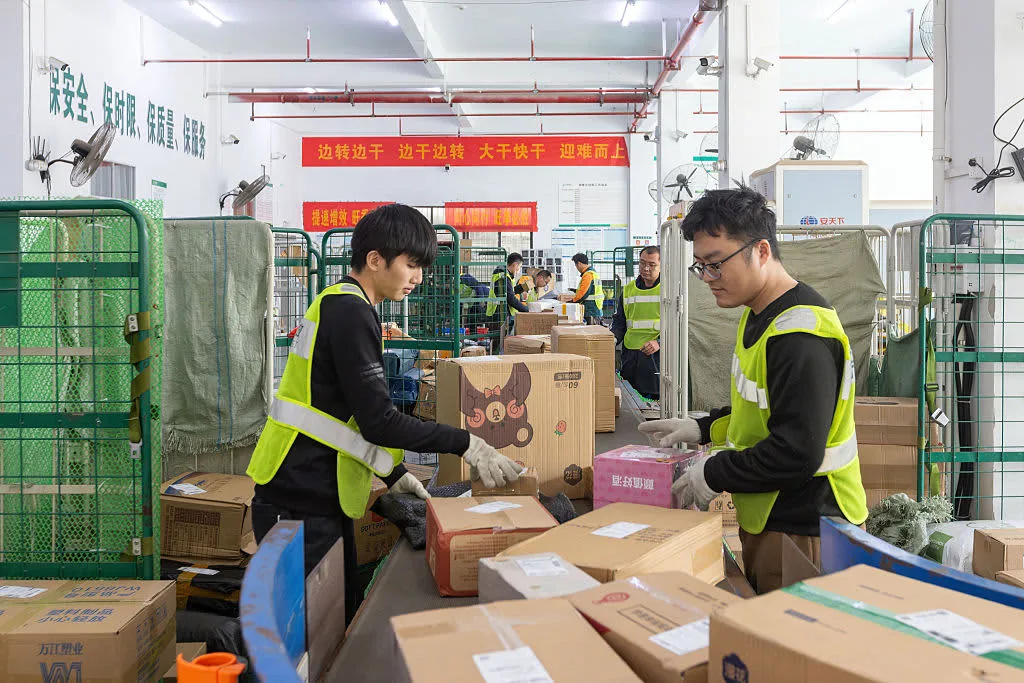
While consumption provided the floor, industrial production acted as the ceiling for early 2026 growth. Industrial output climbed by 6.3% in the first two months, significantly outpacing the 5% growth anticipated by markets. This acceleration highlights the continued strength of China’s manufacturing sector, which remains a cornerstone of the national strategy to offset the cooling real estate market. The driver behind this industrial prowess is a resilient, albeit contentious, external demand. Despite escalating trade frictions and "de-risking" rhetoric from Western capitals, China’s exports surged by nearly 22% in the January-February period. This growth was particularly concentrated in trade with Southeast Asian nations and parts of Europe, where Chinese-made green technology and electronic components continue to find receptive markets.
However, this export success is a double-edged sword. The surge in outbound shipments has reignited criticisms from major trade partners regarding China’s industrial overcapacity. Policymakers in Washington and Brussels have expressed concern that Chinese firms, supported by state-directed credit, are flooding global markets with undervalued goods to compensate for weak domestic demand. This tension suggests that while exports are currently a growth engine, they remain vulnerable to future protectionist measures and trade barriers.
The most persistent drag on the Chinese economy remains the real estate sector, which once accounted for roughly a quarter of national GDP. Fixed-asset investment, which encompasses property, infrastructure, and manufacturing, rose by 1.8% year-over-year. While this beat the more pessimistic forecasts of a contraction, the underlying data reveals a stark divergence. Investment in real estate development plummeted by 11.1% in the first two months of 2026. Although this is an improvement over the catastrophic 17.2% decline seen in 2025, it indicates that the "bottoming out" process for the property sector is proving to be long and painful.

The human cost of this crisis is reflected in home prices across 70 major Chinese cities, which saw their steepest decline in eight months this February, dropping 3.2% year-over-year. This persistent deflation in property values continues to erode household wealth, acting as a structural brake on broader consumption. To counter this, Beijing has shifted its investment focus; excluding property, fixed-asset investment rose by a healthy 5.2%. This capital is increasingly being funneled into high-tech manufacturing and strategic infrastructure, as the government attempts to transition the economy away from its historical reliance on land sales and debt-fueled construction.
As China manages these internal transitions, the external environment has become increasingly precarious. The escalating conflict in the Middle East and the potential for a war involving Iran have introduced a new layer of uncertainty. Geopolitical tensions are now cited by Chinese officials as a primary threat to national economic stability. The National Bureau of Statistics acknowledged these risks on Monday, noting that the "evolving external environment" is exerting a significant impact on domestic operations.
Central to these concerns is the security of energy supplies. A full-scale regional war could lead to the closure of the Strait of Hormuz, a critical chokepoint through which a significant portion of the world’s oil passes. However, early analysis suggests that China may be better positioned to weather such a shock than it was a decade ago. Over the past twenty years, Beijing has engaged in a massive strategic effort to diversify its energy sources and build substantial reserves. As of January 2026, China is estimated to hold 1.2 billion barrels of onshore crude oil stockpiles, a volume sufficient to cover three to four months of national demand.
Furthermore, China’s energy dependency on the Strait of Hormuz has been diluted. Seaborne oil imports through the waterway now account for less than half of China’s total oil shipments, thanks to increased pipeline capacity from Russia and Central Asia. Experts suggest that oil flowing through the Hormuz represents only about 6.6% of China’s total energy consumption when accounting for coal and renewables. While this provides a buffer against a direct energy shortage, the indirect economic consequences of a Middle Eastern conflict remain severe. Higher global energy costs would inevitably feed into inflationary pressures, disrupting global supply chains and dampening the purchasing power of China’s key trading partners.
Economists at Goldman Sachs have already begun adjusting their forecasts in response to these geopolitical shifts. The firm recently trimmed its China real GDP growth forecast for 2026 by 0.1 percentage point, citing the impact of higher energy costs. While this is a smaller reduction than those forecasted for other Asian economies, it highlights the interconnected nature of the global market. Goldman also raised its annual consumer inflation outlook for China to 0.9%, up from 0.6%, as factory-gate prices are expected to rebound on the back of rising oil costs.
The labor market also reflects this cautious environment. The urban unemployment rate stood at 5.3% in the first two months of 2026, a slight increase from the 2025 average of 5.2%. While the government has set a GDP growth target of 4.5% to 5% for the year—its most conservative goal since the early 1990s—the emphasis has clearly shifted toward stability and risk mitigation over breakneck expansion.
Looking ahead, the Chinese leadership faces a delicate balancing act. The early 2026 data suggests that the economy possesses a degree of "asymmetric resilience"—strong in manufacturing and holiday-driven consumption, but weak in property and subject to external shocks. As the year progresses, the focus will likely remain on fiscal policy interventions to support domestic demand if the Middle Eastern crisis worsens. For global markets, China’s ability to maintain its industrial momentum while insulating itself from geopolitical contagion will be the defining economic narrative of the year. The "strong footing" noted in January and February provides a necessary cushion, but the path forward remains fraught with variables that lie far beyond Beijing’s direct control.