The optimism that once defined the start of the year in global financial markets has been abruptly replaced by a sober realization: the fight against inflation is far from over. A series of hotter-than-expected economic data points, punctuated by a significant surge in wholesale inflation for February, has sent shockwaves through the corridors of Wall Street and the Federal Reserve. What was once a debate over whether the central bank would cut interest rates three or four times this year has evolved into a much more somber question: will there be any interest rate cuts at all in 2026?
The latest catalyst for this market reassessment came from the Bureau of Labor Statistics, which reported that the Producer Price Index (PPI) posted its most substantial monthly gain in over a year. As a leading indicator for consumer prices, the PPI measures the average change over time in the selling prices received by domestic producers for their output. When producers face higher costs for raw materials, energy, and labor, those costs are almost inevitably passed down the supply chain to the consumer. The February report served as a stark reminder that the "last mile" of the inflation fight—bringing the rate down to the Fed’s elusive 2% target—is proving to be the most difficult.
In the immediate aftermath of the PPI release, the futures markets, which serve as a barometer for investor sentiment regarding central bank policy, underwent a violent repricing. According to the CME Group’s FedWatch Tool, which calculates the probability of interest rate changes based on 30-day Fed Funds futures contracts, the likelihood of a rate reduction in the first half of the year has effectively evaporated. Before the recent escalation of geopolitical tensions and the release of the February inflation data, many traders had priced in a high probability of a rate cut as early as June. Those odds have now plummeted to a mere 18.4%.
The narrative of "higher for longer" has returned with a vengeance. Even expectations for the late summer and early autumn have been drastically scaled back. The probability of a cut in July now stands at roughly 31.5%, while September—previously seen as a near-certainty for an easing of monetary policy—has seen its odds fall to 43.6%. Currently, the market does not see a greater-than-50% chance of a rate reduction until the final meeting of the year in December. Even then, the conviction is shaky, with odds hovering around 60%. Historically, the Federal Reserve prefers a higher level of market certainty before making a major policy shift, suggesting that even a December cut remains a coin toss.
The headwinds facing the Federal Open Market Committee (FOMC) are multifaceted and increasingly global. While domestic service costs remain stubbornly elevated, two major external shocks have fundamentally altered the economic landscape: the imposition of new, aggressive trade tariffs and the outbreak of the Iran war on February 28. These events have created a "perfect storm" of cost-push inflation. The conflict in the Middle East, in particular, has introduced a significant risk premium into energy markets. With Iran being a pivotal player in regional stability and global oil transit, the threat of prolonged supply disruptions has sent crude oil futures climbing, threatening to reignite energy-driven inflation just as it appeared to be stabilizing.
Economists are now warning that the Fed is trapped in a difficult balancing act. Eugenio Aleman, chief economist at Raymond James, noted that the wholesale inflation reading likely reinforces a decision by the Fed to hold rates steady at its current meeting, but it also tilts the risks toward a more "hawkish" tone in the central bank’s official communications. The term "hawkish" refers to a policy stance that prioritizes fighting inflation through higher interest rates over stimulating economic growth. Aleman suggested that even if the Fed leaves rates unchanged, the messaging will likely lean toward a prolonged period of restrictive policy, especially as energy costs begin to filter through the economy in the coming months.
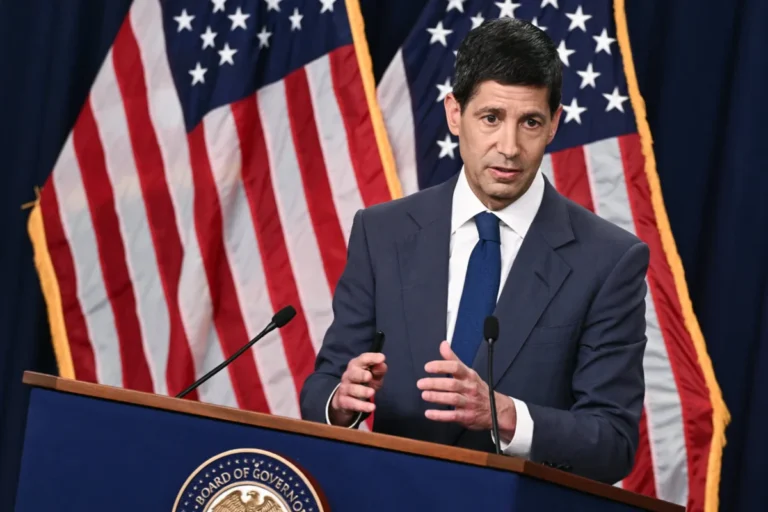
The internal dynamics of the Federal Reserve also reflect this growing uncertainty. While the majority of the committee appears inclined to maintain the current fed funds rate—which currently sits at a target level of 3.64%—there are visible cracks in the consensus. Fed Governors Stephen Miran and Christopher Waller have recently emerged as vocal advocates for immediate cuts, pointing to signs of softening in the labor market. February saw a notable increase in job losses in certain sectors, leading some to argue that the Fed risks keeping policy too tight for too long, potentially triggering a deeper recession than necessary.
However, the prevailing view among the FOMC leadership remains cautious. The "dual mandate" of the Federal Reserve—to promote maximum employment and stable prices—is currently in a state of tension. If the Fed cuts rates too early to save jobs, it risks letting inflation spiral out of control, particularly with the added pressure of war-related energy shocks and tariff-induced price hikes. If it waits too long, the labor market could deteriorate beyond the point of a "soft landing."
From a global perspective, the Federal Reserve’s predicament is being mirrored elsewhere, though with varying degrees of intensity. In Europe, central banks are grappling with their own stagflationary pressures, though the impact of the Iran war is felt more acutely there due to a higher reliance on imported energy. The divergence in policy between the Fed and other major central banks could lead to significant volatility in the currency markets. A "higher for longer" stance in the United States typically strengthens the dollar, which can have the side effect of exporting inflation to other countries by making their imports more expensive.
For the corporate sector, the delay in rate cuts has tangible consequences. Many businesses that had planned for capital expenditures or debt refinancing in the second half of 2026 are now having to rethink their strategies. High borrowing costs continue to squeeze profit margins, particularly for small and medium-sized enterprises that lack the cash reserves of multinational giants. Furthermore, the housing market remains in a state of semi-paralysis; mortgage rates, which track the yield on the 10-year Treasury note, are unlikely to see significant relief as long as the Fed remains on hold.
The market’s implied trajectory for interest rates now suggests a fed funds rate of 3.43% by the end of 2026, a marginal decrease from the current 3.64%. This represents a significant shift from the start of the year, when investors were betting on a much more aggressive easing cycle. The volatility in fed funds futures highlights the precariousness of the current economic forecast.
As the FOMC prepares to release its latest interest rate decision and updated "dot plot" of economic projections, all eyes will be on Chairman Jerome Powell’s press conference. Investors will be searching for any clues as to how the committee is weighing the recent geopolitical developments against the domestic inflation data. Will the Fed acknowledge the need for a "geopolitical buffer" in its policy, or will it remain laser-focused on the monthly data prints?
Ultimately, the February PPI report has served as a wake-up call. It has dismantled the narrative that the path back to price stability would be linear and predictable. With a war in the Middle East adding a layer of complexity to the global supply chain and domestic services costs refusing to budge, the Federal Reserve finds itself in one of the most challenging environments of the post-pandemic era. For now, the "pivot" to lower rates remains a distant prospect, a casualty of a world that remains stubbornly expensive and increasingly volatile.