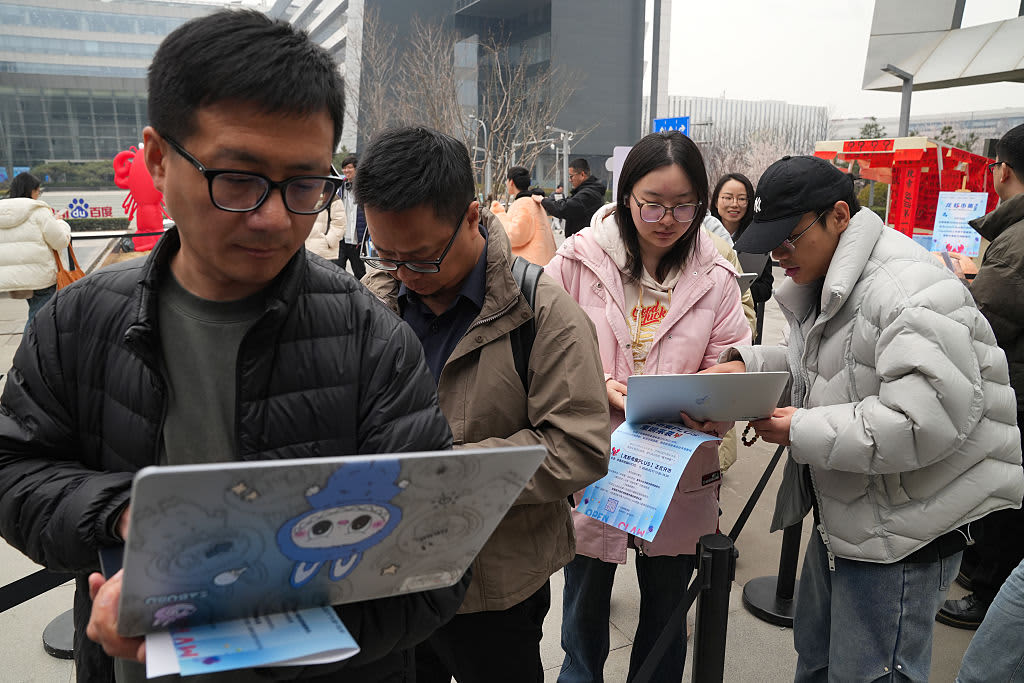
In the bustling technology hubs of Beijing and Shenzhen, a new consumer phenomenon is upending the traditional economics of the secondhand electronics market. While the global tech industry has spent the last two years focused on large language models (LLMs) and generative chatbots, a more autonomous evolution—the AI agent—has taken hold of the Chinese mainland with unprecedented velocity. At the center of this whirlwind is OpenClaw, an open-source AI agent that has become so pervasive that it is now a primary driver of hardware valuations, specifically causing a localized price surge for preowned Apple MacBooks that defies standard seasonal depreciation.
The rise of OpenClaw represents a shift from "passive" AI, which merely responds to prompts, to "agentic" AI, which can autonomously execute tasks. These agents can manage schedules, navigate e-commerce platforms to find the best deals, and even draft and send complex professional correspondence with minimal human intervention. However, this level of autonomy requires deep system integration, creating a unique hardware dilemma for users. Because OpenClaw requires permission to interact with sensitive data and system-level functions to operate effectively, it introduces a significant security paradox: to be useful, the agent must be powerful, but to be powerful, it must be granted access that could, if compromised, expose a user’s entire digital life.
This security anxiety has birthed a "secondary device" culture in China. Rather than installing OpenClaw on their primary workstations or personal laptops containing banking details and private credentials, thousands of early adopters are seeking out dedicated "AI machines." This trend has funneled a massive amount of consumer demand into the refurbished and used computer market, specifically targeting Apple’s Mac lineup due to its superior power efficiency and the robust local processing capabilities of its proprietary silicon.
Jeremy Ji, the chief strategy officer and general manager of international business at ATRenew—a leading player in China’s circular economy that maintains strategic partnerships with Apple and JD.com—observes that this demand is fundamentally altering the price lifecycle of consumer electronics. Under normal market conditions, the price of used electronics in China follows a predictable downward trajectory in the spring, typically bottoming out before the hype of autumn product launches. This year, however, the "OpenClaw fever" has effectively frozen that decline. From March through May, ATRenew has maintained pricing for Apple products at levels usually reserved for the peak fall season. The typical spring discount has vanished, replaced by a competitive bidding environment for high-quality used hardware.

The economics of this surge are particularly visible in the narrowing gap between new and used hardware. Ji notes that while a brand-new MacBook typically commands a 15% premium over a certified preowned model, the sheer volume of buyers looking for "sandboxed" AI machines has kept the resale value of the M-series MacBooks remarkably resilient. The demand is not just for any laptop; it is specifically for Apple’s M1 through M5 chips. The architectural efficiency of Apple Silicon allows these devices to run local AI agents with less heat and better battery performance than many contemporary Windows-based competitors, making the Mac Mini and the MacBook Air the preferred "engines" for the OpenClaw ecosystem.
This shift in consumer behavior is not happening in a vacuum. Data from international cybersecurity firm SecurityScorecard indicates that OpenClaw adoption in China is currently outstripping that in the United States. While American users have been more cautious or perhaps more focused on cloud-based solutions like OpenAI’s GPT-4, the Chinese market has embraced the open-source nature of OpenClaw. The software, originally launched by Austrian developer Peter Steinberger in late 2025, found its most fertile ground when Chinese tech behemoths like Tencent and Baidu began integrating or promoting it as a gateway to their broader service ecosystems. By using OpenClaw as a tool to attract users to their platforms, these giants have effectively institutionalized the AI agent in the Chinese digital consciousness.
The scale of this adoption is reflected in the logistics of the secondary market. ATRenew, which processes roughly 100,000 devices per day, expects the share of laptops and personal computers in its business mix to climb from 15% to 20% in the coming months. This is a significant pivot for a company that has historically been dominated by smartphone trade-ins. The shift suggests that the AI agent is not just a software trend but a hardware catalyst that could redefine the "essential" tech stack for the average consumer.
The global semiconductor industry is also feeling the ripples of this trend. Jensen Huang, CEO of Nvidia, recently characterized OpenClaw as "definitely the next ChatGPT," labeling it the most successful open-source project in human history. This endorsement from the world’s leading AI chipmaker underscores the technological weight behind the movement. As AI agents require substantial memory to process real-time tasks, the surge in demand has contributed to a broader spike in memory chip prices globally. This, in turn, has created a secondary economic effect: as the price of new, high-spec Android flagship phones rises due to component costs, more Chinese consumers are opting for used iPhones, further cementing Apple’s dominance in the high-end secondary market.
The geopolitical and economic implications of this trend are multifaceted. First, it demonstrates that China is moving rapidly toward an "AI-first" consumer economy, where software utility dictates hardware value. Second, it highlights the growing importance of the "circular economy" in the tech sector. As new hardware becomes more expensive due to supply chain pressures and high demand for AI-capable chips, the ability to refurbish and redistribute older but capable machines—like those featuring the M1 or M2 chips—becomes a vital economic stabilizer.

Furthermore, the OpenClaw phenomenon illustrates a divergence in how global populations manage digital risk. While Western markets often wait for "walled garden" solutions from major tech providers that promise integrated security, the Chinese market has shown a preference for a "hardware-segregated" approach—simply buying another machine to isolate the risk. This "burner laptop" strategy for AI experimentation is a pragmatic, if costly, solution to the inherent vulnerabilities of autonomous agents.
Looking ahead, the sustainability of this price surge depends on the continued evolution of OpenClaw and its competitors. If AI agents become more integrated into the core operating systems of our primary devices—as Apple and Microsoft are currently attempting—the need for a separate "AI machine" may diminish. However, for the foreseeable future, the "air-gapped" or segregated hardware model remains the gold standard for security-conscious power users.
For investors and market analysts, the ATRenew data serves as a leading indicator of a broader shift. The fact that a single open-source software project can influence the resale value of hardware across a nation of 1.4 billion people is a testament to the transformative power of agentic AI. It is no longer enough to track how many people are downloading an app; analysts must now track how that app influences the physical supply chain of the devices required to run it.
In the short term, the used MacBook has become a form of "AI currency" in China. With Jeremy Ji predicting that the demand will remain strong throughout the year, the typical cycles of the consumer electronics market have been permanently disrupted. The "OpenClaw Effect" is a preview of a future where the value of our physical tools is inextricably linked to the autonomous software agents we choose to let run upon them. As the world watches China’s rapid adoption, the secondary market for electronics may never return to its "pre-AI" state of predictable, steady depreciation. Instead, we are entering an era of "utility-driven valuation," where the ability to safely house an AI agent is the most valuable feature a piece of hardware can offer.