The Federal Open Market Committee (FOMC) concluded its latest two-day policy gathering on Wednesday by electing to keep the benchmark federal funds rate within the 3.5% to 3.75% range. This decision, while widely anticipated by institutional investors and economists, reflects a central bank caught between the competing pressures of resilient domestic growth, persistent inflationary "stickiness," and a volatile new geopolitical crisis in the Middle East. By an 11-1 margin, the committee opted for stability over movement, signaling that while the tightening cycle may have reached its zenith, the path toward monetary easing remains fraught with obstacles that did not exist even a month ago.
The primary catalyst for this cautious stance is the outbreak of hostilities involving Iran, a conflict that began nearly three weeks ago and has already sent tremors through global commodity markets. Central to the Fed’s concern is the potential for prolonged disruption in the Strait of Hormuz, a vital maritime artery through which approximately one-fifth of the world’s total petroleum consumption passes. The resulting spike in crude oil prices has immediate downstream effects on U.S. consumer prices, particularly at the gas pump, threatening to undo months of progress in bringing the Personal Consumption Expenditures (PCE) price index back toward the Fed’s 2% target.
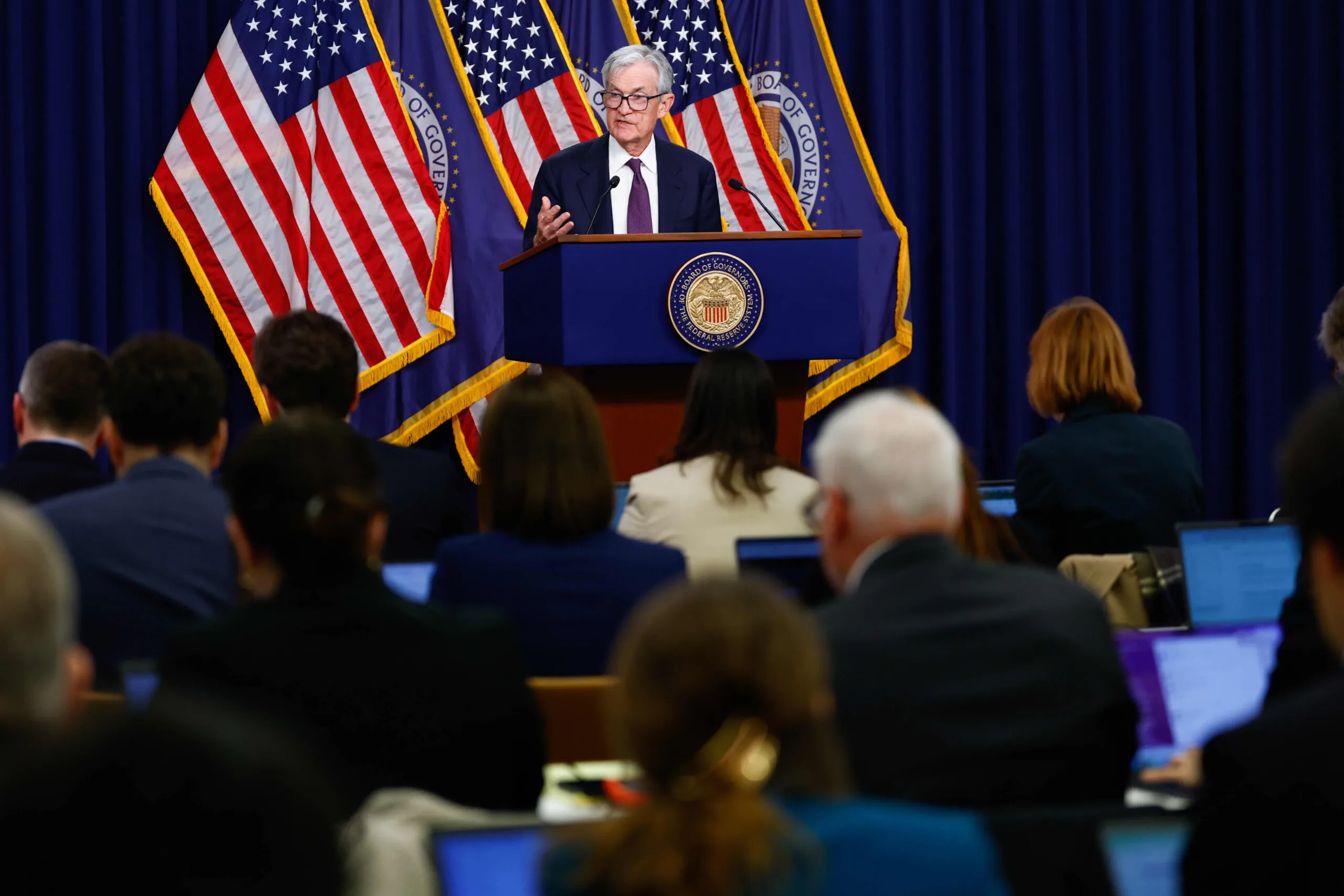
In his post-meeting press conference, Federal Reserve Chair Jerome Powell adopted a tone of strategic ambiguity, acknowledging that the "implications of developments in the Middle East for the U.S. economy are uncertain." Powell noted that while the direct impact on American domestic demand might be limited, the supply-side shock to energy markets is already influencing inflation expectations. "Near-term measures of inflation expectations have risen in recent weeks," Powell told reporters, "likely reflecting the substantial rise in oil prices caused by the supply disruptions." This shift in expectations is a critical metric for the Fed; if consumers and businesses begin to price in higher future inflation, it can become a self-fulfilling prophecy, necessitating a even more restrictive monetary policy for a longer duration.
The internal dynamics of the committee also revealed a growing divergence in how policymakers view the risks to the labor market versus the risks of inflation. Governor Stephen Miran cast the lone dissenting vote, advocating for a 25-basis-point cut. Miran’s stance is rooted in a concern that the Fed may be waiting too long to pivot, potentially ignoring cracks in the employment sector that have been masked by top-line economic strength. Conversely, Governor Christopher Waller, who had previously leaned toward a more accommodative stance in January, rejoined the majority in voting for a hold. This shift suggests that even the more "dovish" members of the board are becoming wary of the inflationary pressure exerted by the current energy shock.
Despite the immediate pressures of the war, the Fed’s updated Summary of Economic Projections (SEP) paints a picture of a remarkably resilient American economy. The committee revised its 2024 Gross Domestic Product (GDP) growth forecast upward to 2.4%, a notable increase from the 2.1% projected in December. Growth for 2027 was also adjusted higher to 2.3%. However, this resilience comes at a cost: the Fed now expects both headline and core PCE inflation to end the year at 2.7%, up from previous estimates. The "dot plot"—the visual representation of where individual members expect rates to be in the future—indicated that while the median expectation is for one rate reduction before the end of 2024, seven of the nineteen participants now expect no cuts at all this year. This is a significant hawkish shift from the December update, where only six members favored a prolonged hold.
The market response to the Fed’s announcement was one of tempered disappointment. Major stock indices, which had been trading in a narrow range prior to the statement, dipped to session lows as investors digested the reality that the "higher for longer" mantra is likely to persist through the summer. The yield on the 10-year Treasury note saw a modest uptick, reflecting the market’s recalibration of the timing for the first rate cut. Earlier in the year, futures markets were aggressively pricing in multiple reductions starting as early as March; those expectations have now been pushed back significantly, with many analysts now eyeing late autumn or even early 2027 for a meaningful policy shift.

Adding a layer of unprecedented complexity to the Fed’s technical mission is a brewing political and legal storm in Washington. Former President Donald Trump, currently campaigning for a return to the White House, has maintained a steady drumbeat of criticism against Chair Powell. Trump has publicly demanded immediate rate cuts to stimulate the economy, accusing the Fed of political bias for not acting more aggressively. This week, the rhetoric escalated as Trump criticized Powell for failing to call an emergency meeting to address what he characterized as an "economic crisis" exacerbated by the Iran conflict.
The succession plan for the Fed leadership has also become a focal point of partisan friction. With Powell’s term as Chair set to expire in May, Trump has already named former Fed Governor Kevin Warsh as his preferred successor. Warsh, known for his deep ties to Wall Street and a history of advocating for market-friendly policies, has signaled a general preference for lower rates, though he has remained largely silent on the specific challenges posed by the current geopolitical climate.
However, Warsh’s path to confirmation is currently blocked by a bizarre legal entanglement involving the Department of Justice and the Fed’s internal administrative affairs. U.S. Attorney Jeanine Pirro has issued subpoenas for Chair Powell regarding a multibillion-dollar renovation of the Federal Reserve’s headquarters in Washington, D.C. Powell has resisted these subpoenas, with a federal judge recently ruling in his favor, describing the legal move as a transparent attempt to exert political pressure on the central bank’s independent monetary policy decisions. Pirro has vowed to appeal the ruling, and the situation has led Senator Thom Tillis to vow a block on Warsh’s nomination until the investigation into Powell is resolved.
This standoff creates a potential vacuum in leadership. Powell has made it clear that he has no intention of stepping down until the investigation is concluded with "transparency and finality," even if his term officially ends. "I will make that decision based on what I think is best for the institution and for the people we serve," Powell stated during his press conference, leaving open the possibility that he could remain on the Board of Governors until his separate board term expires in 2028.
On the global stage, the Fed’s decision to hold rates steady places it in a different rhythm than some of its international peers. While the European Central Bank (ECB) and the Bank of England are facing similar inflationary pressures from the Middle East conflict, their domestic growth profiles are significantly weaker than that of the United States. This "American exceptionalism" in economic growth allows the Fed more room to keep rates high to fight inflation, but it also strengthens the U.S. Dollar, which can create headaches for emerging markets burdened with dollar-denominated debt.
As the second half of the year approaches, the Federal Reserve finds itself navigating a "perfect storm" of economic variables. The resilience of the U.S. consumer and the tightness of the labor market—evidenced by a projected 4.4% unemployment rate—provide a buffer against a recession, but they also provide the fuel for persistent inflation. When coupled with a sudden energy war and an increasingly litigious political environment, the Fed’s "data-dependent" approach will be tested like never before. For now, the message from the central bank is one of watchful waiting, as they hope that the geopolitical fires in the Middle East do not ignite a new, uncontrollable inflationary spiral at home.