The Federal Open Market Committee (FOMC) concluded its most recent policy meeting this week against a backdrop of geopolitical volatility and economic crosscurrents that have arguably made the central bank’s mandate more complex than at any point in the last half-century. While the decision to maintain the federal funds rate at its current restrictive level was widely anticipated by global markets, the nuances of the Fed’s communication revealed a central bank grappling with a "new normal" defined by external shocks rather than internal cyclicality. As the United States remains embroiled in a direct conflict with Iran, the traditional tools of monetary policy are being tested by an environment where the price of crude oil is dictated by missile strikes rather than consumer demand.
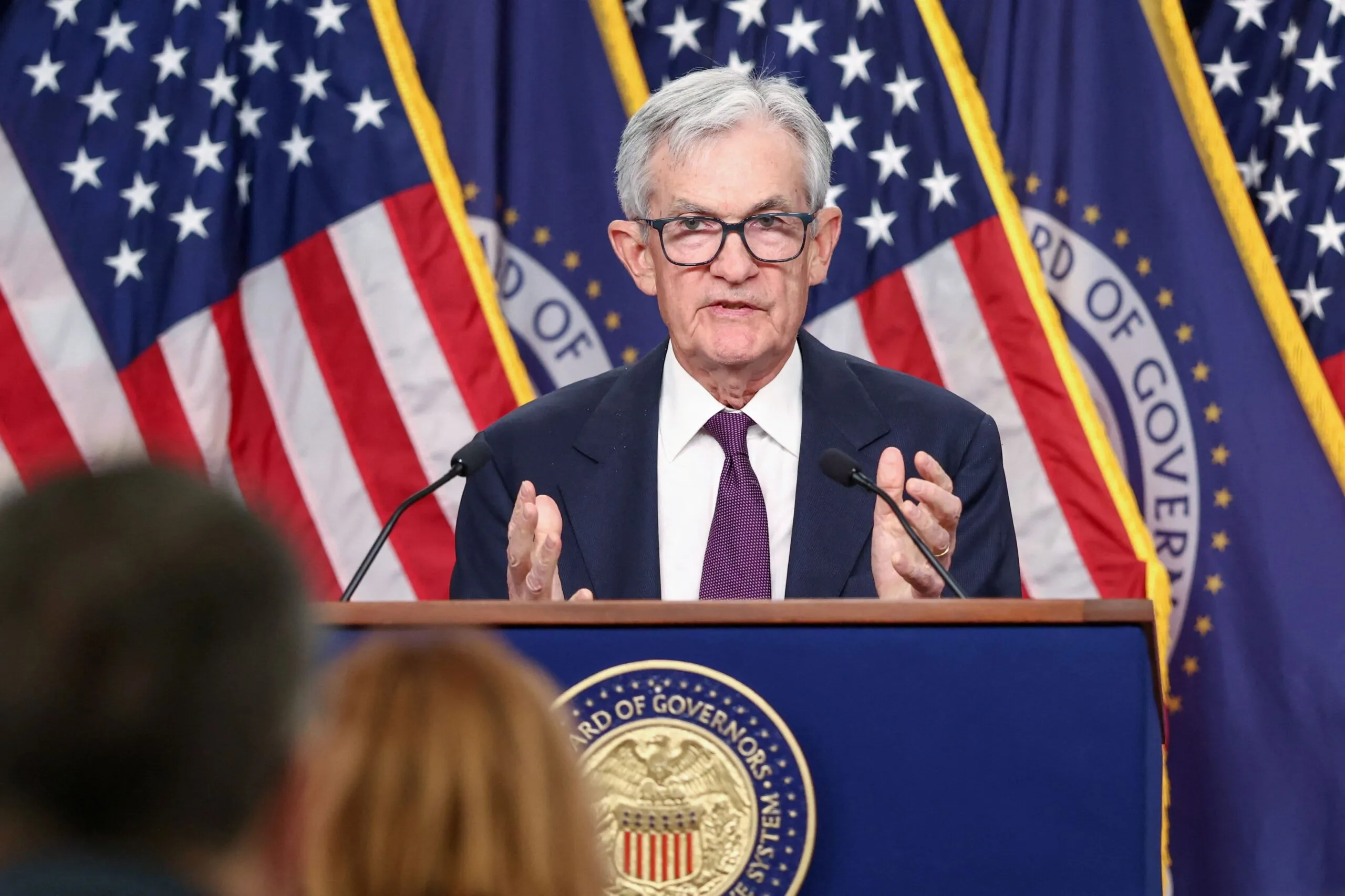
Federal Reserve Chair Jerome Powell’s post-meeting press conference was a masterclass in cautious rhetoric, but the underlying tension was palpable. The primary takeaway from the proceedings was a pervasive sense of "unveiled uncertainty." For months, investors have sought a clear timeline for the pivot toward a more accommodative stance. Instead, they were met with a policy statement that underwent only surgical revisions and a Summary of Economic Projections that signaled a Fed in no hurry to retreat from its hawkish fortress. Powell utilized the word "uncertain" or its derivatives more than half a dozen times, effectively signaling to the markets that the "data-dependent" mantra has evolved into a "crisis-dependent" one.
The shadow of the ongoing war with Iran looms largest over the Eccles Building. For the Fed, the conflict represents the ultimate exogenous shock—one that hits the supply side of the economy with surgical precision while leaving the demand side in a state of nervous suspension. Powell acknowledged the near-impossibility of modeling economic outcomes when global energy corridors are under threat. The recent spike in oil prices, which has seen Brent crude hover stubbornly above the $100-a-barrel mark, acts as a regressive tax on consumers while simultaneously fueling the very inflation the Fed is sworn to combat. Powell’s admission that "nobody knows" the ultimate magnitude of the economic effects of the war underscores a rare moment of vulnerability for a chair who usually projects an image of data-driven certainty.
The internal rift within the FOMC is becoming increasingly visible through the lens of the "dot plot," the quarterly chart that maps out each official’s expectations for the future of interest rates. While the median forecast still suggests one modest 25-basis-point cut by the end of 2026 and another in 2027, the dispersion of the dots reveals a committee that is far from a consensus. The projections for 2027, in particular, resemble a scattergraph of economic anxiety. One official is calling for a rate hike, three favor holding steady, and the remainder are split between one and five cuts. This lack of a unified front suggests that the Fed is internally debating whether the current inflation is a temporary byproduct of war-related energy shocks or a structural shift in the global economy that requires rates to remain "higher for longer."
Complicating this internal debate is the looming leadership transition at the central bank. Powell’s tenure as Chair is nearing its conclusion, but his future remains entangled in an ongoing investigation and the sluggish pace of the political confirmation process for his successor. During the news conference, Powell reiterated that he would remain in his post as long as the investigation persists and until a successor—widely rumored to be former Governor Kevin Warsh—is confirmed by the Senate. This period of "pro tem" leadership creates a unique vacuum of authority. Investors are left wondering if the current policy path is a legacy of the Powell era or a bridge to a potentially more hawkish Warsh administration. Stephen Coltman, head of macro at 21shares, noted that the committee likely prefers to "do as little as possible" to avoid destabilizing the markets before a new chair takes the helm.

One of the most significant rhetorical battles of the week centered on the term "stagflation." For months, market bears have argued that the U.S. is entering a 1970s-style malaise, characterized by stagnant growth and persistent inflation. Powell, however, explicitly rejected this characterization. He pointed to a labor market that, while cooling, remains resilient, and an economy that continues to grow at a respectable pace despite the headwinds of high interest rates and energy costs. To Powell, "stagflation" is a term reserved for the double-digit unemployment and rampant price spirals of the Volcker era. Yet, critics argue that "anemic" hiring rates combined with inflation that has stayed above the Fed’s 2% target for five consecutive years suggests the comparison might be more apt than the Chair is willing to admit.
The economic impact of the Fed’s hesitation is being felt across the globe. As the U.S. maintains its restrictive stance, the dollar remains dominant, putting immense pressure on emerging markets and complicating the policy paths of the European Central Bank (ECB) and the Bank of England. The "higher for longer" reality in Washington means that other central banks must risk either devaluing their currencies by cutting rates early or stifling their own growth by following the Fed’s lead. This global synchronization of restrictive policy is heightening the risk of a synchronized global slowdown.
Market participants are also adjusting to the reality that the Fed’s dual mandate—maintaining price stability and maximum employment—is currently in conflict. While inflation remains the primary enemy, the "anemic" hiring mentioned by several analysts suggests that the labor market may be more fragile than the headline unemployment rate indicates. Felix Aidala, an economist at Indeed, warned that the Fed is often making decisions based on "weeks- or months-old data" that may not reflect the rapid shifts occurring in a wartime economy. The risk of a "policy error"—waiting too long to cut rates and inadvertently triggering a deep recession—is now a central theme of Wall Street’s concerns.
From an investment perspective, the Fed’s "wait and see" approach has created a bifurcated market. On one hand, the lack of immediate rate hikes provides some relief to equity markets; on the other, the lack of a clear path toward cuts keeps borrowing costs high for corporations and homeowners alike. Gina Bolvin, president of Bolvin Wealth Management Group, suggested that the Fed’s comfort with waiting should be a signal to investors to remain flexible. The message is clear: the era of predictable, incremental policy shifts is over, replaced by a period where geopolitical headlines are just as important as the Consumer Price Index.
Looking forward, the Fed’s path is obscured by factors outside its control. If the conflict in the Middle East escalates, further disrupting global supply chains and energy markets, the Fed may be forced to choose between supporting a flagging economy or fighting a new wave of cost-push inflation. If the conflict de-escalates, the "dot plot" could shift toward a more aggressive cutting cycle as the energy premium evaporates. For now, however, the central bank is essentially in a defensive crouch.
In summary, the most recent Fed meeting was less about what the committee did and more about what it cannot do. It cannot control the price of oil, it cannot predict the duration of a war, and it cannot provide certainty in an inherently uncertain world. By holding rates steady and maintaining a flexible, if fractured, outlook for the future, the Fed is attempting to buy time. Whether that time will be used to engineer a soft landing or merely delay an inevitable reckoning remains the trillion-dollar question for the global economy. As Jerome Powell prepares to eventually pass the baton, he leaves behind a central bank that is more powerful than ever, yet seemingly more at the mercy of global events than at any time in its history.