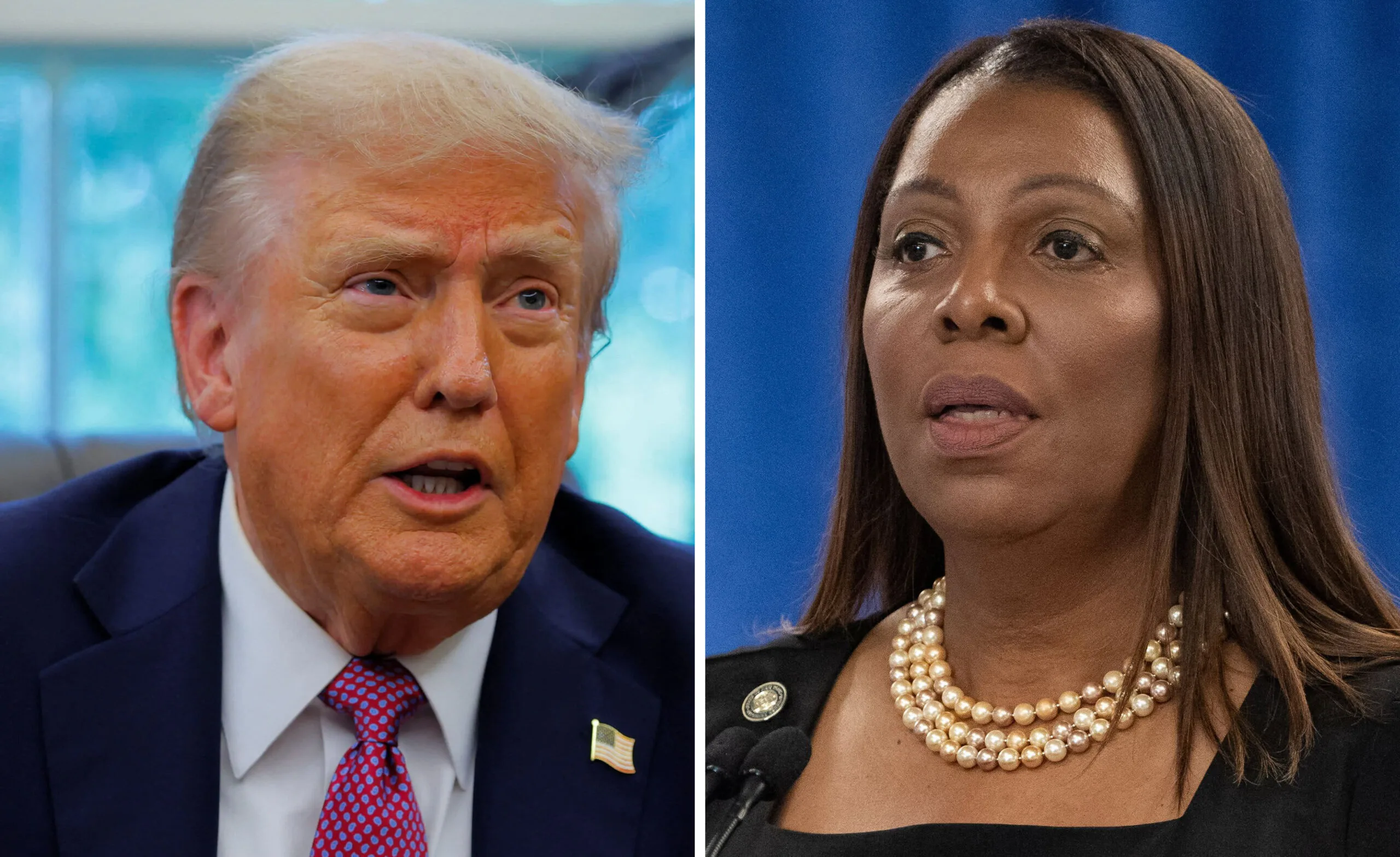
New York Attorney General Letitia James, leading a robust coalition of 24 states, has launched a high-stakes legal challenge against the federal government’s latest attempt to impose a sweeping global tariff regime. The lawsuit, filed in the U.S. Court of International Trade, marks a significant escalation in the ongoing constitutional struggle between the executive branch and state leaders over the limits of presidential authority in international commerce. This legal maneuver comes just days after the Supreme Court of the United States delivered a stinging rebuke to the administration, striking down a previous iteration of the "Liberation Day" tariffs that had sent shockwaves through global markets.
The heart of the new litigation centers on the administration’s rapid pivot to Section 122 of the Trade Act of 1974. After the Supreme Court ruled that the use of the International Emergency Economic Powers Act (IEEPA) was an improper mechanism for broad-based duties, the White House immediately invoked Section 122 to sustain its protectionist agenda. Currently, this global tariff is set at a baseline of 10%, though Treasury officials have signaled an imminent escalation to 15%. The coalition of state prosecutors argues that this move is not merely a policy disagreement but a calculated "end run" around the highest court in the land, designed to bypass the legislative branch’s constitutional prerogative to levy taxes and regulate foreign trade.
From an economic perspective, the reintroduction of these tariffs threatens to reignite inflationary pressures that have only recently begun to stabilize. By taxing nearly all imported goods, the administration is effectively implementing a consumption tax that falls disproportionately on American households and small businesses. Economists warn that a 15% blanket tariff could lead to a significant rise in the Consumer Price Index (CPI), as retailers and manufacturers pass these costs directly to the public. For industries reliant on complex global supply chains—such as automotive manufacturing, consumer electronics, and pharmaceuticals—the uncertainty created by shifting legal frameworks is as damaging as the duties themselves.
Attorney General Letitia James has been vocal about the potential for "economic chaos" resulting from these policies. In statements regarding the filing, James emphasized that the administration is ignoring the separation of powers to foot American consumers with the bill for a protectionist experiment. The coalition’s argument is rooted in the specific history of the Trade Act of 1974. They contend that Section 122 was never intended to be a permanent tool for trade rebalancing. Instead, it was drafted as a narrow provision to address specific monetary crises and balance-of-payment emergencies during the era when the United States was transitioning away from the gold standard. Applying it as a broad, permanent trade barrier, they argue, is a gross misinterpretation of congressional intent.
The White House, however, remains undeterred. Spokesmen for the administration have defended the tariffs as a necessary tool to address "fundamental international payments problems" and to narrow the nation’s persistent trade deficit. The administration views the 10% to 15% levies as a lever to force trading partners to the negotiating table and to protect domestic manufacturing from what it characterizes as predatory foreign competition. This "America First" economic strategy views the deficit not just as a statistical imbalance, but as a transfer of national wealth that must be halted through executive action.
The legal battle is further complicated by the fallout from the Supreme Court’s previous ruling. On Wednesday, a federal court confirmed that companies which paid the now-invalidated IEEPA tariffs are entitled to billions of dollars in refunds. This creates a massive fiscal liability for the U.S. Treasury and adds a layer of urgency to the states’ lawsuit. If the current Section 122 tariffs are also found to be illegal, the government could face a cumulative refund bill that reaches into the hundreds of billions, potentially destabilizing federal budget projections for years to come.

Market volatility has already reflected the deepening rift between the states and the federal government. Investors in multinational corporations are increasingly concerned about retaliatory measures from major trading blocs like the European Union and China. History suggests that global tariffs are rarely unilateral; they often trigger a "tit-for-tat" cycle of protectionism. During the 2018-2019 trade disputes, U.S. agricultural exports—particularly soybeans and pork—suffered significantly as foreign governments targeted American farmers in response to industrial tariffs. The 24-state coalition includes several regions with high agricultural and manufacturing output, where the threat of foreign retaliation looms large.
Furthermore, the lawsuit highlights a deeper ideological divide regarding the "non-delegation doctrine"—the principle that Congress cannot hand over its core legislative powers to the executive branch. By claiming the authority to set tax rates at the border via executive order, the administration is testing the boundaries of Article I, Section 8 of the Constitution. Legal scholars note that if the Court of International Trade upholds the administration’s use of Section 122, it would represent one of the most significant shifts of economic power from the Capitol to the White House in the modern era.
The friction between Attorney General James and the administration is not limited to trade policy. The legal landscape is shadowed by a series of personal and political entanglements. James has been a consistent antagonist to the President’s agenda, while the Department of Justice previously pursued an indictment against her on charges of bank fraud—charges that were ultimately dismissed by a judge and rejected by two separate grand juries. This history of litigation adds a layer of political theater to a case that is, at its core, about the fundamental mechanics of the American economy.
Beyond the domestic legal fray, the international community is watching the proceedings with bated breath. The World Trade Organization (WTO) has long struggled to maintain its "Most Favored Nation" principle in an era of rising nationalism. If the United States—the architect of the post-WWII liberal trade order—continues to move toward a permanent, high-tariff regime, it could signal the definitive end of the globalization era. Trade analysts suggest that a 15% global tariff would likely lead to a "de-coupling" of economies, where regional trade blocs become more insular, potentially reducing the overall efficiency of global markets and slowing the pace of innovation.
Small businesses, often the most vulnerable to price fluctuations, are already reporting distress. Unlike large conglomerates that can absorb costs or shift production to different countries, small enterprises often have fixed suppliers and thin margins. A 10% increase in the cost of raw materials or components can be the difference between profitability and bankruptcy. The states’ lawsuit explicitly mentions the burden on these smaller entities, arguing that the federal government is effectively picking winners and losers in the domestic market through arbitrary trade barriers.
As the case moves forward in the Court of International Trade, the primary question will be whether the executive branch has overstepped its delegated authority. The 24 states represent a diverse array of economic interests, from the financial hubs of the Northeast to the industrial centers of the Midwest. Their unified front suggests that the opposition to the tariff regime is not merely partisan, but reflects a deep-seated concern about the long-term health of the American economy and the integrity of the constitutional order.
In the coming months, the judicial system will be tasked with reconciling the President’s broad claims of national security and economic emergency with the statutory limitations set by Congress decades ago. The outcome of this case will likely dictate the trajectory of U.S. trade policy for a generation. Whether the result is a return to a more traditional, legislatively-led trade strategy or the solidification of a permanent "tariff-first" executive branch, the implications for the global economy could not be higher. For now, businesses and consumers remain in a state of precarious limbo, waiting to see if the courts will once again check the administration’s ambitions or allow a new era of protectionism to take firm root.