Beijing has signaled a high degree of confidence in its national energy security, dismissing concerns that a widening conflict in the Middle East could paralyze the Chinese economy. As the war involving Iran continues to obstruct one of the world’s most vital maritime arteries, the Strait of Hormuz, the Chinese government is doubling down on its narrative of "energy self-reliance." This stance comes at a delicate diplomatic juncture, as U.S. President Donald Trump has publicly pressured China to take a more active role in securing the waterway, even suggesting that his upcoming high-stakes summit in Beijing could be delayed if the People’s Republic does not contribute to regional stability.
The official response from Beijing has been one of calculated calm. Fu Linghui, a spokesperson for the National Bureau of Statistics (NBS), characterized the nation’s energy supply as "relatively strong" during a recent briefing. Fu emphasized that China’s diversified energy portfolio and robust domestic reserves provide a "relatively good" foundation for weathering the current storm of external market volatility. To bolster this claim, the NBS released data showing that domestic crude oil production rose by 1.9% year-on-year during the first two months of the year, reaching a total of 35.73 million metric tons. This marginal but steady growth is part of a broader, years-long strategy by Beijing to reduce its vulnerability to the "Malacca Dilemma" and other potential maritime blockades.
However, the calm exterior in Beijing contrasts sharply with the escalating rhetoric coming from the White House. President Trump has framed China’s involvement in the Hormuz crisis not as an option, but as an obligation. Arguing from a transactional perspective, the President asserted that because China is a primary beneficiary of Middle Eastern crude, it should bear a proportionate share of the security burden. According to reports, the Trump administration has linked the restoration of oil flows through the strait to the success of bilateral diplomatic engagements, casting a shadow over the planned end-of-month summit. The implication is clear: Washington is no longer willing to act as the sole guarantor of maritime security for routes that primarily fuel its greatest economic rival.
The friction is exacerbated by a significant discrepancy in how both nations calculate China’s dependency on the Strait of Hormuz. President Trump has claimed that China receives nearly 90% of its oil via the waterway—a figure that would suggest an existential threat to the Chinese economy should the strait remain closed. Independent energy analysts and market data firms, however, present a much more nuanced picture. While the strait is undeniably critical, estimates suggest it accounts for approximately 40% to 50% of China’s seaborne oil imports. When calculated against China’s total primary energy consumption—which includes its massive domestic coal production, nuclear power, and the world’s largest renewable energy fleet—the oil flowing through Hormuz represents only about 6.6% of the nation’s total energy mix.
This statistical divide highlights a broader shift in global energy dynamics. Over the last decade, China has aggressively diversified its energy sources to mitigate the very risks currently manifesting in the Persian Gulf. Through the construction of massive overland pipelines from Russia and Central Asia, Beijing has created "energy land bridges" that bypass vulnerable maritime chokepoints. Furthermore, China’s strategic pivot toward electric vehicles (EVs) and high-speed rail has begun to decouple its economic growth from the fluctuating prices of the global oil market, although the transition remains a work in progress.
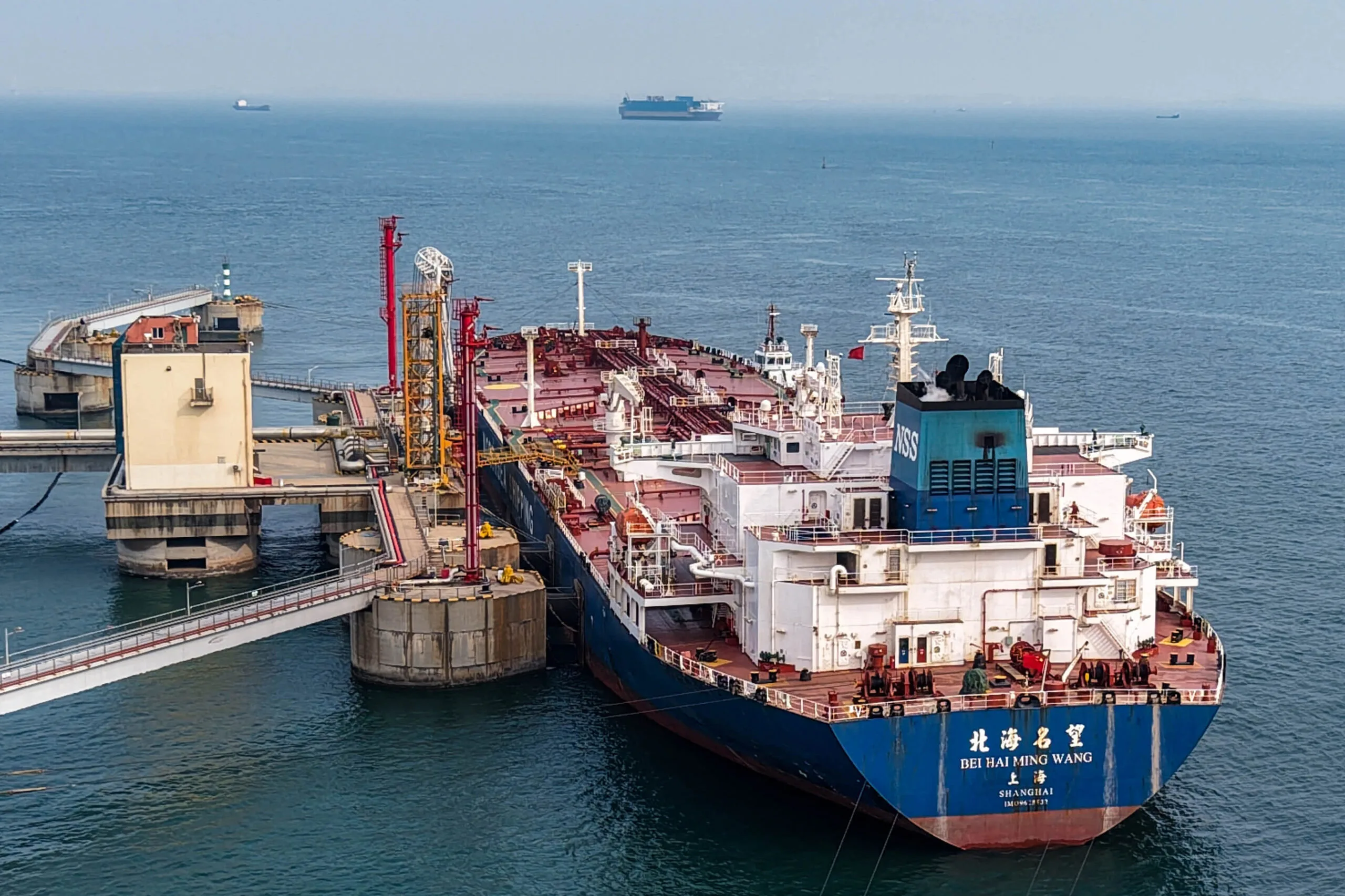
Despite the war, the relationship between Tehran and Beijing appears to have granted China a unique advantage. While most global tankers have avoided the Strait of Hormuz due to prohibitive insurance premiums and the threat of kinetic strikes, Iranian vessels have continued to move. Reports indicate that Iran has delivered more than 11 million barrels of crude to Chinese ports in the two weeks since the conflict began. This "special channel" underscores the deep-seated strategic partnership between the two nations, codified in their 25-year comprehensive cooperation agreement. For Beijing, this flow of oil serves as a vital lifeline; for Tehran, it provides essential hard currency at a time when other markets are effectively shuttered.

The economic stakes of the current crisis are reflected in the global commodities markets, where crude oil prices have surged past the $100-a-barrel threshold. This is the highest level seen in nearly four years, sparking fears of a global inflationary spiral. For China, the world’s largest oil importer, sustained prices at this level could threaten its manufacturing margins and export competitiveness. However, Beijing possesses a formidable "insurance policy" in the form of its Strategic Petroleum Reserve (SPR). As of early this year, China held an estimated 1.2 billion barrels of onshore crude stockpiles. This massive reserve, one of the largest in human history, is sufficient to cover three to four months of total national demand, providing the government with significant breathing room to navigate a prolonged disruption.
From a geopolitical perspective, the U.S. demand for Chinese intervention in the Gulf presents a complex dilemma for President Xi Jinping. On one hand, China has long advocated for "non-interference" in the internal affairs of other nations and has been hesitant to project military power far from its shores. Sending the People’s Liberation Army Navy (PLAN) to escort tankers in the Gulf would mark a historic shift in Chinese foreign policy, potentially drawing Beijing into a quagmire it has spent decades avoiding. On the other hand, a refusal to assist could provide Washington with the leverage it needs to demand concessions on trade, technology transfers, and the status of Taiwan.
Economists note that the current crisis is a stress test for the "de-risking" strategies adopted by major powers. While the U.S. has achieved near energy independence through the shale revolution, China has sought security through domestic expansion and diversified alliances. The 1.9% increase in domestic production reported by the NBS, while seemingly small, represents a significant achievement given the maturity of China’s existing oil fields. It reflects a massive capital injection into enhanced oil recovery techniques and the exploration of unconventional "tight" oil resources in regions like Xinjiang and the South China Sea.
The diplomatic standoff also raises questions about the future of global maritime governance. For nearly a century, the U.S. Navy has served as the "global policeman" of the seas, ensuring the free flow of commerce. As the world shifts toward a multipolar order, the question of who pays for and protects these "global commons" is becoming increasingly contentious. By pressuring China to secure the Strait of Hormuz, the Trump administration is effectively challenging the current international security architecture, suggesting that the era of the U.S. providing "free security" for its competitors is coming to an end.
As the end-of-month summit approaches, the international community is watching closely to see if Beijing will blink. Will China leverage its influence in Tehran to help de-escalate the conflict and restore the flow of oil, or will it rely on its massive stockpiles and domestic production to wait out the storm? The NBS data suggests that, for now, China believes it has the endurance to resist external pressure. By emphasizing its "strong foundation" and "energy sovereignty," Beijing is signaling to both its domestic audience and the international community that it will not be easily coerced by the threat of energy shocks or diplomatic isolation.
Ultimately, the crisis in the Strait of Hormuz is more than a struggle over oil; it is a preview of the new era of "resource geopolitics." In this environment, energy security is no longer just about securing supply, but about the ability to withstand volatility, diversify dependencies, and maintain strategic autonomy in the face of great power competition. Whether China’s 1.2 billion barrels and its growing domestic production will be enough to shield it from the fallout of a Middle Eastern war remains to be seen, but for now, the leadership in Beijing is betting on its own resilience.