India, the world’s largest producer of rice with an annual output exceeding 150 million tonnes, finds its agricultural bedrock facing an intensifying crucible of environmental and economic pressures. The conventional method of paddy cultivation, known as puddled transplanting, has long been a staple, yet its resource-intensive nature is increasingly unsustainable. Against this backdrop, direct seeded rice (DSR) has emerged as a beacon of hope, promising a paradigm shift towards more viable and climate-resilient farming practices. However, despite its demonstrable advantages, the widespread adoption of DSR remains constrained by a complex web of technical, economic, and socio-cultural barriers.
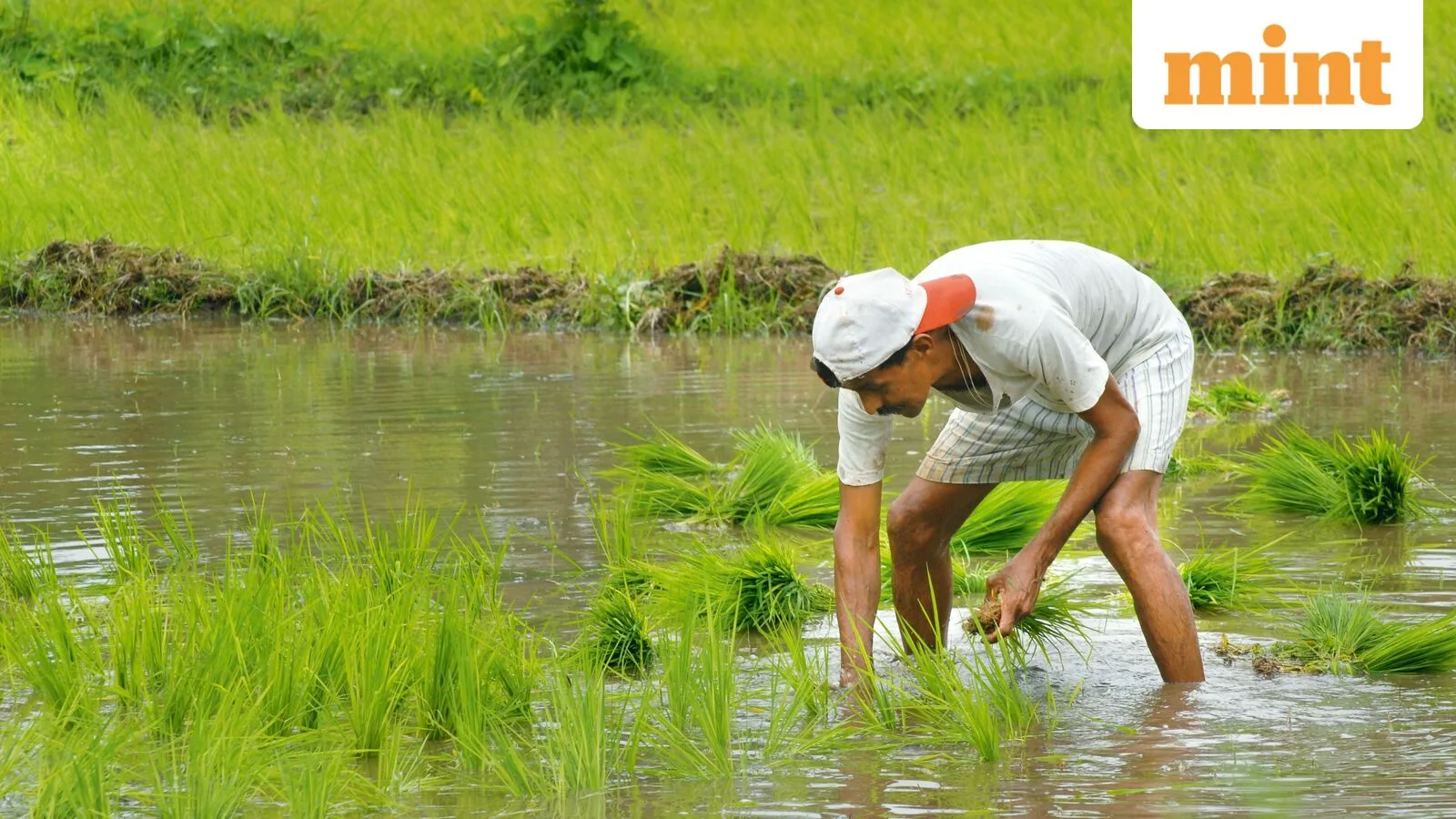
Traditional rice cultivation in India is characterized by several environmentally taxing stages: nursery preparation, intensive ploughing, puddling (the process of churning soil in standing water), and manual transplanting of seedlings into flooded fields. This method, while deeply entrenched in agricultural tradition, demands colossal quantities of fresh water, consumes significant labor, and critically, contributes substantially to atmospheric methane emissions from the anaerobic decomposition of organic matter in submerged soils. As groundwater tables plummet, particularly in the northern rice bowl, labor costs escalate, and climate variability introduces unprecedented challenges, policymakers and agricultural scientists are increasingly championing DSR as an imperative for future food security and ecological balance.
Direct seeded rice, in essence, is a cultivation technique where rice seeds are sown directly into the field, bypassing the traditional steps of raising seedlings in nurseries and then transplanting them. This seemingly simple alteration eliminates the need for puddling and continuous flooding, marking a fundamental departure from centuries-old practices. The technique can be implemented either through dry seeding (sowing dry seeds into a dry or moist seedbed) or wet seeding (sowing pre-germinated seeds into a puddled but unflooded or lightly flooded field). By circumventing nursery preparation, puddling, and transplanting, DSR promises significant efficiencies across the entire cultivation cycle, offering a pathway to mitigate some of the most pressing concerns confronting Indian agriculture.
The advantages of DSR are multi-faceted and compelling. Foremost among them is its profound impact on water conservation. Conventional paddy farming is notoriously water-guzzling, with estimates suggesting that producing a single kilogram of rice can consume between 3,000 to 5,000 litres of water. Studies conducted by leading agricultural research institutions indicate that DSR can slash irrigation water usage by a substantial 25% to 50%. This reduction is critical for states like Punjab and Haryana, which constitute India’s rice basket but face alarming rates of groundwater depletion, with extraction levels reaching 156% and 137% of annual recharge, respectively. Less water requirement translates directly into significant energy savings, as farmers need to pump less groundwater, potentially reducing energy consumption by 60% to 70% and easing the strain on rural power grids.
Economically, DSR offers a tangible boon to farmers. By reducing reliance on manual labor for transplanting and minimizing irrigation needs, the method can cut cultivation costs by approximately ₹13,000 to ₹14,000 per hectare. For small and marginal farmers, who constitute the majority of India’s agricultural workforce, these savings can significantly boost profitability and resilience. Environmentally, DSR presents a clear advantage in the fight against climate change. The absence of continuous flooding in DSR fields drastically reduces anaerobic decomposition, leading to lower methane emissions – a potent greenhouse gas with a global warming potential far exceeding carbon dioxide. This makes DSR a more climate-friendly alternative, aligning with India’s broader commitments to sustainable development and carbon footprint reduction. Furthermore, the expedited crop establishment in DSR also saves valuable time, potentially enabling earlier harvest and facilitating subsequent cropping cycles, thereby enhancing land use efficiency.

Despite these persuasive benefits, the journey towards widespread DSR adoption in India, which currently accounts for only about 400,000 hectares out of a total kharif rice area of 44.5 million hectares (as per 2025-26 estimates), is fraught with significant hurdles. A primary impediment is the limited availability of rice varieties specifically bred and suited for direct seeding. The vast majority of rice varieties cultivated in India have been developed over decades for the puddled transplanted system, exhibiting optimal performance under submerged conditions. These varieties may struggle with germination rates, early vigor, and disease resistance in the drier, aerobic conditions prevalent in DSR fields, leading to concerns about yield stability among farmers.
Another formidable challenge is effective weed management. In traditional transplanted rice, standing water acts as a natural weed suppressant. DSR fields, lacking continuous inundation, are far more vulnerable to weed proliferation, demanding precise and timely herbicide application. Many farmers, particularly those with limited access to information or resources, lack the requisite knowledge and tools for effective weed control under this system. The shift in weed spectrum and the potential for herbicide resistance further complicate this issue, necessitating integrated weed management strategies that may include mechanical weeding and judicious chemical use.
Mechanization also poses a considerable barrier. Successful DSR implementation often requires specialized machinery such as seed drills, precision planters, and sometimes even laser land levelers for optimal seed establishment and uniform crop stand. Such equipment is not readily accessible or affordable for many small and marginal farmers, especially in regions with lower levels of agricultural mechanization. The initial capital investment for these machines, coupled with a lack of localized repair and maintenance services, deters many from making the switch. Beyond equipment, there is a significant knowledge gap and inherent farmer reluctance. Generations of farmers have been accustomed to the transplanted method, and switching to a relatively unfamiliar technique involves perceived risks concerning yield stability, pest and disease management, and overall crop establishment. Without robust extension services, practical demonstrations, and peer-to-peer learning networks, overcoming this deeply ingrained inertia proves challenging.
Recognizing the strategic importance of DSR, both state and central governments in India, alongside agricultural scientific bodies, have intensified efforts to promote its adoption. State governments are deploying a mix of financial incentives, subsidies for machinery, and extensive awareness campaigns aimed at groundwater conservation and cost reduction. For instance, the Punjab government has offered an incentive of ₹1,500 per acre for farmers adopting DSR during the upcoming kharif season, allocating dedicated funds to expand the area under this technique. Haryana has gone further, announcing an incentive of ₹4,500 per acre, an increase from its previous ₹4,000, underscoring the urgency and perceived benefits of the method.
Beyond direct financial incentives, agricultural research institutions like the Indian Agricultural Research Institute (IARI) and various state agricultural universities are actively engaged in developing DSR-specific rice varieties that combine high yield potential with improved resistance to weeds and diseases under non-puddled conditions. The Federation of Seed Industry of India (FSII) and other industry groups are also collaborating with research institutions and farmers, focusing on technological innovations in seed development and addressing farmer concerns through field trials and training. This collaborative ecosystem is crucial for building farmer confidence and providing the necessary technological backstop.
The imperative for transitioning to more resource-efficient cultivation practices cannot be overstated for India. As Dr. A.K. Singh, former director of the Indian Agricultural Research Institute, aptly puts it, "Rice will remain central to India’s food security, but the production systems must evolve to respond to emerging challenges related to natural resource conservation and climate change." India’s position as a global agricultural powerhouse, providing food for over 1.4 billion people and a significant portion of the world, hinges on its ability to innovate and adapt. The growing pressure on finite water resources, the increasing cost of labor, and the undeniable need to reduce agriculture’s environmental footprint make the transition to DSR not just an option, but an ecological and economic necessity. By systematically addressing the challenges through targeted research, policy support, robust extension services, and enhanced access to appropriate machinery and knowledge, India can unlock the full potential of direct seeded rice, fostering a more sustainable, profitable, and resilient agricultural future for its farmers and its people.