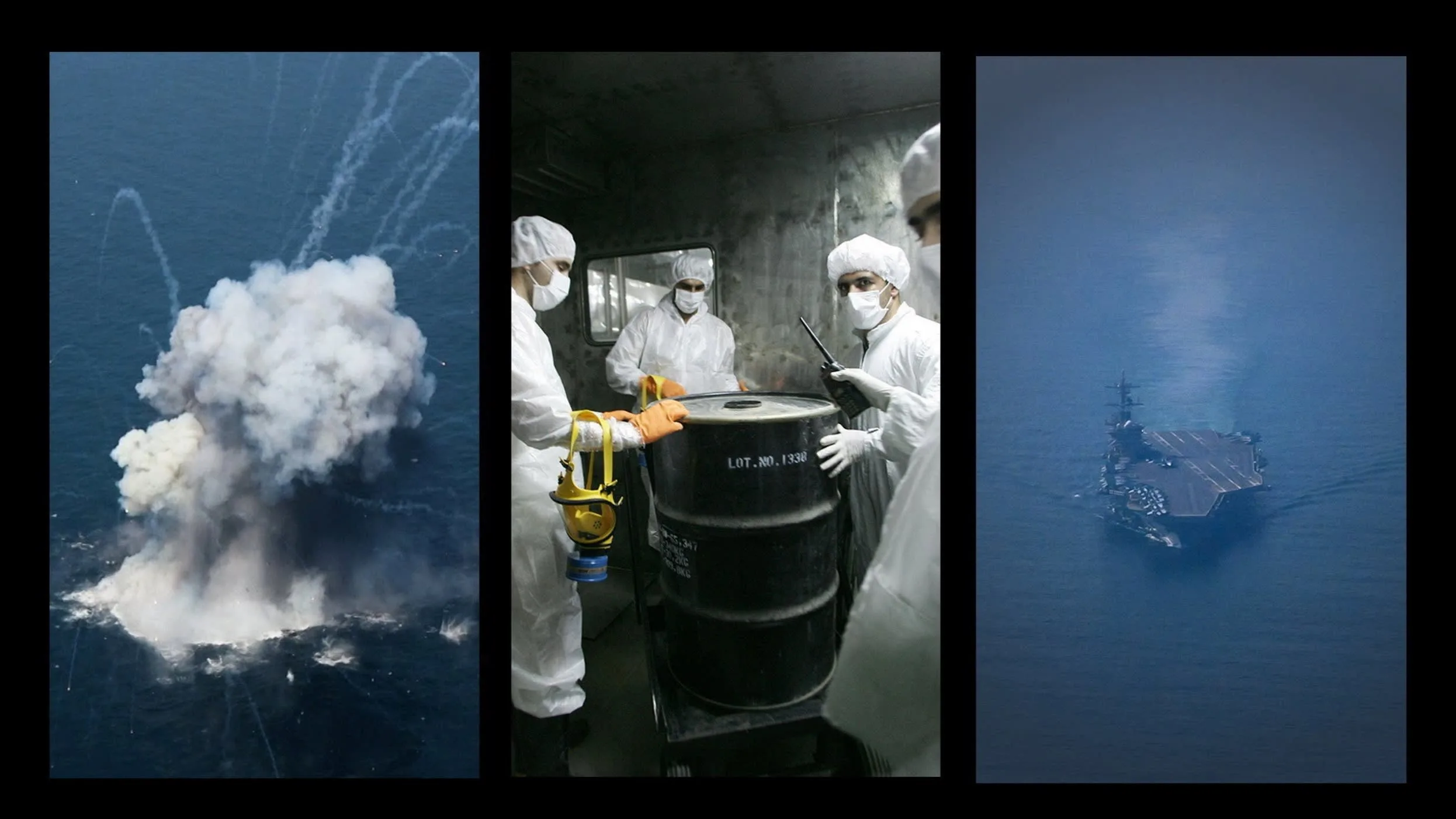
The geopolitical landscape of the Middle East has long been defined by the friction between Washington’s desire for regional stability and Tehran’s pursuit of strategic autonomy through its nuclear program. Since the United States unilaterally withdrew from the Joint Comprehensive Plan of Action (JCPOA) in 2018, the world has watched a high-stakes game of "maximum pressure" unfold. Yet, despite a campaign of crippling economic sanctions, the assassination of high-ranking military officials, and a rhetoric that often bordered on the precipice of conflict, one significant line remained uncrossed: the physical destruction of Iran’s nuclear stockpile and enrichment facilities. This restraint reveals a complex interplay of energy economics, domestic political constraints, and a calculated assessment of regional escalation risks that have come to define the modern era of American foreign policy.
The decision to avoid a direct kinetic strike on Iran’s nuclear infrastructure is not merely a matter of military logistics; it is a calculation deeply rooted in the global energy market. Iran sits atop some of the world’s largest proven oil and gas reserves, and more importantly, it commands the Strait of Hormuz. This narrow waterway is the world’s most important oil transit chokepoint, through which approximately 21 million barrels of oil—roughly 21% of global petroleum liquids consumption—pass daily. For a U.S. administration that prioritized domestic economic growth and low energy prices, the risk of a "tanker war" or a complete blockage of the Strait was an unacceptable price to pay. Market analysts have long warned that a direct conflict with Iran could send Brent Crude prices soaring well above $150 per barrel, triggering a global recession and undermining the very economic gains the "America First" agenda sought to protect.
Beyond the immediate volatility of the oil markets, the strategic restraint was influenced by the internal ideological tug-of-war within the U.S. executive branch. While hawkish advisors frequently advocated for more aggressive measures to permanently "set back" Iran’s nuclear clock, the overarching philosophy of the Trump administration was centered on the avoidance of "forever wars." Having campaigned on the promise of bringing troops home and ending costly interventions in the Middle East, the prospect of a new, open-ended conflict with a nation of 85 million people—much larger and more militarily capable than Iraq or Afghanistan—was politically radioactive. The strategy was therefore designed to be one of economic strangulation rather than military annihilation, betting that the collapse of the Iranian Rial and the evaporation of foreign direct investment would force Tehran to the negotiating table for a "better deal."
The economic impact of this "maximum pressure" campaign was indeed profound, yet it yielded a paradox. By the end of 2020, Iran’s GDP had contracted significantly, and its inflation rate hovered near 40%. However, this economic distress did not result in a cessation of nuclear activities. Instead, Tehran responded with "strategic escalation." Following the U.S. exit from the JCPOA, Iran began incrementally breaching the limits set by the 2015 accord, increasing its stockpile of enriched uranium and deploying more advanced centrifuges. By 2024, International Atomic Energy Agency (IAEA) reports indicated that Iran had successfully enriched uranium to 60% purity—a short technical step away from the 90% "weapons-grade" threshold. This enrichment occurred in deeply buried facilities like Fordow, which are engineered to withstand conventional aerial bombardment, further complicating the military calculus for any would-be attacker.
Furthermore, the global geopolitical environment shifted during this period, providing Iran with an economic and diplomatic lifeline that diluted the efficacy of U.S. sanctions. The emergence of a more formal "axis" between Tehran, Moscow, and Beijing has rewritten the rules of international isolation. China, as the world’s largest oil importer, has continued to purchase Iranian crude through a "shadow fleet" of tankers using clandestine ship-to-ship transfers and opaque financial networks. These sales, often conducted in Yuan rather than Dollars, have helped Iran maintain a baseline level of foreign exchange reserves. For the U.S., a military strike on nuclear sites would not only risk a regional conflagration but could also alienate key global trade partners who view American extraterritorial sanctions as a form of "economic imperialism."
Expert insights suggest that the restraint was also a matter of intelligence and "breakout time" psychology. Historically, the U.S. intelligence community has maintained that while Iran has developed the technical capabilities for enrichment, there is no definitive evidence that the supreme leadership has made the final political decision to weaponize that material. Striking the facilities prematurely could, in the eyes of many strategists, provide the very justification the Iranian hardliners need to move from a civilian-labeled program to a full-scale nuclear weapons dash. By leaving the stockpile "untouched" but under heavy surveillance and economic siege, the U.S. maintained a level of leverage that a smoking ruin of a facility would not provide.
The role of regional allies, specifically Israel and Saudi Arabia, also played a pivotal role in shaping this restrained approach. While Israel has historically taken a more proactive "Begin Doctrine" stance—as seen in its previous strikes on nuclear reactors in Iraq (1981) and Syria (2007)—the Iranian nuclear program is far more decentralized and hardened. Israeli officials have frequently debated the merits of a solo strike, but the logistical reality is that such an operation would require significant American support, including heavy bunker-buster munitions and aerial refueling. Within the U.S. government, there was a prevailing concern that an uncoordinated strike could lead to a massive retaliatory missile campaign from Iran’s proxies, such as Hezbollah in Lebanon, which possesses an arsenal of over 150,000 rockets capable of saturating Israel’s Iron Dome defenses.
From a macroeconomic perspective, the decision to leave the nuclear sites intact while crushing the economy has led to a "new normal" in the Middle East—a state of permanent crisis that the markets have, surprisingly, begun to price in. The "geopolitical risk premium" that used to add $10 to $20 to the price of a barrel of oil during times of tension has become more muted as traders focus on global demand signals and the rise of U.S. shale production. In essence, the U.S. successfully decoupled the Iranian nuclear threat from the immediate survival of the global economy, allowing the nuclear program to grow in technical terms while shrinking the Iranian state’s ability to fund its broader regional ambitions.
However, the long-term viability of this "stockpile-untouched" policy is now being questioned as the JCPOA’s "sunset clauses" approach and the "breakout time" shrinks to nearly zero. The policy of restraint was built on the assumption that sanctions would eventually trigger a change in regime behavior or a domestic uprising. While Iran has seen significant internal unrest, the clerical establishment remains firmly in control, and the nuclear program has become a point of nationalistic pride, making it difficult for any faction in Tehran to concede.
As we look toward the future of Western-Iranian relations, the strategic paradox remains. The U.S. has proven it can isolate a major economy and target its military leadership without sparking a full-scale war. Yet, the core objective—stopping the advancement of the nuclear program—remains unfulfilled. The stockpile grows, the centrifuges spin, and the world remains in a state of uneasy equilibrium. The decision to leave the nuclear facilities untouched was a triumph of pragmatic economics and risk aversion over ideological purity, but it has left a simmering problem that the next generation of global leaders will inevitably have to confront. The "maximum pressure" era demonstrated that while the dollar is a powerful weapon, it cannot unilaterally dismantle a nation’s scientific and strategic ambitions without the ultimate, and far more dangerous, use of force.