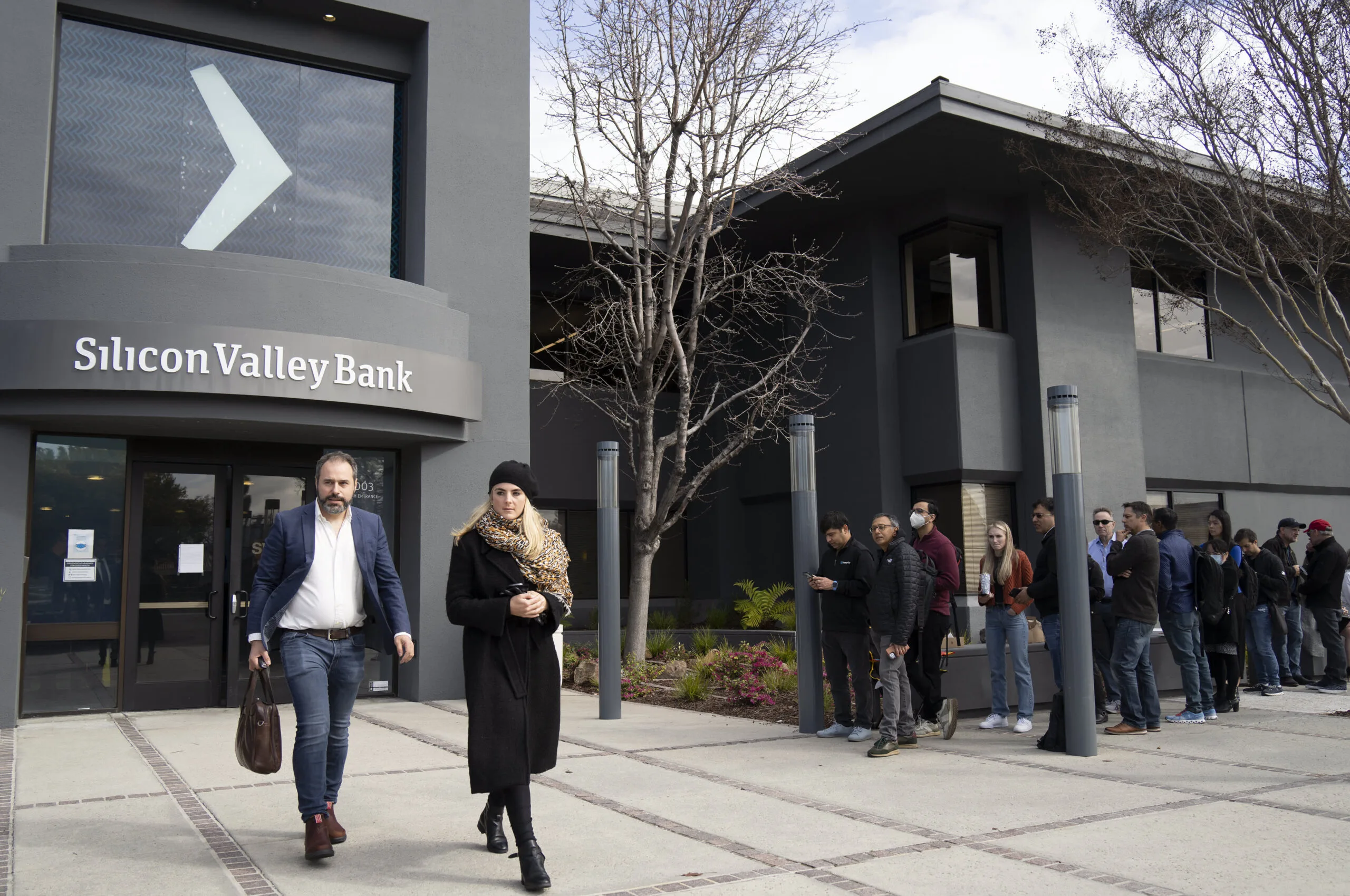
On the evening of March 9, 2023, the atmosphere at a retirement celebration for a long-tenured JPMorgan Chase executive in New York City was abruptly punctured by a phone call that would alter the trajectory of American venture finance. Jamie Dimon, the Chairman and CEO of the world’s most powerful bank, beckoned Doug Petno, the co-head of JPMorgan’s commercial and investment banking division, away from the festivities. On the other end of the line, federal regulators were grappling with a systemic crisis: Silicon Valley Bank (SVB), the primary financial artery for the global startup ecosystem, was in the throes of a terminal bank run. The question from Washington was blunt: Was JPMorgan Chase prepared to step in and acquire the failing lender?
While JPMorgan ultimately declined to purchase SVB—opting instead to watch as California regulators seized the institution the following day—the decision was not born of disinterest, but of a realization that the market was already moving toward them. As $42 billion in deposits evaporated from SVB in a single 24-hour window, the "flight to safety" became a stampede toward the balance sheet of the nation’s largest bank. In a single weekend, JPMorgan onboarded a volume of new tech clients that would typically take three years to acquire. This chaotic inflection point served as the catalyst for an aggressive, multi-year strategic pivot: the transformation of a "too-big-to-fail" institutional giant into the definitive home for the "Innovation Economy."
The vacuum created by the collapse of SVB and the subsequent failure of First Republic Bank—which JPMorgan did eventually acquire in May 2023—left the venture capital and startup world without its traditional financial pillars. For decades, SVB had dominated this niche by offering high-touch service, venture debt, and a deep understanding of the unique risk profiles of pre-revenue companies. JPMorgan, despite its $4.1 trillion in assets, was often perceived by founders as too bureaucratic, too slow, and too disconnected from the idiosyncratic needs of Silicon Valley. Today, that perception is being systematically dismantled as the bank deploys its massive capital reserves to build a "one-stop shop" that follows a company from its initial seed round to its eventual IPO and beyond.
The scale of this ambition is reflected in the numbers. JPMorgan has successfully quadrupled its client base within the startup and venture sector, now serving nearly 12,000 companies. This expansion is supported by a dedicated army of 550 specialized bankers across both coasts, many of whom were recruited directly from the wreckage of the regional banking crisis. Key among these hires was John China, the former president of SVB Capital, who now co-leads JPMorgan’s innovation economy business. By integrating these veterans, JPMorgan is attempting to "industrialize" the boutique relationship model that made SVB successful, backed by a global infrastructure that no regional bank could ever hope to match.
Central to this strategy is a recognition that banking startups is not merely about collecting deposits; it is an intelligence-gathering operation. JPMorgan’s technology budget for the current year is nearly $20 billion—a figure that exceeds the total annual revenue of many mid-sized banks. By becoming the primary bank for the world’s most disruptive startups, JPMorgan gains a front-row seat to the future of technology. This proximity allows the bank to identify emerging trends in cybersecurity, quantum computing, and artificial intelligence before they hit the mainstream. When a startup client utilizes generative AI to radically streamline its operations, JPMorgan’s bankers are often dispatched to study the implementation, effectively using their client base as a global R&D lab to optimize the bank’s own internal processes.
However, the path to dominance is not without friction. The primary criticism leveled against JPMorgan by the venture community has historically been its "friction-heavy" onboarding. In the fast-paced world of tech, where a "move fast and break things" ethos prevails, a 15-minute delay in opening a digital account can be a dealbreaker. Modern founders have flocked to "neobanks" and fintechs like Mercury, Ramp, and Brex—the latter of which was recently valued at over $5 billion following an acquisition interest by Capital One—because of their seamless, digital-first interfaces.
Petno and his leadership team are acutely aware of this deficit. The bank is currently engaged in a massive engineering project to "leapfrog" these fintech rivals by combining a frictionless digital experience with the institutional stability of a global powerhouse. The goal is to create a platform where a founder can deposit a multi-million dollar Series A check in a Chase branch and have that capital immediately recognized by a specialized startup team that understands venture debt, equity management, and international payroll. The pitch is simple: "You can never outgrow JPMorgan." From a garage-based startup to a "Magnificent Seven" tech titan, the bank intends to provide a lifetime of financial services, capturing lucrative investment banking fees, private banking wealth management for founders, and commercial lending as the companies mature.
The economic implications of this consolidation are profound. The collapse of the regional banking model for startups has led to a concentration of power in a few "fortress" institutions. While this provides a level of systemic stability—reducing the risk of the localized bank runs that plagued 2023—it also raises questions about the availability of credit for riskier, early-stage ventures. Regional banks were often more willing to take "character-based" risks on founders that didn’t fit a standard credit model. As JPMorgan applies its rigorous institutional risk frameworks to the startup world, there is a lingering concern that the "innovation gap" might widen for those on the fringes of the venture ecosystem.
To counter this, JPMorgan is leaning heavily into the "private bank" model it inherited and refined through the First Republic acquisition. By catering to the personal wealth of venture capitalists and founders, the bank creates a circular ecosystem of loyalty. When a VC fund manages its capital through JPMorgan, and the founders in that fund’s portfolio bank with the same institution, the "network effect" becomes a formidable barrier to entry for competitors.
Global comparisons further highlight JPMorgan’s unique positioning. In the United Kingdom, the collapse of SVB’s subsidiary led to its acquisition by HSBC, creating a similar "mega-bank" dominance in the London tech scene. Across the Eurozone and Asia, startup banking remains fragmented, often split between traditional lenders and a rising tide of specialized fintechs. JPMorgan’s attempt to create a unified, global "Innovation Economy" vertical puts it in direct competition not just with other banks, but with the very fintechs it often seeks to partner with or acquire.
The current macroeconomic environment adds another layer of complexity to this mission. The "VC Winter" of 2023 and 2024, characterized by higher interest rates and a cooling of late-stage valuations, has forced startups to prioritize capital preservation over growth at all costs. In this environment, the "safety" of a bank with $4 trillion in assets is a powerful marketing tool. While smaller competitors might struggle with liquidity or the rising cost of deposits, JPMorgan can afford to play the long game, investing in relationships today that may not pay off in investment banking fees for another decade.
Ultimately, JPMorgan’s push to become the new Silicon Valley Bank is a testament to the bank’s philosophy of "relentless incrementalism." It is not merely seeking to replace a fallen rival; it is seeking to redefine what a commercial bank can be in the 21st century. By bridging the gap between the risk-heavy world of venture capital and the conservative world of institutional finance, Jamie Dimon and Doug Petno are betting that the future of banking lies in the ability to scale intimacy. If they succeed, the "Innovation Economy" will no longer be a niche sector on the West Coast, but a core pillar of the world’s largest financial fortress, ensuring that no matter how large a unicorn grows, it remains tethered to the same New York-based balance sheet that saw opportunity in the middle of a crisis.