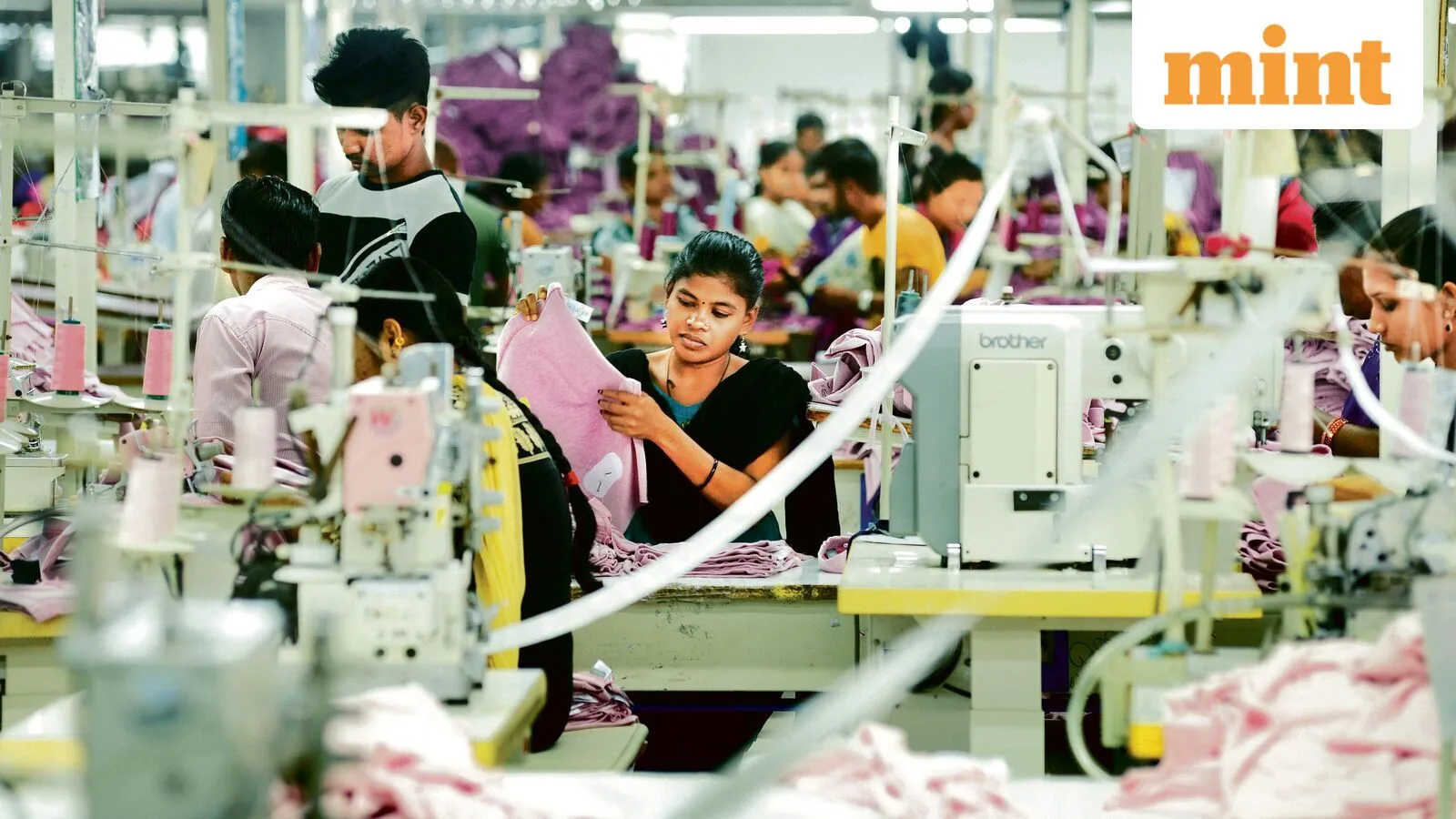
India’s ambitious drive to green its vast Micro, Small, and Medium Enterprises (MSME) sector faces significant hurdles, as evidenced by the dismal performance of a flagship government initiative. The Micro and Small Enterprises (MSE) Green Investment and Financing for Transformation (GIFT) Scheme, designed to catalyze sustainable practices, has seen a mere ₹13.22 crore disbursed in interest subvention, a paltry 3.7% of its targeted ₹350 crore. This stark underperformance, revealed in a parliamentary disclosure by the Union Ministry of MSMEs, underscores a critical disconnect between policy intent and ground-level execution, raising concerns about India’s industrial competitiveness in an increasingly carbon-conscious global economy.
Launched in the fiscal year 2023-24 and slated to conclude on March 31, 2026, the MSE GIFT Scheme aimed to incentivize MSMEs to adopt renewable energy sources and energy-efficient machinery. Its grand vision was to facilitate concessional financing for loans ranging from ₹10 lakh to ₹2 crore, with an ambitious target of supporting 5,800 businesses through ₹5,800 crore in green loans. The underlying assumption, according to scheme guidelines, was an average loan size of ₹1 crore per enterprise. While the scheme intended to foster a vital shift towards sustainable operations, its limited uptake signals systemic challenges that transcend mere awareness, necessitating a comprehensive review of its design and implementation.
Geographically, the scheme’s limited reach has been uneven. Tamil Nadu emerged with the highest number of beneficiaries, accounting for 1,067 enterprises, followed by Punjab with 610 and Rajasthan with 608. These states, known for their vibrant manufacturing and industrial clusters, might possess a marginally higher degree of awareness or readiness for such initiatives, yet even their participation remains a fraction of the national potential. The Small Industries Development Bank of India (SIDBI) was designated as the implementing agency, responsible for bringing together MSMEs and financial institutions, and conducted 60 workshops to promote the scheme. However, these efforts clearly did not translate into the anticipated financial engagement.
The underperformance of the MSE GIFT Scheme takes on heightened significance amidst escalating global pressures for industrial decarbonization. The European Union’s Carbon Border Adjustment Mechanism (CBAM), for instance, represents a formidable trade barrier for carbon-intensive imports, including those from India. Given that India’s more than 77 million MSMEs contribute approximately 45% to the country’s exports and 30% to its Gross Domestic Product (GDP), their ability to transition to greener operations is not merely an environmental imperative but a crucial determinant of India’s export competitiveness and economic resilience. Failure to adapt could lead to substantial losses in market access, increased operational costs due to carbon tariffs, and a diminished standing in global supply chains that increasingly prioritize sustainability.
Experts are unequivocal in their call for a thorough re-evaluation of the scheme. Arun Maira, a former member of the Planning Commission and a seasoned management consultant, advocates for an "after-action review." He emphasizes the necessity of identifying missing information from the initial planning phase and consulting directly with businesses to understand the precise reasons behind the lack of materialization of green loans. This diagnostic approach is critical to inform necessary amendments and ensure future policies are better aligned with the ground realities of the MSME sector.

A key point of contention lies in the scheme’s financial assumptions. While the guidelines projected an average loan requirement of ₹1 crore for greening operations, industry stakeholders suggest this figure is often misaligned with the actual investment needs for initial sustainability upgrades. Dattatray Navalgundkar, Executive Director of the Centre for Industry 4.0 (C4I4) Lab, a non-profit supporting MSME modernization, points out that foundational greening steps, such as setting up smart monitoring systems for utility consumption and greenhouse gas emissions, or basic automation for an MSME with 50 machines, typically cost around ₹50 lakh. This disparity between the assumed loan size and actual requirements may deter MSMEs from even considering the scheme, as they perceive the financial burden as disproportionately high for their immediate needs.
Beyond the financial mismatch, the scheme’s fundamental design has drawn criticism for its over-reliance on conventional credit mechanisms and a lack of integrated support structures. Vinod Kumar, President of the India SME Forum, an association representing nearly 97,000 MSMEs, argues that the scheme’s underperformance is not indicative of a lack of interest in green transition among MSMEs. Instead, he highlights several structural impediments: "Many MSEs are already credit-constrained, making them reluctant to borrow additional funds for sustainability upgrades." This pervasive issue of credit access, where MSMEs often struggle with collateral requirements, stringent lending criteria, and high interest rates, creates a significant barrier to leveraging schemes that require them to secure loans upfront before receiving government benefits.
Furthermore, Kumar points to the scheme’s failure to recognize the unique ecosystem of India’s MSME sector. A substantial portion of Indian MSMEs operate within industrial clusters – be it textiles, ceramics, engineering, leather, or foundries. These clusters often share common infrastructure, challenges, and opportunities for collective action. However, the MSE GIFT scheme is predominantly structured around individual enterprise financing rather than promoting cluster-level green upgrades, which would inherently be more effective due to economies of scale, shared learning, and collective impact. Initiatives like common effluent treatment plants, shared renewable energy generation, or collective adoption of cleaner production technologies within a cluster could yield far greater environmental and economic benefits than individual, fragmented efforts.
The absence of robust technical support and capacity building further compounds the problem. While the government has identified 891 eligible technologies across various sectors, the mere identification does not translate into adoption. MSMEs often lack the technical expertise to identify the most suitable green technologies for their specific operations, evaluate their return on investment, or effectively implement and maintain them. They require handholding, access to expert consultancy, and simplified tools to navigate the complex landscape of green innovation. Without such integrated support, the financial incentives alone are insufficient to overcome the knowledge and implementation gaps.
Looking ahead, a recalibration of policy is imperative. Future schemes must consider a blended finance approach, incorporating grants, performance-linked incentives, and first-loss guarantees alongside interest subventions to de-risk green investments for both MSMEs and financial institutions. Simplified application processes and faster disbursal mechanisms are also crucial. More critically, there needs to be a fundamental shift towards cluster-based interventions, leveraging existing industrial associations and local bodies to drive collective greening initiatives. Technical assistance centers, perhaps facilitated through public-private partnerships, could provide tailored guidance, technology evaluation, and implementation support. Moreover, proactive engagement with MSMEs through targeted surveys and focus groups would provide invaluable insights into their specific pain points and help co-create solutions that are genuinely impactful.
The stalled progress of the MSE GIFT Scheme serves as a critical lesson in India’s journey towards sustainable industrialization. While the intent to green the MSME sector is laudable and economically necessary, the execution requires a deeper understanding of the sector’s intrinsic challenges. Unlocking the immense potential of India’s MSMEs to contribute to both economic growth and environmental sustainability demands not just financial incentives, but a holistic ecosystem of accessible finance, technical guidance, and a policy framework that acknowledges and leverages their unique operating structures. The urgency to address these shortcomings is paramount, not only to meet India’s climate commitments but also to secure the future competitiveness of a vital segment of its economy in a rapidly evolving global marketplace.