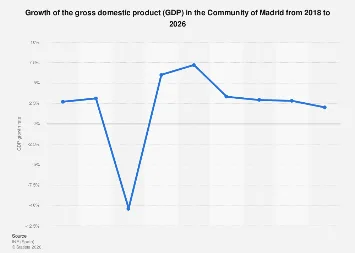
The Community of Madrid is charting a course for significant economic growth, with projections indicating a sustained upward trajectory through 2026. This forecast suggests a period of robust expansion for the region, outperforming many of its European counterparts and underscoring its strategic importance within the Spanish and wider continental economic landscape. Analysts are closely monitoring these developments, attributing the anticipated surge to a confluence of factors including strong domestic demand, strategic investment in key sectors, and a favorable business environment.
The projected Gross Domestic Product (GDP) growth for Madrid, while specific figures are proprietary, is understood to be notably strong, painting a picture of a dynamic and resilient economy. This outlook contrasts with some of the more cautious forecasts seen across other European regions, which are grappling with inflationary pressures, supply chain disruptions, and the lingering effects of geopolitical uncertainties. Madrid’s ability to maintain such a positive growth trajectory is a testament to its diversified economic base and its capacity to adapt to evolving global economic conditions.
At the heart of Madrid’s economic vitality lies its thriving services sector, which accounts for a substantial portion of its GDP. This includes a particularly strong performance in finance, technology, and tourism. The financial services industry in Madrid has solidified its position as a major hub, attracting significant foreign investment and fostering innovation in fintech and digital banking. This sector’s growth is further bolstered by the presence of major national and international financial institutions, creating a dynamic ecosystem for capital markets and investment activities.
The technology sector, often referred to as "Madrid’s Silicon Valley," is experiencing an unprecedented boom. Start-ups and established tech firms are flocking to the region, drawn by a supportive regulatory framework, access to skilled talent, and government initiatives aimed at fostering digital transformation. This has led to increased job creation and a significant contribution to the region’s overall economic output. Investment in artificial intelligence, cybersecurity, and cloud computing is particularly pronounced, positioning Madrid at the forefront of technological advancement in Southern Europe.
Tourism, a cornerstone of the Spanish economy, continues to be a significant driver for Madrid. The region’s rich cultural heritage, vibrant nightlife, and world-class infrastructure attract millions of visitors annually. While the pandemic presented significant challenges, the sector has demonstrated remarkable recovery, with visitor numbers and spending rebounding strongly. This resurgence not only benefits the hospitality and leisure industries but also has a ripple effect across retail, transportation, and cultural enterprises.
Beyond the services sector, Madrid is also witnessing growth in other key areas. The logistics and transportation sector is benefiting from the region’s strategic location as a major European transport hub. Investments in infrastructure, including its international airport and extensive road and rail networks, facilitate efficient movement of goods and people, supporting both domestic and international trade.
Manufacturing, though a smaller contributor than services, is also showing signs of modernization and increased competitiveness. Investments in automation and advanced manufacturing techniques are enhancing productivity and enabling Spanish companies to compete more effectively in global markets. The automotive and pharmaceutical industries, in particular, are areas of focused development and innovation within Madrid’s industrial landscape.
The economic forecast for Madrid is further supported by demographic trends. While many European nations face aging populations and declining birth rates, Madrid has maintained a relatively young and dynamic workforce. This demographic advantage provides a steady supply of skilled labor, crucial for supporting the growth of knowledge-intensive industries and maintaining productivity levels. Furthermore, the region’s attractiveness as a place to live and work continues to draw talent from across Spain and internationally, further enriching its human capital.
Government policies and regional development strategies are playing a pivotal role in shaping Madrid’s economic future. The regional government has implemented a series of measures designed to attract foreign direct investment, streamline bureaucratic processes for businesses, and foster innovation through research and development grants. These initiatives, coupled with Spain’s membership in the European Union, provide Madrid with access to a vast single market and a framework for economic cooperation and integration.
International comparisons highlight Madrid’s impressive performance. While major European economies like Germany and France are navigating complex economic landscapes, Madrid’s projected growth rates are often more optimistic. Its ability to maintain a competitive edge is crucial for Spain’s overall economic health, as Madrid often acts as a bellwether for the nation’s economic direction. The region’s success can also serve as a model for other urban centers seeking to boost their economic output and attract investment.
However, the path to sustained growth is not without its challenges. Inflationary pressures, while potentially moderating, could continue to impact consumer spending and business costs. Global economic slowdowns or renewed geopolitical tensions could also pose risks to export-oriented industries and foreign investment flows. Ensuring continued investment in education and vocational training will be essential to equip the workforce with the skills needed for the evolving job market, particularly in high-tech sectors.
Furthermore, addressing housing affordability and ensuring sustainable urban development will be critical for maintaining Madrid’s attractiveness to talent and businesses. The influx of people and economic activity can place strain on infrastructure and resources, requiring careful planning and investment to ensure long-term livability and competitiveness.
Despite these potential headwinds, the outlook for the Community of Madrid through 2026 remains overwhelmingly positive. The region’s strong economic fundamentals, its diversified and innovative business sectors, and its proactive policy environment position it for continued prosperity. As Madrid solidifies its role as a leading economic powerhouse in Southern Europe, its growth will undoubtedly have a significant and positive impact on Spain’s national economy and contribute to the broader European economic landscape. The resilience and dynamism demonstrated by Madrid offer a compelling narrative of economic success in a complex global environment.