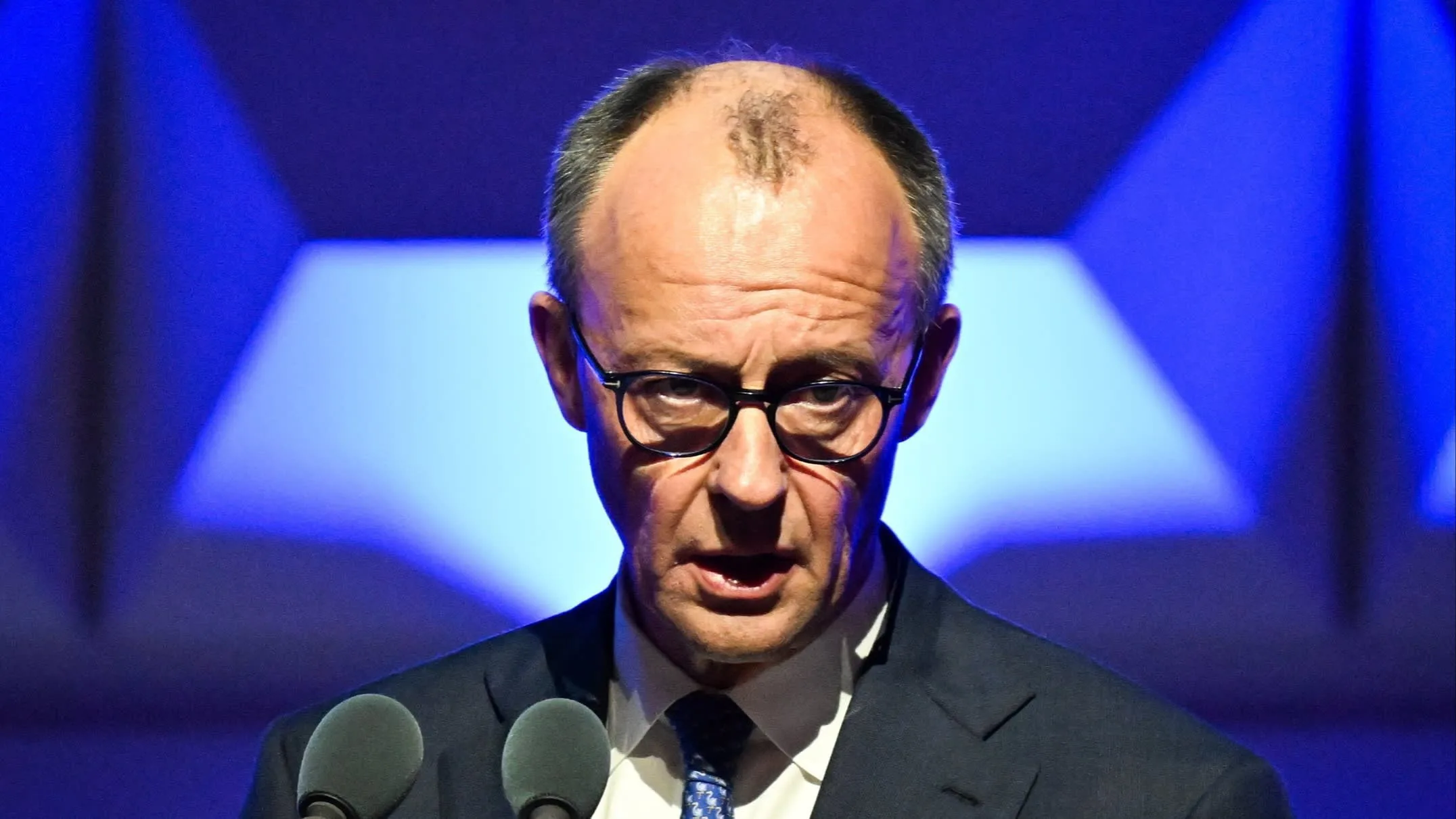
The delicate architecture of Western geopolitical unity is facing a significant stress test as Friedrich Merz, the leader of Germany’s Christian Democratic Union (CDU) and a primary contender for the chancellorship, has publicly denounced what he perceives as a softening of the United States’ stance on Russian oil sanctions. This diplomatic friction arrives at a precarious moment, as the global community grapples with the dual challenges of a protracted conflict in Eastern Europe and a rapidly escalating crisis in the Middle East. Merz’s critique highlights a deepening concern within European capitals that the U.S. administration, driven by domestic economic priorities and the fear of an energy price shock, may be inadvertently providing a financial lifeline to the Kremlin at the expense of long-term strategic objectives.
The core of the disagreement centers on the enforcement of the G7-led price cap and the specific sanctions targeting the Russian "shadow fleet"—a decentralized network of aging tankers used by Moscow to transport crude oil outside the reach of Western insurance and financial services. For months, the United States has balanced a narrow tightrope: attempting to limit Russian oil revenues while ensuring that global markets remain sufficiently supplied to prevent a spike in gasoline prices. However, as the Middle East threatens to descend into a broader regional war involving major oil producers, the calculus in Washington appears to have shifted toward market stability. Merz has labeled this shift "wrong," arguing that any perceived leniency undermines the collective effort to isolate the Russian economy and halt its military operations in Ukraine.
Economic data underscores the complexity of this policy dilemma. Throughout late 2023 and the first half of 2024, Russian Urals crude has frequently traded above the $60-per-barrel price cap established by the G7. Despite the sanctions regime, Russia has successfully pivoted its exports toward Asian markets, specifically China and India, which now account for the vast majority of its seaborne oil shipments. According to recent market analysis, Russian oil revenues reached a 2024 high in the second quarter, fueled by both steady demand and the increasing sophistication of the shadow fleet. Critics like Merz argue that if the U.S. Treasury Department relaxes its enforcement of secondary sanctions on the firms facilitating these trades, the entire Western sanctions framework risks becoming a hollow gesture.
From the perspective of Washington, the threat of $100-per-barrel oil is not merely an economic concern but a political one. High energy costs are a primary driver of inflation, which remains a sensitive issue for the American electorate. With the Middle East on edge—following intensified hostilities between Israel and various regional actors—the risk of a disruption in the Strait of Hormuz has placed a premium on non-Middle Eastern oil supplies. By allowing Russian crude to flow more freely into global markets, albeit at a discount, the U.S. aims to create a buffer against potential supply shocks in the Levant and the Persian Gulf. This "realpolitik" approach, however, sits uncomfortably with European allies who have shuttered their own industrial reliance on Russian energy at great economic cost.
Germany, in particular, finds itself in a vulnerable position. As the Eurozone’s largest economy, it has transitioned from being Russia’s primary energy partner to one of its most vocal critics. This transition has not been without pain; the German industrial sector, long reliant on cheap natural gas, has seen a contraction in output and a decline in international competitiveness. When German leaders see the U.S. easing pressure on the very commodity that funds the Russian war machine, it creates a sense of strategic misalignment. Merz’s intervention is reflective of a broader sentiment in Berlin that Europe is bearing the brunt of the energy transition and the economic fallout of the war, while the U.S. maintains the flexibility to adjust its policies based on domestic convenience.
The geopolitical implications of this rift extend beyond energy markets. The perceived inconsistency in U.S. policy provides an opening for Russia to exploit divisions within the North Atlantic Treaty Organization (NATO). Vladimir Putin has long wagered that Western resolve would eventually crumble under the weight of high energy prices and "sanctions fatigue." By signaling a willingness to prioritize price stability over strict sanction adherence, the U.S. may be signaling that its threshold for economic pain is lower than its rhetoric suggests. This is a dangerous precedent, according to Merz and his supporters, as it emboldens not only Moscow but also other revisionist powers watching the Western response to global crises.
Furthermore, the situation in the Middle East has added a layer of volatility that complicates the sanctions landscape. If the U.S. were to strictly enforce oil sanctions against Russia while simultaneously dealing with a potential cutoff of Iranian oil or disruptions to Saudi Arabian exports, the global economy could face a stagflationary shock reminiscent of the 1970s. For the Biden administration, the goal is "calibrated enforcement"—a strategy that involves enough pressure to irritate the Kremlin but not enough to trigger a global recession. However, Merz argues that this calibration is failing. He suggests that the "wrong" signals are being sent to the global shipping and insurance markets, suggesting that the risks of dealing in Russian oil are manageable.
Expert insights into the "shadow fleet" reveal the scale of the challenge. Current estimates suggest that over 600 vessels are now operating in this unregulated sector, often using fraudulent transponders and ship-to-ship transfers in international waters to disguise the origin of their cargo. For sanctions to be truly effective, the U.S. would need to aggressively target the individual ship owners and the obscure management companies based in jurisdictions like Dubai or the Marshall Islands. Doing so, however, would effectively remove millions of barrels of oil from the market daily. Merz’s critique implies that Germany and the broader EU are ready for a more confrontational approach, even if it results in higher costs at the pump, provided it leads to a swifter end to the conflict in Ukraine.
The timing of Merz’s statements is also significant in the context of German domestic politics. With federal elections on the horizon, the CDU is positioning itself as the party of "clear-eyed" foreign policy and "principled" economic leadership. By attacking the U.S. decision, Merz is also implicitly criticizing the current German coalition government for not being assertive enough in its dealings with Washington. He is championing a vision of Europe that is more strategically autonomous—a Europe that does not simply follow the lead of the U.S. Treasury Department but instead sets its own high standards for geopolitical accountability.
Global market analysts remain divided on the potential impact of a return to "maximum pressure" on Russian oil. Some argue that the global market is more resilient than it was in 2022 and that increased production from the U.S., Guyana, and Brazil could offset a more aggressive crackdown on Russian exports. Others warn that the spare capacity within OPEC+ is concentrated in countries that may not be willing to cooperate with Western geopolitical goals. In this environment, the U.S. strategy of easing sanctions enforcement is seen by some as a necessary evil to keep the global economy afloat during a period of unprecedented regional instability.
As the conflict in the Middle East continues to dominate the headlines, the dispute over Russian oil sanctions serves as a reminder that the world’s crises are deeply interconnected. The flow of oil is the common thread that links the battlefields of the Donbas to the shipping lanes of the Red Sea. Friedrich Merz’s vocal opposition to the U.S. policy shift marks a turning point in the transatlantic dialogue, signaling that the "business as usual" approach to sanctions enforcement is no longer acceptable to a significant portion of the European political establishment.
Ultimately, the resolution of this disagreement will depend on whether the U.S. and its European allies can harmonize their economic and security strategies. If the West appears divided, the efficacy of sanctions as a tool of statecraft will be permanently diminished. As Merz has made clear, the stakes are not merely measured in dollars or euros, but in the integrity of the international order. The coming months will determine whether the "wrong" decision, as Merz calls it, was a temporary tactical maneuver or a fundamental shift in the West’s willingness to sustain the economic costs of defending its values. For now, the global energy market remains a theater of high-stakes diplomacy, where every barrel of oil carries the weight of a geopolitical statement.