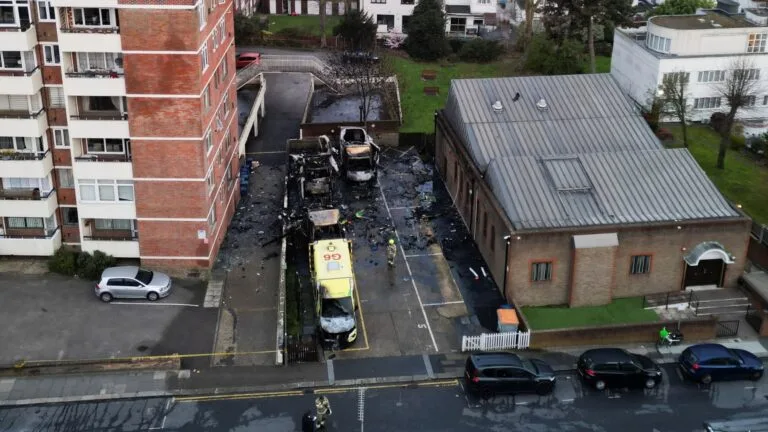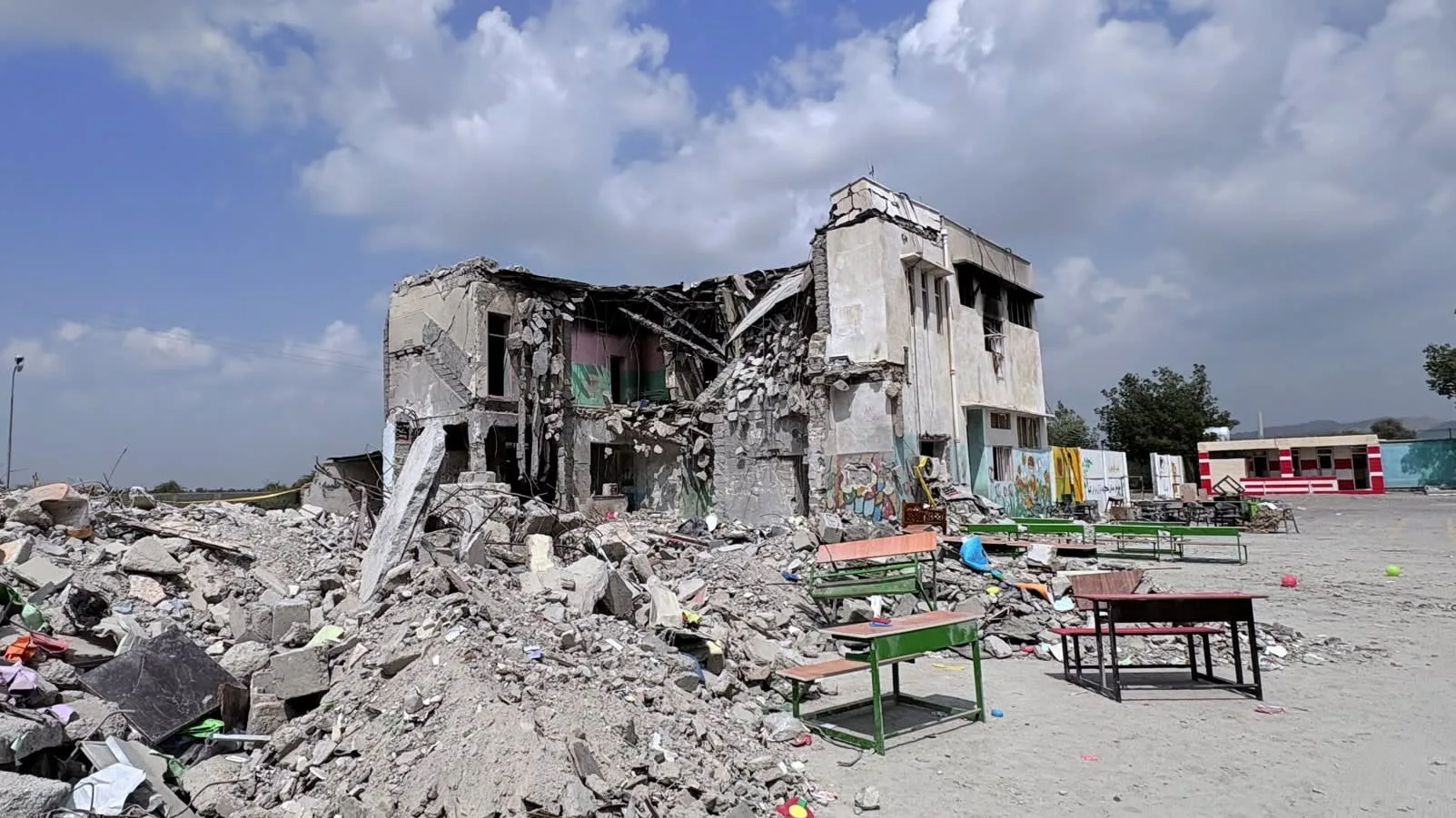
The explosion that tore through an educational facility in Iran has transcended the immediate tragedy of lost lives, evolving rapidly into a pivotal flashpoint in the broader "information war" that defines modern Middle Eastern geopolitics. In the digital age, a kinetic strike—such as a bombing—is no longer an isolated military or domestic event; it is the catalyst for a sophisticated, multi-front campaign of narrative-shaping, psychological operations, and economic destabilization. As smoke cleared from the site, a secondary, invisible conflict ignited across encrypted messaging apps, state-run news agencies, and international diplomatic corridors, illustrating how information has been weaponized to serve competing interests in a region already on edge.
For Iran, a nation grappling with a complex tapestry of internal dissent and external sanctions, the bombing of a school represents a profound challenge to state legitimacy and the social contract. Education centers are traditionally viewed as "soft targets," yet their symbolic value is immense. When such institutions are compromised, the state’s primary duty—the provision of security—is called into question. However, the subsequent information war is rarely about establishing objective facts. Instead, it serves as a mechanism for the Iranian government to consolidate domestic support by pointing toward "foreign agitators," while simultaneously providing an opening for opposition groups and external adversaries to highlight the regime’s perceived incompetence or brutality.
The economic ramifications of this instability are immediate and measurable. In the hours following the initial reports, the Iranian Rial often experiences heightened volatility on the informal market, reflecting a "risk premium" that investors and citizens alike place on civil unrest. According to data from regional economic monitors, instances of high-profile violence in Iran correlate with a 3% to 5% spike in the cost of hard currency as the local population seeks to hedge against further devaluation. This economic anxiety is a deliberate target of information warfare. By flooding the digital space with rumors of imminent crackdowns or further attacks, external actors can exacerbate capital flight, putting additional pressure on a central bank already hamstrung by the loss of access to the SWIFT global payment system and the freezing of overseas assets.
Beyond the borders of the Islamic Republic, the school bombing serves as a case study in the "splinternet"—the fragmentation of the global internet into ideologically aligned silos. Within Iran, the state’s "National Information Network" works to throttle social media platforms like Instagram and Telegram, which are frequently used to coordinate protests or share unverified footage of the aftermath. By controlling the flow of data, the government attempts to monopolize the narrative, framing the event through the lens of national martyrdom. Conversely, diaspora media outlets and Western intelligence-linked social media accounts often pivot the narrative toward the failure of the Iranian security apparatus, or in some cases, suggest "false flag" operations designed to justify further domestic repression.
This tug-of-war over the "truth" has significant implications for international energy markets. While a school bombing may seem distant from the oil fields of Khuzestan or the transit routes of the Strait of Hormuz, the perception of Iranian stability is a key metric for global oil traders. The Middle East remains responsible for approximately 31% of global oil production, and any sign of escalating internal conflict in Iran raises the specter of regional contagion. When information warfare creates a fog of war regarding who was responsible for an attack—be it ISIS-K, separatist groups, or state-sponsored proxies—the uncertainty often leads to a "geopolitical hedge" in Brent Crude pricing, adding a dollar or two to the price per barrel as markets price in the risk of a wider escalation.
Expert insights into the mechanics of this information war suggest that we are seeing the refinement of "reflexive control," a technique where information is fed to an adversary to lead them to make a decision that is actually detrimental to their own interests. In the context of the school bombing, various actors use "deepfake" audio and manipulated video to inflame sectarian tensions or to provoke a disproportionate military response from the state. This creates a cycle of violence and retribution that is increasingly difficult for international mediators to de-escalate. The lack of independent journalism within Iran further complicates the situation, as foreign news bureaus are often restricted, leaving a vacuum that is filled by state propaganda on one side and "OSINT" (Open Source Intelligence) activists on the other, the latter of whom vary wildly in their accuracy and objectivity.
Comparing the Iranian situation to other global conflicts, such as the ongoing war in Ukraine, reveals a common thread: the total integration of the digital and physical battlefields. In Ukraine, the bombing of civilian infrastructure is immediately documented and used to solicit international aid and sanctions. In Iran, the process is inverted; information is often suppressed or distorted to prevent international scrutiny or to avoid triggering further "maximum pressure" sanctions from Washington and Brussels. The economic cost of this information blackout is hidden but substantial, manifesting as a "transparency tax" that prevents legitimate foreign investment from returning to the country, even in non-sanctioned sectors like pharmaceuticals or food production.
The human capital cost of targeting educational institutions is perhaps the most devastating long-term economic impact. Iran has historically boasted one of the highest literacy rates and most educated populations in the Middle East, with a particular emphasis on STEM (Science, Technology, Engineering, and Mathematics) fields. When schools become the front lines of a conflict—whether through physical bombings or the subsequent "poisoning" of the information environment—it accelerates the "brain drain" phenomenon. World Bank estimates suggest that the annual cost of the migration of educated Iranians exceeds $50 billion, a figure that dwarfs the immediate physical damage of any single bombing. The psychological toll on students and educators creates a climate of fear that stifles innovation and reduces the long-term productivity of the workforce.
Furthermore, the role of private technology companies in this information war cannot be overstated. Platforms like X (formerly Twitter) and Meta find themselves in an impossible position, tasked with moderating content in a language and cultural context they may not fully grasp, while under pressure from various governments to remove "misinformation." In many cases, these platforms become the primary source of news for the Iranian youth, who comprise over 60% of the population. The struggle to verify the source of a bombing—and the subsequent blaming of "foreign agents" by the state—often plays out in the comments sections of these platforms, creating a digital proxy war that mirrors the physical one on the ground.
As the international community looks toward a potential resolution of the various tensions surrounding Iran, the school bombing serves as a reminder that peace is not merely the absence of explosions, but the presence of a stable, verifiable information ecosystem. Without a baseline of shared facts, diplomatic efforts like the revival of the Joint Comprehensive Plan of Action (JCPOA) or regional rapprochement with neighbors like Saudi Arabia remain fragile. The "information war" ensures that every tragedy is leveraged for maximum political gain, often at the expense of the truth and the economic well-being of the civilian population.
In conclusion, the Iranian school bombing is a microcosm of the 21st-century conflict: a tragic loss of life amplified by digital distortion and economic desperation. For business leaders and policymakers, the lesson is clear: in an interconnected world, the narrative surrounding an event is often as influential as the event itself. As long as information remains a weapon of war, the path to stability in the Middle East will remain obscured by the smoke of both physical explosives and digital deception. The true cost of the bombing is not just in the rubble of the classroom, but in the further erosion of trust and the continued isolation of a nation from the global economic and information order. Only by addressing the systemic roots of this information warfare can there be any hope of protecting the next generation from becoming casualties in a conflict fought both in the streets and on the screens.