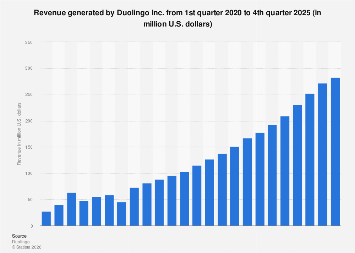
The digital language learning sector is poised for significant expansion in 2025, with key players like Duolingo Inc. expected to demonstrate robust revenue growth. While specific quarterly figures for 2025 are not yet publicly disclosed by the company, industry analysis and market trends provide a clear indication of Duolingo’s likely financial performance. The company’s established user base, innovative product offerings, and strategic market positioning suggest a sustained upward trajectory in its revenue streams.
Duolingo has emerged as a dominant force in the global edtech market, leveraging a freemium model that attracts millions of users worldwide. Its core offering, a free, gamified language learning application, serves as a powerful customer acquisition engine. This broad accessibility allows Duolingo to capture a vast audience, many of whom eventually convert to paid subscriptions, such as Duolingo Super, which offers an ad-free experience and additional features. This dual-pronged approach—wide user engagement coupled with effective monetization—is a cornerstone of its financial strategy.
The projected revenue for Duolingo in 2025 will likely be influenced by several critical factors. Firstly, the company’s continued investment in product development and artificial intelligence (AI) integration is paramount. AI is increasingly being used to personalize learning experiences, offering adaptive lessons and more sophisticated feedback mechanisms. This enhancement of the user experience can drive higher engagement and retention rates, directly impacting subscription renewals and new customer acquisition. Early indications from the company’s roadmap suggest a focus on advanced AI features that could further differentiate Duolingo from its competitors.
Secondly, the expansion into new markets and the deepening of penetration in existing ones will play a vital role. Duolingo currently offers courses in dozens of languages, catering to a diverse global user base. As emerging economies continue to embrace digital education and as globalization necessitates cross-cultural communication, the demand for language learning services is expected to surge. Duolingo’s strategic partnerships and localized marketing efforts will be crucial in capitalizing on these opportunities. For instance, increased efforts in regions with rapidly growing middle classes, such as parts of Asia and Africa, could unlock substantial new revenue streams.
Thirdly, the growth of Duolingo’s advertising business is another significant contributor to its overall revenue. While the free tier of the app relies on advertising, the company has been refining its ad formats to be less intrusive and more integrated into the learning experience. As the user base expands, so too does the potential for advertising revenue, making it a complementary income source to its subscription services. The increasing sophistication of digital advertising platforms and Duolingo’s large, engaged audience make it an attractive proposition for advertisers seeking to reach specific demographic groups.
Market data from leading research firms indicates a strong compound annual growth rate (CAGR) for the global online language learning market, often projected to be in the double digits for the coming years. This overall market expansion provides a favorable backdrop for Duolingo’s financial performance. Competitors, including Babbel, Rosetta Stone, and a growing number of smaller, specialized platforms, are also vying for market share. However, Duolingo’s scale, brand recognition, and continuous innovation have historically allowed it to maintain a leading position.
The economic impact of Duolingo’s continued growth extends beyond its own financial statements. As a major player in edtech, its success can spur further investment in the sector, leading to job creation in technology, education, and content development. Furthermore, by making language learning more accessible and affordable, Duolingo contributes to a more globally connected workforce and fosters greater intercultural understanding, which are increasingly valuable in an interconnected world economy. The ability of individuals to acquire new language skills can directly enhance their employability and career prospects, contributing to overall economic productivity.
Analyzing Duolingo’s business model reveals a sophisticated understanding of user behavior and market dynamics. The company’s ability to gather and analyze vast amounts of user data allows for continuous refinement of its learning algorithms and product features. This data-driven approach enables them to identify trends, predict user needs, and optimize their monetization strategies. For example, understanding which language courses are most popular in specific regions or which learning methods yield the highest completion rates informs their strategic decisions and resource allocation.
Looking ahead to 2025, Duolingo’s financial performance will likely be closely watched by investors and industry analysts. The company has a history of setting ambitious goals and executing effectively. While precise revenue figures are speculative at this stage, the underlying market trends and Duolingo’s strategic initiatives paint a picture of continued financial strength and expansion. The company’s commitment to innovation, its global reach, and its effective monetization strategies position it well to capitalize on the growing demand for digital language education. The ongoing evolution of its AI capabilities and its expansion into new pedagogical areas will be key indicators of its future success. The company’s ability to adapt to changing user preferences and technological advancements will be crucial in maintaining its competitive edge and driving sustained revenue growth in the dynamic edtech landscape.