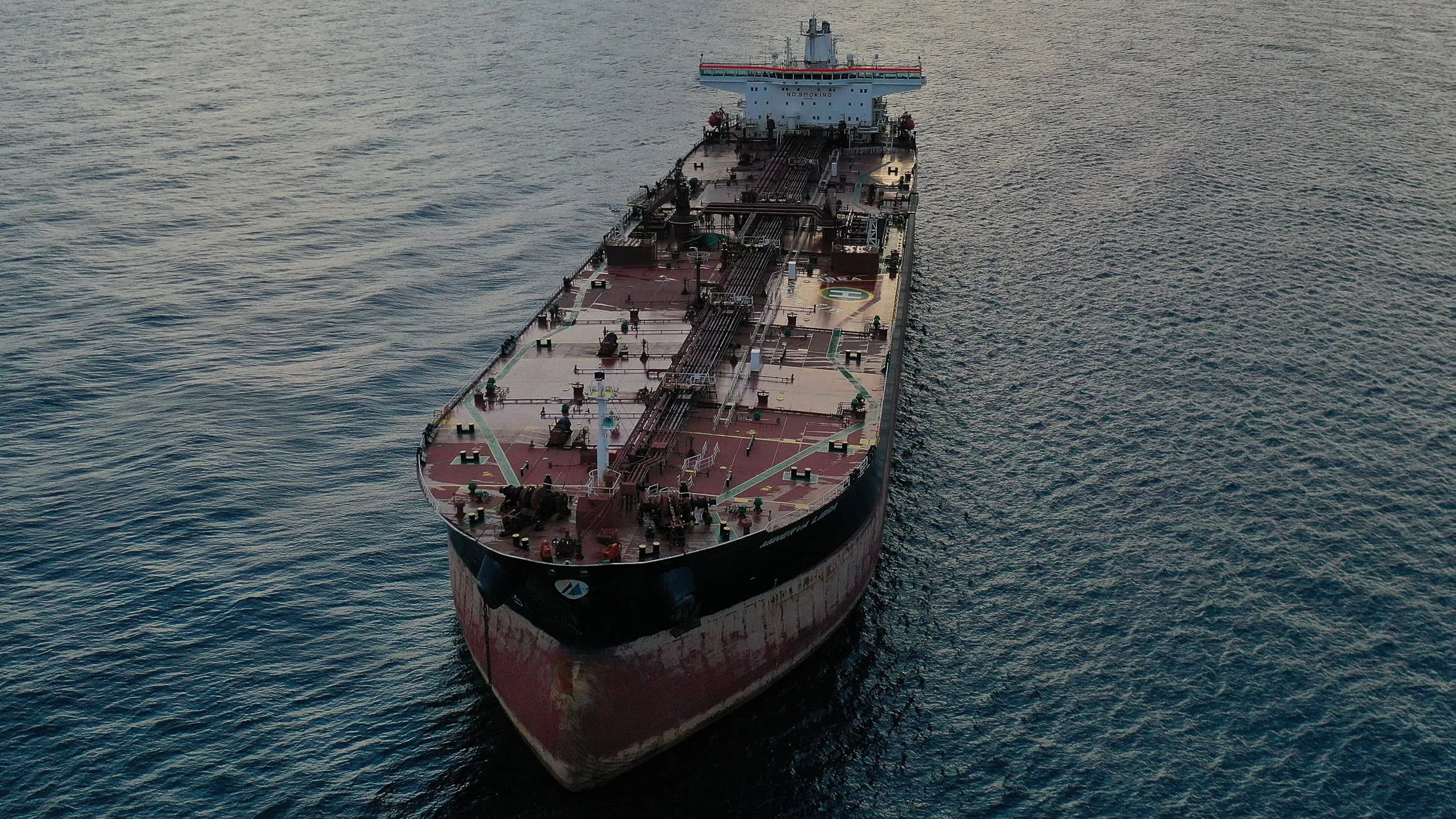
The geopolitical landscape of the Middle East is undergoing a seismic shift as the threat of a wider regional conflict involving Iran forces a radical reconfiguration of global energy logistics. For decades, the Strait of Hormuz has served as the undisputed jugular vein of the global oil trade, but as tensions reach a breaking point, the world’s largest supertankers are increasingly bypassing the Persian Gulf in favor of Red Sea terminals. This migration of maritime traffic is not merely a temporary tactical maneuver; it represents a fundamental pivot in energy security strategy that carries profound implications for global markets, insurance costs, and the economic stability of both oil-producing and oil-consuming nations.
The Strait of Hormuz, a narrow waterway through which approximately 20 to 21 million barrels of oil pass daily—roughly 20% of the world’s total liquid petroleum consumption—has long been considered the most vulnerable chokepoint in the global energy supply chain. As rhetoric between Tehran and its regional adversaries escalates into direct military engagement, the risk of a total or partial blockade of the Strait has transitioned from a theoretical "black swan" event to an immediate operational concern for commodity traders and shipping conglomerates. In response, the maritime industry is executing a massive logistical pivot toward Saudi Arabia’s western coastline, specifically the Port of Yanbu, which serves as the terminus for the Kingdom’s massive East-West Pipeline.
This 745-mile infrastructure project, often referred to as the "Petroline," was designed precisely for this contingency. With a nameplate capacity of approximately 5 million barrels per day, the pipeline allows Saudi Arabia to bypass the Strait of Hormuz entirely, transporting crude from its eastern fields directly to the Red Sea. Current satellite tracking data and port manifests indicate a surge in Very Large Crude Carriers (VLCCs) congregating at Red Sea terminals, as buyers from Europe and Asia seek to secure supplies that are insulated from the volatility of the Gulf. However, the capacity of such alternative routes remains a critical bottleneck. Even if the Petroline and the UAE’s Habshan–Fujairah pipeline—which terminates outside the Gulf of Oman—are utilized to their absolute maximum, they can only compensate for a fraction of the volume that typically flows through Hormuz.
The economic fallout of this shift is being felt most acutely in the maritime insurance markets. War risk premiums for vessels entering the Persian Gulf have skyrocketed, in some cases increasing by over 1,000% within a matter of weeks. For a single VLCC voyage, these insurance costs can now add hundreds of thousands of dollars to the total freight bill, an expense that is inevitably passed down to the consumer at the pump. By contrast, while the Red Sea has faced its own share of instability due to Houthi insurgent activity in the Bab el-Mandeb strait, many operators currently view the northern Red Sea as a relatively safer harbor compared to the immediate vicinity of Iranian naval assets.
Market analysts are closely monitoring the impact of this disruption on the "geopolitical risk premium" embedded in Brent and West Texas Intermediate (WTI) crude prices. Historically, the threat of a Persian Gulf shutdown has been enough to send prices surging by $10 to $20 per barrel. In the current climate, the price floor for crude has been bolstered by the reality that a prolonged conflict could remove millions of barrels from the market overnight. The International Energy Agency (IEA) has warned that while global spare capacity remains relatively high, much of that capacity is physically located behind the very chokepoints that are now under threat. This creates a paradoxical situation where the world has plenty of oil, but no reliable way to move it to the refineries that need it most.
The strategic pivot to the Red Sea also highlights the changing roles of regional powers. Saudi Arabia’s investment in its western infrastructure is paying dividends, positioning the Kingdom not just as a producer, but as a resilient logistical hub. The expansion of the Yanbu industrial complex and the neighboring King Abdullah Port is part of a broader "Vision 2030" strategy to diversify trade routes, yet the current crisis has accelerated these ambitions into an immediate necessity. For the United Arab Emirates, the port of Fujairah has become an indispensable asset, acting as a deep-water gateway that allows tankers to load without ever entering the Persian Gulf.
For Asian economies, particularly China, India, and Japan, the choking of Gulf exports is a matter of national security. These nations are the primary destinations for Middle Eastern crude, and their reliance on the Strait of Hormuz is nearly absolute. Beijing, in particular, has sought to mitigate this vulnerability by investing in the China-Pakistan Economic Corridor (CPEC) and increasing overland imports from Russia and Central Asia. However, the sheer volume of maritime trade means that there is no immediate substitute for the supertanker fleets. As these vessels cluster in the Red Sea, the logistical strain on the Suez Canal is also expected to increase, further complicating the global supply chain for liquefied natural gas (LNG) and refined petroleum products.
The shift is also impacting the refinery sector. European refineries, which have been forced to pivot away from Russian Urals due to sanctions, had become increasingly dependent on Middle Eastern grades. A disruption in the Gulf forces these refiners to compete for the limited volumes available at Red Sea terminals or to source more expensive alternatives from the Atlantic Basin, such as West African or North Sea crude. This competition is driving a wedge between regional crude benchmarks, leading to extreme volatility in the "crack spreads"—the difference between the price of crude oil and the petroleum products extracted from it.
Furthermore, the environmental and safety risks of this maritime congestion cannot be ignored. The Red Sea is a delicate ecosystem, home to some of the world’s most resilient coral reefs. The sudden influx of high-tonnage traffic, combined with the risk of military crossfire, raises the specter of a catastrophic oil spill that could devastate the region’s tourism and desalination industries. Maritime authorities in Egypt, Jordan, and Saudi Arabia have reportedly stepped up patrols and vessel traffic management protocols to mitigate the risk of collisions in the increasingly crowded sea lanes.
As the situation evolves, the global energy industry is preparing for a "new normal" where the Strait of Hormuz is no longer viewed as a reliable passage. This realization is likely to trigger a new wave of investment in pipeline infrastructure and strategic petroleum reserves (SPR) across the globe. Countries that have traditionally relied on "just-in-time" delivery for their energy needs are now reconsidering the value of long-term storage and alternative routing.
In the short term, the rush of supertankers to the Red Sea serves as a barometer for the world’s anxiety over a major regional war. Each vessel that chooses the long route around the Cape of Good Hope or opts for a Red Sea pickup is a vote of no confidence in the stability of the Persian Gulf. While the Red Sea offers a temporary reprieve and a vital alternative, it is a solution fraught with its own complexities and limitations. The global economy remains tethered to the Middle East’s volatile geography, and as the "Tanker War" of the 21st century looms, the race to secure energy transit routes has become as critical as the race to produce the energy itself.
Ultimately, the economic impact of this shift extends far beyond the price of a barrel. It influences inflation targets for central banks, the profitability of global airlines, and the geopolitical alignment of nations. As the Red Sea becomes the new front line of energy logistics, the world watches to see if this ancient trade route can bear the weight of a global economy in crisis, or if the bottlenecks will simply migrate from one narrow strait to another. The current movement of the global tanker fleet is not just a reaction to war; it is the beginning of a profound reordering of the world’s most vital commodity markets.