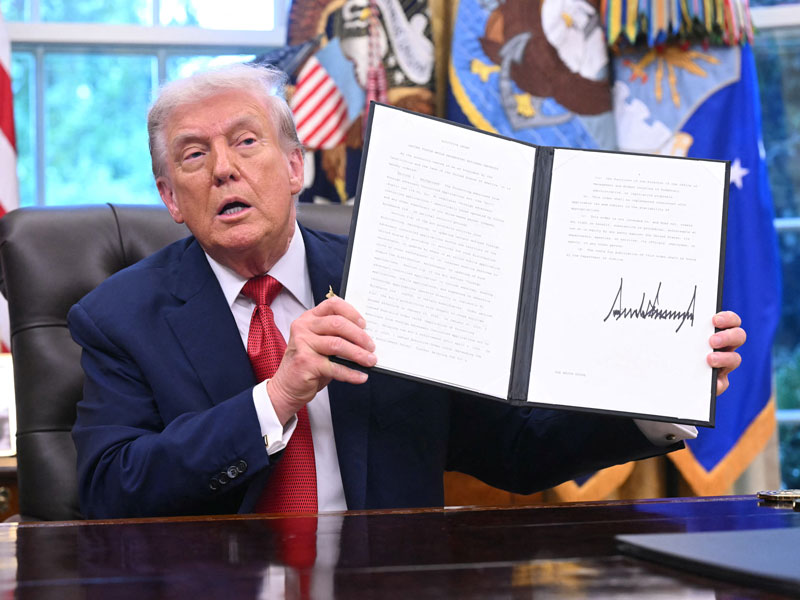
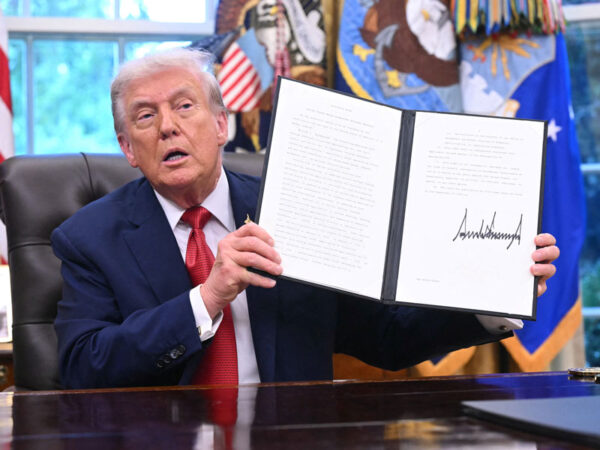
After a protracted period of diplomatic friction, regulatory scrutiny, and a series of extended deadlines, the future of TikTok in the United States has taken a significant turn. President Donald Trump has formally signed an executive order mandating the divestiture of the popular social media application from its Chinese ownership, ostensibly transferring its operations to American hands. This development, arriving after years of intense negotiations and legal challenges, including interventions from federal and state authorities and even a Supreme Court ruling, signals a new chapter for one of the world’s most influential digital platforms. However, beneath the surface of this resolution, a closer examination reveals that Beijing may have strategically positioned itself to retain considerable influence, transforming what appears to be an American victory into a nuanced geopolitical triumph for China.
On the face of it, the agreement presents a compelling case for American interests. The proposed framework involves a newly established U.S. entity, to be primarily controlled by Oracle and a consortium of American investors, which would assume responsibility for TikTok’s operations within the United States. Under this arrangement, all data pertaining to American users would be housed on Oracle’s servers located in Texas. Furthermore, the new American company would license TikTok’s proprietary recommendation algorithms, with plans to retrain them using American user data. The governance structure is also heavily weighted towards U.S. control, with six out of seven board seats designated for American nationals. This setup appears to safeguard American user data and place the operational and algorithmic core of TikTok firmly under U.S. jurisdiction. Adding a financial incentive, the deal includes a substantial payment from the investors to the U.S. administration, framed as a fee for brokering the resolution with Beijing.
However, a more critical appraisal of the agreement unveils a less reassuring picture of complete U.S. control. Global investors already hold a significant stake, approximately 60%, in ByteDance, TikTok’s parent company. The founders own an additional 20%, with employees holding the remaining 20%. Consequently, the new arrangement elevates U.S. ownership of the American operations to 80%, while ByteDance retains just under 20%, still positioning it as the largest single shareholder. More critically, the intellectual property underpinning TikTok’s highly effective recommendation algorithms remains firmly within ByteDance’s possession. The U.S. entities are not acquiring the core technology outright but are instead obtaining a licensed version.
Algorithms, by their very nature, are not static assets. Unlike tangible property, they are dynamic, data-intensive systems that require continuous refinement, adaptation, and substantial engineering support to maintain their efficacy. While Oracle may gain the ability to examine the code, replicate it, and retrain the licensed version on U.S. data, the ongoing operational capacity of the American TikTok will still be contingent upon periodic updates from China. This raises significant questions regarding the future flow of these updates, the extent to which Oracle can effectively monitor and audit them, and whether the U.S. version will have access to the same level of technological advancement as its global counterpart.
The power of an algorithm is derived not only from its architectural design but also from the vast datasets upon which it is trained. By restricting the new U.S. version of TikTok to solely American user data for retraining, Oracle will be deprived of access to the comprehensive global datasets that contribute to the sophistication and effectiveness of ByteDance’s cutting-edge models. This creates an inherent limitation on the performance and competitive edge of the U.S. TikTok, potentially widening the gap between its capabilities and those of the globally deployed version.
From Beijing’s perspective, the agreement provides substantial leverage. China has classified personalized recommendation algorithms as sensitive technology under its export-control regulations since 2020. This designation means that any export of updates or enhancements to TikTok’s algorithm is subject to approval by the Chinese government. This regulatory power allows Beijing to wield TikTok as a diplomatic tool. In the event of escalating geopolitical tensions—whether concerning Taiwan, trade disputes, or international conflicts—China could delay or withhold licensing approvals for algorithm updates, effectively using TikTok as a bargaining chip in broader diplomatic negotiations. This scenario transforms the platform from a purely commercial enterprise into a potent instrument of Chinese statecraft.
For U.S. investors involved in the new TikTok entity, a licensing arrangement governed less by strict legal terms and more by the shifting currents of geopolitical relations implies a heightened level of uncertainty. Rather than a definitive transfer of control from Chinese to American hands, the deal appears to substitute one form of dependence for another. While ByteDance will no longer directly manage daily content recommendations, thereby alleviating the U.S. government’s most immediate national security concerns regarding data access and algorithmic manipulation, China retains a residual and potent form of control. Beijing’s ability to dictate the scope of the license, the frequency of algorithm updates, and the potential for the U.S. version to keep pace with global advancements positions China to maintain significant influence. This arrangement risks solidifying, rather than diminishing, China’s sway over the platform.
The immediate fears of Chinese access to American user data or direct algorithmic manipulation may indeed subside with this agreement. However, these concerns are likely to be supplanted by a more subtle yet enduring risk: technological dependence on China, which maintains a critical chokehold on the engine that drives TikTok’s immense user engagement—its recommendation algorithm. The Trump administration’s approach appears to have traded one vulnerability for another. In a broader economic context, the potential emergence of a less competitive U.S. version of TikTok might not necessarily be detrimental to American society. Some analysts suggest that a less potent iteration of the platform could translate into reduced addictiveness, potentially benefiting American teenagers by fostering healthier digital habits, a consequence that users may not fully appreciate in the short term.
The long-term economic implications are multifaceted. For Oracle, this deal represents an opportunity to expand its cloud services and data management capabilities, albeit within a constrained technological environment. The company’s success will hinge on its ability to navigate the complexities of the licensing agreement and demonstrate robust data security and operational independence to U.S. regulators and the public. For the broader U.S. tech sector, the outcome of the TikTok saga could set precedents for future foreign investment and national security reviews of digital platforms, potentially influencing how other countries approach similar cross-border technology acquisitions.
Globally, the situation underscores the increasing intersection of technology, national security, and international relations. The U.S. strategy reflects a growing trend among Western nations to scrutinize and regulate Chinese technology companies, driven by concerns over data privacy, intellectual property theft, and potential state influence. China, in turn, has demonstrated its capacity to use its regulatory powers and market influence to protect its strategic technological assets and assert its geopolitical interests. The TikTok case serves as a potent case study in the challenges of managing the global digital economy in an era of heightened geopolitical competition, where the control of data and algorithms has become a paramount strategic concern. The ultimate impact on innovation, market competition, and user experience will continue to unfold as the new operational framework takes shape.