The global automotive sector finds itself at a pivotal juncture, grappling with profound technological shifts and a re-evaluation of its decarbonization pathways, compelling component manufacturers, particularly in dynamic markets like India, to adopt a ‘powertrain-agnostic’ strategy. This critical reorientation, moving away from a singular focus on electric vehicles (EVs), underscores a strategic imperative for resilience amidst market uncertainties and evolving policy landscapes. Auto component makers are increasingly pitching diversified portfolios capable of supporting internal combustion engines (ICE), hybrid electric vehicles (HEVs), compressed natural gas (CNG), and pure electric platforms simultaneously, a pragmatic hedge against the volatile trajectory of clean mobility.
The Shifting Tides of Global Automotive Strategy
For years, the narrative in the automotive industry was overwhelmingly dominated by the relentless march towards electrification. Major global automakers, fueled by ambitious emissions regulations and a desire to capture early market share, poured billions into EV-only platforms. Companies like Ford, Volkswagen, and Stellantis committed to aggressive electrification targets, envisioning a rapid transition to an all-electric future. However, recent developments suggest a more nuanced reality. Consumer adoption rates for EVs, while growing, have not universally met initial projections, particularly in markets where charging infrastructure remains nascent, purchase costs are prohibitive, or range anxiety persists.
This recalibration is evident in significant financial write-downs announced by some of the industry’s titans. Ford Motor, for instance, has reported substantial losses in its EV division, projecting write-downs exceeding $19 billion as it acknowledges the need for a more diversified product mix that includes hybrids. Similarly, Stellantis has signaled a $26.5 billion write-off related to its electrification investments, opting to broaden its strategic focus to encompass advanced ICE and hybrid technologies alongside EVs. Even luxury brands like Porsche, a subsidiary of Volkswagen, have faced production delays for their EV lineups, contributing to an estimated $6 billion impact on the parent company. These adjustments are not merely minor course corrections; they represent a fundamental reassessment of the speed and linearity of the energy transition, forcing a strategic pivot across the entire automotive value chain.
India’s Unique Trajectory and the Imperative for Flexibility
The Indian automotive market presents a particularly complex landscape, characterized by acute price sensitivity, a vast existing ICE vehicle parc, and a developing energy infrastructure. While the Indian government has actively promoted EV adoption through initiatives like the FAME scheme, it has also maintained a pragmatic stance on transitional fuels. The Bureau of Energy Efficiency (BEE) and a high-level Niti Aayog panel have outlined a multi-technology clean fuel mix scenario for the coming decade, explicitly including hybrids, flex-fuel vehicles, CNG, and traditional ICE engines alongside EVs. This policy clarity, emphasizing a phased transition rather than an abrupt shift, creates a distinct operating environment for Indian auto component manufacturers.
Industry leaders recognize this complexity. Parag Satpute, managing director and chief executive at Greaves Cotton, a company with a market capitalization of approximately ₹3,580 crore, articulated this necessity: "You have to hedge your bets, or rather, you have to make sure you have activities in all [powertrains]. Even the OEMs are doing that." For component makers, this hedging is often more feasible than for vehicle assemblers. Greaves Cotton, traditionally strong in engine manufacturing, is expanding its offerings to include powertrain-agnostic components such as gear shift systems, foot throttle controls, steering wheels, and park brake cables, which are essential across all propulsion architectures. This approach leverages existing manufacturing capabilities while broadening market reach.

The Strategic Advantage of Powertrain Agnosticism
The shift towards powertrain-agnostic portfolios offers a crucial competitive advantage in an era defined by uncertainty. Companies like Tenneco Clean Air India, a subsidiary of the American component major Tenneco Inc. with a market cap exceeding ₹22,000 crore, exemplify this adaptability. Arvind Chandra, chief executive at Tenneco Clean Air India, highlighted the company’s preparedness for various scenarios: "What we’re seeing at a high level is no matter how the pendulum swings, whether it swings to go back to full internal combustion engine, diesel, petrol vehicles, we are fine because we have enough content there in terms of emissions, after-treatment systems, etc." He further noted that a swing towards electrification benefits them through demand for more sophisticated electronically controlled shock absorbers, while hybrids offer the "best of both worlds" for their business.
Pune-based Belrise Industries, listed last year and currently valued at ₹17,540 crore, also champions this flexible approach. Swastid Badve, general manager at Belrise Industries, emphasized that a significant portion of their current business derives from products inherently agnostic to the powertrain. "If you see the bread and butter of what Belrise does, there’s chassis, polymer parts, suspensions – all of those are power-agnostic. So, in effect, whether it’s an EV or an ICE, our components go into both EVs as well as ICE," Badve explained. This strategy minimizes the risk of stranded assets or obsolete product lines, ensuring continued relevance and revenue streams regardless of which technology gains dominance in specific segments or markets.
Economic Implications and Future Outlook
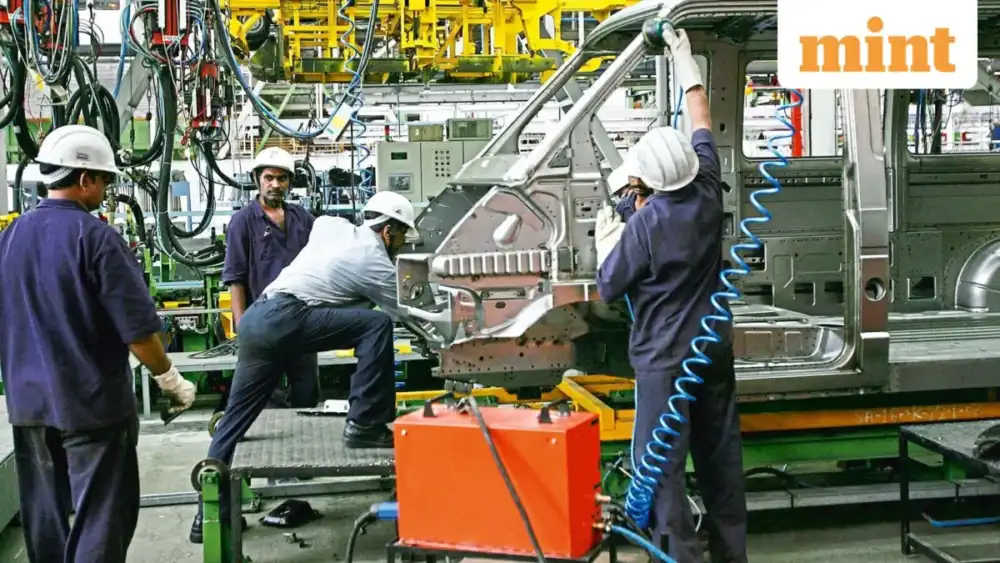
The implications of this strategic shift extend beyond individual companies, resonating throughout the broader economy. India’s auto component industry is a significant contributor to the nation’s manufacturing output and employment, supporting millions of jobs directly and indirectly. By embracing powertrain agnosticism, Indian suppliers enhance their resilience, attract global OEMs seeking diversified and reliable partners, and solidify India’s position as a robust manufacturing hub. This approach fosters domestic technological capabilities, encouraging investments in R&D that can serve a wide array of propulsion systems rather than concentrating efforts on a single, potentially volatile, technology.
Harshvardhan Sharma, Group Head of Automotive Technology & Innovation at Nomura Research Institute Consulting & Solutions India, aptly summarized the rationale: "Instead of making a binary bet on EV only components, many suppliers are investing in components and engineering capabilities that can serve ICE, hybrid and electric platforms simultaneously." He further articulated that the transition to electrification will not be linear, especially in diverse markets like India where multiple technologies are destined to coexist for the foreseeable future. In such an environment, suppliers that are "powertrain agnostic with products spanning multiple propulsion architectures are structurally better positioned to manage both demand uncertainty and technology risk."
The current landscape suggests a prolonged period of technological pluralism in the automotive industry. Rather than a swift, clean break from fossil fuels, the coming decades will likely see a complex interplay of various propulsion systems, each optimized for different applications, geographies, and consumer preferences. For auto component makers, this means that adaptability, diversified product portfolios, and continuous innovation across multiple technological fronts will be paramount. The ability to pivot, to leverage existing strengths while building new capabilities, and to serve a heterogeneous market will define success in this evolving, multi-faceted journey towards sustainable mobility. This strategic flexibility is not merely a tactical response to uncertainty; it is a fundamental shift towards a more robust and sustainable business model in a rapidly changing world.