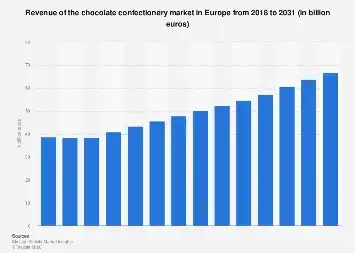
The European chocolate market is projected to experience robust and consistent growth in revenue from 2018 through 2031, indicating a resilient and evolving consumer landscape for this beloved confectionary. This long-term forecast, based on comprehensive market analysis, suggests a compound annual growth rate (CAGR) that will see the sector significantly expand its economic footprint across the continent. The data encompasses a broad definition of chocolate and chocolate products, falling under the umbrella of "Chocolate Confectionery," which primarily includes chocolate bars, candy bars, and pralines. Crucially, this segment explicitly excludes products such as cookies and spreads that contain cocoa but are not primarily considered chocolate confections. The global dominance of key players like Mondelez International, Mars, Nestlé, Ferrero, and Hershey underscores the concentrated nature of manufacturing power within this industry, influencing supply chains, product development, and marketing strategies across European nations.
The European chocolate market is characterized by several key metrics that paint a detailed picture of its performance and trajectory. These include total market revenue, average revenue generated per capita, overall market volume (measured in kilograms), average volume consumed per capita, and the price per unit, with a unit typically defined as one kilogram. The market’s scope is defined by retail sales, encompassing both online and offline channels, and is exclusively focused on private end-customer consumption (B2C). It is important to note that this analysis is confined to "at-home consumption," deliberately excluding the significant, yet distinct, market for "out-of-home" chocolate consumption, such as that found in cafes, restaurants, and convenience stores. This segmentation allows for a precise understanding of consumer purchasing habits within their domestic environments.
Examining the historical performance and projected future of the European chocolate market reveals a dynamic interplay of consumer preferences, economic factors, and industry innovation. While specific CAGR figures are proprietary to the data provider, the sustained upward trend implies a market that is not only recovering from any potential past economic headwinds but is actively expanding. This growth is likely fueled by a combination of factors, including population demographics, increasing disposable incomes in certain regions, and a fundamental, enduring consumer demand for chocolate. The per capita consumption figures, both in terms of revenue and volume, offer a granular view of how deeply ingrained chocolate is in the European diet and lifestyle, varying significantly by country and demographic.
A pivotal driver of this projected growth is the ongoing trend of premiumization. European consumers, particularly in Western and Northern European countries, are increasingly willing to spend more on higher-quality chocolate products. This translates into a demand for artisanal chocolates, those made with ethically sourced cocoa beans, single-origin varieties, and unique flavor combinations. Brands that can effectively communicate their commitment to quality ingredients, sustainable practices, and sophisticated flavor profiles are well-positioned to capture a larger share of this value-driven market. The rise of craft chocolate makers and the increased availability of premium brands in mainstream retail channels are testaments to this evolving consumer palate. This shift from bulk, mass-produced chocolate to more curated, experience-oriented products suggests a maturing market where taste, origin, and ethical considerations are becoming as important as price.
Innovation in product development also plays a crucial role in sustaining market momentum. Beyond traditional chocolate bars and pralines, manufacturers are exploring novel formats, textures, and flavor profiles. This includes the development of plant-based or vegan chocolate options to cater to growing dietary trends, the incorporation of functional ingredients like probiotics or adaptogens, and the creation of more sophisticated chocolate-based desserts and snacks. The integration of technology in product design and consumer engagement, such as personalized chocolate assortments or interactive online ordering platforms, further contributes to market dynamism. The willingness of consumers to experiment with new offerings ensures a continuous cycle of demand and encourages manufacturers to invest in research and development.
Geographically, the European market is not monolithic. While Western European nations often lead in premiumization and per capita spending, emerging markets in Eastern Europe are exhibiting strong volume growth as disposable incomes rise and chocolate consumption becomes more widespread. This presents a dual opportunity for manufacturers: to deepen their penetration in established, high-value markets and to tap into the burgeoning demand in developing economies. Understanding these regional nuances is critical for strategic market entry and expansion. For instance, a marketing strategy that emphasizes indulgence and gifting might resonate strongly in Germany or France, while a focus on affordability and accessibility could be more effective in Poland or Romania.
The economic impact of the chocolate market extends beyond direct sales. It supports a vast ecosystem of stakeholders, including cocoa farmers in West Africa and South America, logistics providers, packaging manufacturers, retailers, and marketing agencies. The increasing focus on sustainability and fair trade practices within the cocoa supply chain is also becoming a significant economic and ethical consideration. Companies are investing in traceability initiatives and direct sourcing programs to ensure the long-term viability of cocoa production and to meet the growing consumer demand for ethically produced chocolate. This has a ripple effect, influencing agricultural practices, rural economies, and international trade relations.
Furthermore, the chocolate market is susceptible to broader economic trends. Inflationary pressures can impact raw material costs, such as cocoa beans and sugar, as well as packaging and energy expenses, which can, in turn, affect retail prices and consumer purchasing power. Fluctuations in currency exchange rates can also influence the cost of imported ingredients and the profitability of exports. Despite these potential challenges, the inherent desirability and perceived value of chocolate as an affordable luxury often allow the market to demonstrate remarkable resilience, even during periods of economic uncertainty. Consumers tend to protect their discretionary spending on items that provide comfort and enjoyment, and chocolate often falls into this category.
The competitive landscape is characterized by both established multinational corporations and a growing number of smaller, independent producers. While the larger players benefit from economies of scale, brand recognition, and extensive distribution networks, smaller companies often thrive by focusing on niche markets, unique product offerings, and direct consumer engagement. This creates a vibrant and dynamic market environment where both large-scale production and specialized craftsmanship can coexist and flourish. The ability of companies, regardless of size, to adapt to changing consumer preferences, embrace innovation, and demonstrate a commitment to quality and sustainability will be key to their success in the coming years. The European chocolate market, therefore, is not merely a sector of confectionery sales but a complex economic engine driven by evolving consumer desires, technological advancements, and a globalized supply chain.