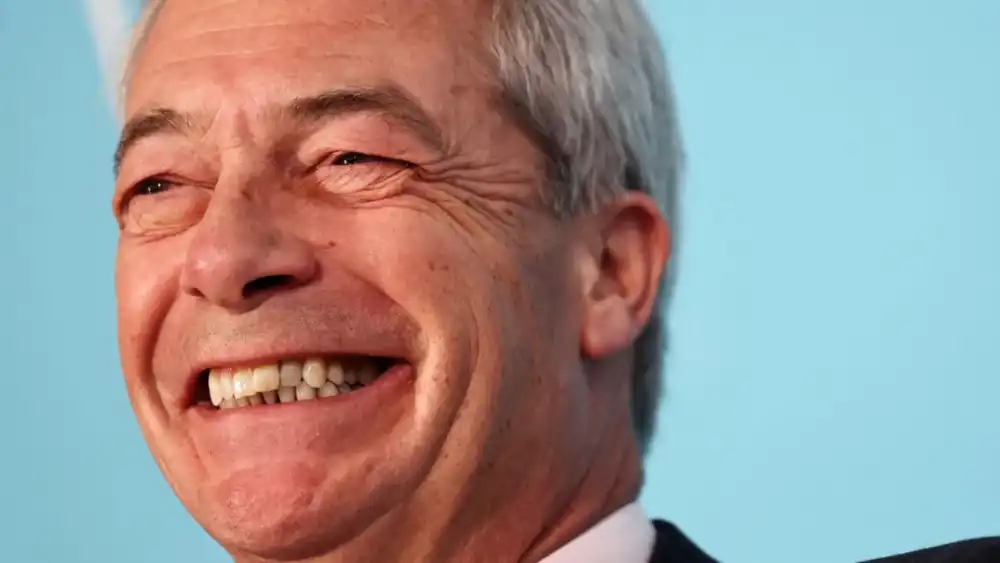
The intersection of high-stakes digital finance and insurgent British politics has reached a new milestone as Reform UK, the right-wing populist party led by Nigel Farage, secured its second substantial injection of capital from a high-profile cryptocurrency investor based in Thailand. This influx of funding highlights a burgeoning trend in the global political economy: the migration of decentralized wealth into traditional democratic processes. As traditional parties struggle to maintain their fundraising bases amidst economic stagnation, alternative political movements are increasingly turning to the "new money" of the blockchain era to finance their expansion and challenge the established order.
The donor in question, George Cottrell—a former aide to Farage often referred to by the moniker "Posh George"—has reportedly channeled another significant sum into the party’s coffers. Cottrell’s background is as colorful as it is controversial, involving a high-flying career in private banking, a period of incarceration in the United States related to money laundering charges, and a subsequent relocation to the luxury enclaves of Southeast Asia. His latest financial commitment to Reform UK underscores a deepening alliance between the libertarian-leaning fringes of the British electorate and the globalized, often nomadic, class of crypto-entrepreneurs who view national borders and traditional fiscal regulations with skepticism.
The timing of this donation is particularly strategic. Reform UK has been positioning itself as the primary disruptor to the Conservative Party’s dominance on the right, leveraging a platform of radical tax cuts, strict immigration controls, and a vocal embrace of digital assets. For a party that prides itself on being an "insurgency," the ability to tap into the massive liquidity of the cryptocurrency market provides a competitive advantage that traditional grassroots fundraising cannot match. This capital allows for sophisticated digital targeting, high-production media campaigns, and the infrastructure necessary to contest seats across the United Kingdom on a scale that was previously the sole province of the two major parties.
From a regulatory perspective, the donation raises complex questions regarding the transparency and origins of political funding in a globalized economy. Under the rules set forth by the UK Electoral Commission, political parties are permitted to accept donations only from "permissible donors." This category includes individuals who are registered on a UK electoral roll, as well as UK-registered companies and trade unions. While Cottrell’s residency in Thailand might suggest a foreign influence, his status as a British citizen and his presence on the electoral register ensure the legality of the transaction. However, the fact that the wealth was generated in the volatile and often opaque world of offshore cryptocurrency trading adds a layer of scrutiny that the Electoral Commission is increasingly pressured to address.
The broader economic context of this trend is the rise of Thailand as a global hub for digital asset enthusiasts and high-net-worth "crypto-exiles." Over the last five years, Thailand has implemented a regulatory framework that, while strictly governed by its Securities and Exchange Commission, has remained attractive to those seeking a balance between lifestyle and financial freedom. This has created a corridor of influence where capital generated in the digital markets of the East is being repatriated to influence the political outcomes of the West. It represents a reversal of the traditional post-war flow of political influence, where Western institutions typically exported their democratic and economic models to developing nations.
This phenomenon is not unique to the United Kingdom. In the United States, the 2024 election cycle has seen an unprecedented amount of funding from the crypto industry. Organizations like Fairshake, a pro-crypto Super PAC, have raised hundreds of millions of dollars to support candidates who favor a light-touch regulatory approach to blockchain technology. The collapse of FTX and the subsequent legal battles of Sam Bankman-Fried briefly cast a shadow over this influence, but the industry has rebounded with a more disciplined and focused lobbying effort. The "crypto-voter" is now a recognized demographic, and the "crypto-donor" is a pillar of modern campaign finance.
For Reform UK, the embrace of crypto-wealth aligns perfectly with its ideological brand. The party’s economic manifesto frequently touches on themes of fiscal sovereignty and the reduction of state intervention—principles that resonate deeply with the "Cypherpunk" ethos of the original Bitcoin movement. By positioning themselves as the party of the future—one that understands the digital frontier—Reform UK aims to capture the imaginations of younger, tech-savvy voters who feel alienated by the perceived stagnation of the Westminster consensus. The party has even flirted with the idea of making the UK a "crypto-capital" of the world, a policy stance that directly appeals to its high-net-worth backers.
However, the reliance on such concentrated sources of wealth carries inherent risks. Political analysts point out that "whale" donors can exert disproportionate influence over party policy, potentially alienating the working-class "Red Wall" voters that Reform UK seeks to court. There is a fundamental tension between the populist rhetoric of "the people versus the elite" and a funding model that relies on millionaire investors living in luxury abroad. If the party is seen as a vehicle for the interests of offshore capital rather than a voice for the domestic disenfranchised, its growth may hit a ceiling.
Moreover, the volatility of the cryptocurrency market itself introduces a level of fiscal instability for the party. Unlike traditional corporate donors, whose contributions are often tied to steady cash flows and quarterly earnings, crypto-wealth can evaporate or multiply overnight. A sudden market downturn could leave a party like Reform UK with significant financial shortfalls in the middle of a critical campaign. Conversely, a bull market provides them with a "war chest" that can overwhelm opponents through sheer volume of spending.
The institutional response to this trend has been one of cautious observation. The UK government has recently introduced the National Security and Investment Act and updated the Elections Act 2022 to tighten rules around foreign interference. Yet, as long as the donors are British citizens, the "offshore" nature of their wealth remains a legal grey area. Critics argue that the current system allows for a "laundering" of political influence, where the source of the money is shielded by the complexities of blockchain ledgers and international shell companies.
As the next general election approaches, the role of George Cottrell and other digital-age donors will likely become a focal point of the political discourse. The debate will center on whether the UK’s democratic integrity is being compromised by "dark money" or whether this is simply the natural evolution of political financing in the 21st century. If Reform UK manages to translate this digital wealth into significant parliamentary representation, it will serve as a proof-of-concept for other populist movements across Europe and beyond.
In the final analysis, the second major donation to Reform UK from a Thailand-based crypto investor is more than just a footnote in a campaign finance report. It is a signal of a paradigm shift. The gatekeepers of political power are no longer just the industrial magnates or the trade union bosses of the 20th century. They are now joined by a new class of digital nomads who wield the power of the blockchain to reshape the maps of national politics. As the boundaries between technology, finance, and governance continue to blur, the British political landscape is being redrawn by forces that are as decentralized as they are powerful. The success or failure of Reform UK will be a litmus test for the efficacy of this new model of political venture capital.