The landscape of alternative investments, once the exclusive playground of institutional titans and sovereign wealth funds, is currently grappling with a significant stress test as the world’s largest private credit fund faces a surge in redemption requests. Blackstone’s flagship private credit vehicle, BCRED, recently processed a record wave of withdrawals, sparking a broader conversation about the stability of the $1.7 trillion private debt market and the inherent tension between illiquid assets and investor liquidity expectations. This development has sent ripples through the financial markets, prompting a re-evaluation of the "shadow banking" sector that has rapidly expanded to fill the void left by traditional commercial banks over the last decade.
In a recent regulatory filing, Blackstone revealed that it had fulfilled redemption requests totaling approximately 7.9% of BCRED’s net asset value for the most recent quarter. For a fund that manages roughly $82 billion in assets, this represents a massive outflow of capital. To facilitate these withdrawals and ensure the fund remained within its operating limits, Blackstone and its employees injected $150 million of their own capital into the vehicle. While the firm characterized this as a move of strength intended to meet 100% of investor requests with "certainty and timeliness," the market reacted with palpable anxiety. Shares of Blackstone plummeted by as much as 8.5% in the immediate aftermath, dragging down the share prices of other major private credit players as investors feared a systemic cooling of the sector.
The friction between the performance of the underlying loans and the sentiment of the investors holding them has become a focal point for Jon Gray, Blackstone’s President and Chief Operating Officer. Gray has been vocal in defending the quality of the portfolio, pointing to a 10% growth in EBITDA (earnings before interest, taxes, depreciation, and amortization) among the fund’s more than 400 borrowers over the past year. From a fundamental perspective, the fund appears robust, boasting an annualized return of 9.8% since its inception for its Class I shares. However, Gray’s assertion that the current volatility is merely "market noise" or a "spin cycle" fueled by news headlines highlights a growing disconnect in the private wealth channel.

This "noise" is not without context. The private credit industry has been under increasing scrutiny following the high-profile struggles of other firms and sectors. Late last year, the collapse of subprime auto lender Tricolor and the fraud charges surrounding First Brands sent a chill through the market. These incidents, while idiosyncratic, served as a reminder that the rapid expansion of private lending has not been without its casualties. More recently, Blue Owl Capital, another heavyweight in the space, was forced to find buyers for $1.4 billion in loans to help facilitate redemptions for 30% of one of its embattled credit funds. When such large-scale maneuvers become necessary, the market begins to question whether the liquidity promised to retail and high-net-worth investors is compatible with the long-term, illiquid nature of the loans themselves.
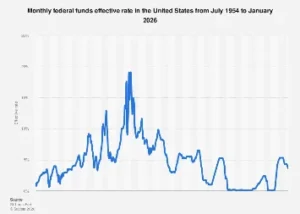
The rise of private credit has been one of the most significant structural shifts in global finance since the 2008 financial crisis. As stricter Basel III regulations forced traditional banks to retreat from mid-market lending to preserve capital, private equity firms stepped in to fill the gap. These firms offered flexible, "bespoke" financing solutions to companies that might otherwise struggle to access the public bond markets. For years, this was a winning formula: investors received higher yields than those available in government bonds, and borrowers received certain, rapid execution. However, the current environment of "higher for longer" interest rates has changed the calculus. While higher rates initially boosted the floating-rate returns of private credit funds, they have also increased the debt-servicing burden on borrowers, raising concerns about potential defaults.
A specific area of concern for BCRED is its heavy exposure to the software industry, which accounts for approximately 25% of its total portfolio. The software sector has long been a darling of private credit due to its recurring revenue models and high margins. Yet, the rapid emergence of generative artificial intelligence has introduced a new layer of uncertainty. Investors are increasingly wary of "legacy" software firms that may face disruption or obsolescence at the hands of AI-driven competitors. Gray has acknowledged these concerns but maintains that many of these companies are deeply embedded in their clients’ operations, making them difficult to dislodge. Furthermore, he emphasizes that as debt lenders, Blackstone sits at the top of the capital structure, providing a significant cushion of equity beneath them that would have to be wiped out before the lenders face losses.
The broader economic impact of a slowdown in private credit cannot be overstated. Because private lenders now provide a significant portion of the capital used for leveraged buyouts and corporate expansions, a contraction in this market could lead to a "credit crunch" for the middle-market companies that form the backbone of the global economy. If funds like BCRED are forced to prioritize liquidity and redemptions over new originations, the flow of capital to productive enterprises could dry up, potentially stifling economic growth.

Moreover, the "retailization" of private markets—the push to bring individual investors into products previously reserved for the ultra-wealthy—has introduced a new behavioral dynamic. Institutional investors, such as pension funds, typically have decades-long investment horizons and are less likely to panic during short-term market fluctuations. In contrast, individual investors and their financial advisors may be more reactive to news cycles and volatility. When a fund offers monthly or quarterly redemptions, even with "gates" or limits in place, it creates a psychological expectation of liquidity. When those gates are tested, it can lead to a self-fulfilling prophecy where the fear of being unable to exit triggers a rush for the doors.
Global regulators are watching these developments with a wary eye. Organizations like the International Monetary Fund (IMF) and the Financial Stability Board (FSB) have repeatedly warned about the lack of transparency in the private debt market. Unlike the public markets, where loan prices are discovered daily, private credit valuations are often based on internal models and are only updated periodically. This "valuation lag" can mask brewing trouble until it is too late to react. The current redemption pressure at Blackstone serves as a real-time laboratory for how these structures handle stress.
Despite the current jitters, many analysts believe the private credit asset class is here to stay. The structural advantages—speed, customization, and the absence of public market volatility—remain attractive to many borrowers. For Blackstone, the challenge lies in managing the transition from a period of unbridled growth to a more mature, scrutinized phase of the credit cycle. The firm’s decision to use its own capital to meet redemptions is a clear signal that it intends to protect its reputation and the viability of the BCRED brand at all costs.
As the "noise" continues, the ultimate resolution will depend on the performance of the underlying companies. If the 10% EBITDA growth cited by Gray remains a reality across the portfolio, the fund will likely weather the storm as redemptions normalize. However, if the broader economy weakens and defaults begin to rise, the current liquidity pressure may be remembered not as a momentary distraction, but as the first crack in the foundation of the private credit boom. For now, the financial world remains focused on Blackstone, waiting to see if the world’s largest private credit fund can prove that its fundamentals are indeed stronger than the market’s fears.