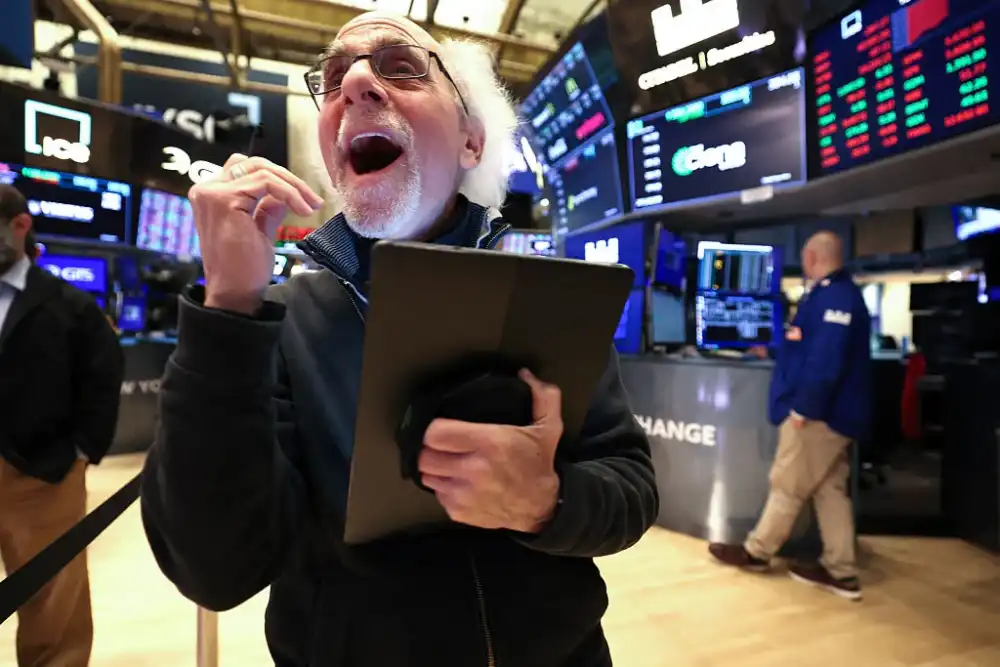
The financial landscape of the past week has been defined by a dramatic reversal of fortune, as equity markets staged a robust recovery that effectively neutralized the anxieties of the preceding period of volatility. Following a tumultuous start to the month characterized by fears of a hard landing and a precipitous unwinding of global carry trades, the major indices have demonstrated an impressive ability to recalibrate. This resurgence was not merely a technical bounce-back but was underpinned by three primary economic pillars: a cooling inflation narrative that solidifies the case for interest rate cuts, a surge in retail spending that defies recessionary forecasts, and a stabilization of the international currency dynamics that had previously sent shockwaves through the global banking system. As investors digest a flurry of data points, the prevailing sentiment has shifted from defensive trepidation to a calculated optimism, suggesting that the "Goldilocks" scenario—where growth remains steady while inflation recedes—is once again the dominant market thesis.
The first and arguably most influential force driving the market’s ascent was the latest suite of inflation data, which provided the clearest signal yet that the Federal Reserve’s restrictive monetary policy is achieving its intended goals. The release of the Consumer Price Index (CPI) for July revealed that year-over-year inflation dipped below the 3% threshold for the first time since early 2021. This psychological and mathematical milestone was greeted with enthusiasm by market participants who have spent the better part of two years navigating the headwinds of high borrowing costs. When paired with the Producer Price Index (PPI) data, which showed wholesale prices rising less than anticipated, the narrative of "disinflation" gained significant momentum. For the Federal Open Market Committee (FOMC), these figures offer the "greater confidence" that Chair Jerome Powell has frequently cited as a prerequisite for pivoting toward a more accommodative stance. Analysts now view a September rate cut not just as a possibility, but as a virtual certainty, with the debate shifting from "if" a cut will occur to "how deep" the initial reduction will be.
However, inflation data alone does not account for the breadth of the rally. The second major catalyst was a series of reports highlighting the unexpected resilience of the American consumer. Fears of a systemic slowdown were sharply rebuked by retail sales figures that significantly overshot consensus estimates. In a month where many economists expected a contraction or stagnation, retail sales surged by 1.0%, the largest increase since early 2023. This data point is crucial because consumer spending accounts for approximately two-thirds of the U.S. Gross Domestic Product (GDP). The strength in spending—particularly in sectors like electronics, appliances, and food services—suggests that despite the pressures of elevated interest rates and a cooling labor market, the household balance sheet remains remarkably durable. This resilience effectively dismantled the "recession is imminent" narrative that had gained traction following the previous month’s disappointing jobs report. By proving that the consumer is still willing and able to spend, the data provided a fundamental floor for corporate earnings expectations, particularly within the discretionary and technology sectors.
The third force acting as a tailwind for the market was the stabilization of the global "carry trade," a complex financial maneuver that had caused a massive liquidity drain earlier in the month. The carry trade involves investors borrowing money in a low-interest-rate currency, such as the Japanese Yen, to invest in higher-yielding assets elsewhere, including U.S. equities and tech stocks. When the Bank of Japan unexpectedly raised interest rates and the U.S. labor market showed signs of softening, the Yen spiked, forcing a rapid and painful liquidation of these positions. This "unwinding" was responsible for the global sell-off that saw the Nikkei 225 suffer its worst day since 1987 and the S&P 500 tumble into a brief correction. Over the past week, however, the Yen has stabilized, and the Bank of Japan has signaled a more cautious approach to further rate hikes. This cooling of currency volatility has allowed institutional investors to return to the market with greater confidence, knowing that the threat of a forced, systemic liquidation has largely been contained.
Beyond these three primary drivers, the broader market context has been bolstered by a successful conclusion to the second-quarter earnings season. While the "Magnificent Seven" technology giants have faced scrutiny regarding their massive capital expenditures on Artificial Intelligence (AI) infrastructure, the actual bottom-line results have remained healthy. The focus has shifted from the sheer scale of investment to the tangible productivity gains being realized. Furthermore, the rally has shown signs of broadening beyond the tech sector. Small-cap stocks, as measured by the Russell 2000, and value-oriented sectors like industrials and financials, have begun to participate more actively in the upward move. This diversification is often viewed by market technicians as a sign of a healthy, sustainable bull market, rather than a speculative bubble concentrated in a few over-leveraged names.
The international perspective further illustrates the strength of this recovery. While the United States led the charge, European markets also found footing as the European Central Bank (ECB) signaled a similar readiness to ease policy in the face of slowing regional growth. In Asia, the stabilization of the Chinese yuan and a series of targeted stimulus measures from Beijing provided a secondary layer of support for global risk appetite. The interconnectedness of modern financial markets means that a recovery on Wall Street often acts as a beacon for global capital, and this past week was no exception. The CBOE Volatility Index (VIX), often referred to as the market’s "fear gauge," saw one of its fastest retreats in history, falling from levels typically associated with systemic crises back to its long-term average, signaling a return to normalcy.
Despite the prevailing optimism, economic analysts caution that the path forward is not without its pitfalls. The upcoming Jackson Hole Economic Symposium will be a critical juncture, as central bankers from around the world gather to discuss the "reassessment of the effectiveness and transmission of monetary policy." Investors will be scrutinizing every word from Chair Powell for clues regarding the trajectory of rate cuts through the end of 2024 and into 2025. There is also the lingering concern of the "Sahm Rule," a recession indicator that was triggered by the recent rise in the unemployment rate. While the strong retail sales data has mitigated this concern for now, the labor market remains the "X-factor" that could either cement the soft landing or pull the economy into a downturn.
Furthermore, the geopolitical landscape remains a source of potential "black swan" events. Ongoing tensions in the Middle East and the protracted conflict in Ukraine continue to pose risks to global energy prices and supply chains. Any significant escalation could reignite inflationary pressures, complicating the Federal Reserve’s plans to ease policy. However, for the time being, the market appears to have priced in these risks, choosing instead to focus on the domestic economic data which suggests a cooling but still vibrant economy.
In conclusion, the stock market’s comeback week represents a significant psychological victory for bulls who have argued that the U.S. economy is more resilient than it is given credit for. By successfully navigating the "triple threat" of inflation anxiety, recession fears, and currency volatility, Wall Street has re-established a foundation for potential growth in the final months of the year. The synergy between cooling prices, robust consumer activity, and stabilized global liquidity has created a fertile environment for equity appreciation. As the focus shifts from crisis management back to growth fundamentals, the narrative of 2024 continues to be one of adaptation and endurance. While the road ahead will undoubtedly feature further bouts of volatility, the lessons learned from this recovery suggest that the structural integrity of the market remains intact, supported by an economy that is bending but notably refusing to break.