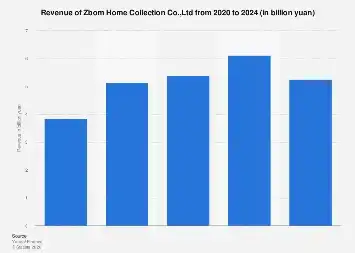
The Chinese home furnishings giant, Zbom Home Collection Co., Ltd., headquartered in China, has experienced a notable evolution in its revenue trajectory leading up to 2024. While precise financial figures for the current year remain proprietary and accessible only through premium data services, available indicators suggest a dynamic performance for the company within the competitive global home furnishings sector. The company’s fiscal year concludes on December 31st, providing a consistent benchmark for annual financial assessments.
Analyzing the period from 2020 to 2024, Zbom Home Collection Co., Ltd. has demonstrated an overall upward trend in its revenue. This growth, however, has not been a linear progression, highlighting the inherent volatility and cyclical nature of the home furnishings industry, which is susceptible to economic fluctuations, consumer spending patterns, and evolving design trends. The company’s ability to achieve an increase in revenue compared to its 2020 performance underscores its resilience and strategic positioning in a market characterized by intense competition and rapidly changing consumer preferences.
The global home furnishings market is a significant economic contributor, valued in the hundreds of billions of dollars annually. This sector encompasses a wide array of products, including furniture, kitchenware, home décor, and textiles. China plays a pivotal role as both a major producer and consumer within this market, with companies like Zbom Home Collection Co., Ltd. often serving as key players in domestic and international supply chains. The industry’s performance is intrinsically linked to macroeconomic indicators such as disposable income, housing market activity, and consumer confidence. In recent years, factors such as the COVID-19 pandemic, which initially boosted demand for home improvement and furnishings as people spent more time at home, have been followed by periods of adjustment driven by inflation, interest rate hikes, and supply chain disruptions.
Zbom Home Collection Co., Ltd.’s revenue performance is a reflection of its strategic decisions, product innovation, and market penetration efforts. As a significant entity, its financial health can offer insights into broader trends within China’s manufacturing and retail sectors, particularly those catering to domestic consumption and export markets. The company’s focus on home collections suggests a strategy centered on providing integrated interior design solutions or a cohesive range of home products, a segment that has seen increased consumer interest as individuals prioritize creating comfortable and aesthetically pleasing living spaces.
The year-over-year revenue fluctuations observed between 2020 and 2024 can be attributed to a multitude of factors. Economic headwinds, such as global inflation and potential slowdowns in key export markets, could have impacted sales in certain periods. Conversely, periods of robust growth might have been fueled by successful product launches, expansion into new geographical markets, or effective marketing campaigns that resonated with consumer demand. The post-pandemic recovery, while initially a boon for many home goods companies, has also presented challenges related to increased operational costs and a recalibration of consumer spending priorities.
Understanding Zbom Home Collection Co., Ltd.’s revenue requires contextualizing it within the broader economic environment. For instance, the Chinese economy, while large, has navigated its own set of challenges, including regulatory shifts, property market adjustments, and efforts to transition towards a more consumption-driven growth model. Companies operating within this landscape must demonstrate agility and adaptability to thrive. The global economic outlook for 2024 and beyond will continue to shape the demand for home furnishings, with geopolitical stability, energy prices, and the trajectory of inflation all playing crucial roles.
Industry analysts often point to key performance indicators beyond top-line revenue, such as profit margins, market share, and inventory turnover, to provide a comprehensive view of a company’s financial standing. While Zbom Home Collection Co., Ltd.’s revenue growth is a positive signal, its sustained profitability and ability to manage costs effectively will be critical for long-term success. The company’s competitive landscape includes both domestic rivals within China and international brands vying for market share across various price points and product categories.
The home furnishings sector is also undergoing a digital transformation, with e-commerce channels becoming increasingly vital for sales and customer engagement. Companies that effectively leverage online platforms, invest in digital marketing, and offer seamless online shopping experiences are better positioned to capture a larger share of the market. Zbom Home Collection Co., Ltd.’s strategic investments in its digital presence and omni-channel capabilities would be significant factors in its revenue generation and overall market competitiveness.
Furthermore, sustainability and environmental, social, and governance (ESG) considerations are gaining prominence among consumers and investors. Companies that demonstrate a commitment to sustainable sourcing, ethical manufacturing practices, and reduced environmental impact may find themselves with a competitive advantage, attracting a growing segment of environmentally conscious consumers. The long-term financial health of Zbom Home Collection Co., Ltd. may, in part, depend on its ability to integrate these principles into its business operations.
In conclusion, Zbom Home Collection Co., Ltd.’s revenue performance from 2020 to 2024 reflects a company navigating the complexities of the global home furnishings market. While specific figures require access to proprietary data, the general trend indicates growth, albeit with periods of variability. The company’s future success will likely be shaped by its ability to adapt to evolving consumer demands, economic uncertainties, technological advancements, and the increasing importance of sustainable business practices, all within the dynamic and competitive international arena of home décor and furnishings.