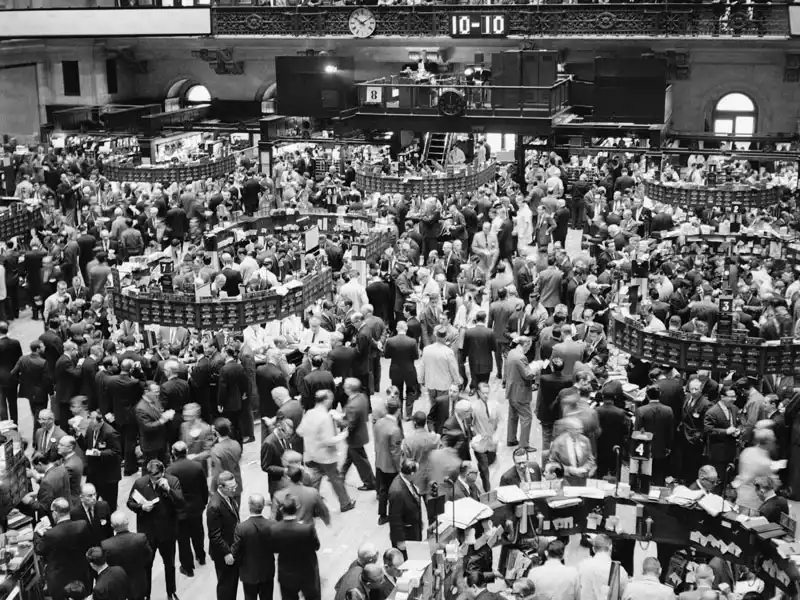
The seismic shift that redefined modern investing wasn’t born in a bustling trading pit, but within the hallowed halls of academia. More than half a century ago, a cadre of economists at the University of Chicago embarked on a intellectual journey that would fundamentally alter how capital is allocated, risk is managed, and wealth is built. Their groundbreaking ideas, initially met with skepticism, evolved from abstract theories into the bedrock principles of global finance, transforming the landscape for individual investors and institutional giants alike. This intellectual revolution, chronicled in Errol Morris’s recent documentary, "Tune Out the Noise," underscores the potent, and sometimes serendipitous, convergence of rigorous thought, technological advancement, and entrepreneurial spirit.
For decades prior, the investment world operated largely on intuition and the belief that a select few individuals possessed an almost mystical ability to "beat the market." This era was characterized by active management, where fortunes were sought through discerning stock-picking and the exploitation of perceived market inefficiencies. The prevailing wisdom, as articulated by figures like Eugene Fama, a Nobel laureate and central architect of the new paradigm, was that such a pursuit was ultimately futile. The core of this challenge lay in the development of the Efficient Market Hypothesis (EMH). This theory posited that asset prices, in well-functioning markets, already reflect all available information. Consequently, any attempt to consistently outperform the market through active trading was akin to searching for signals amidst a sea of random fluctuations, or "noise."
The 1960s provided the fertile ground for these radical ideas to take root. The advent of computing power offered unprecedented capabilities for data analysis. Suddenly, vast datasets of stock prices and corporate financials, previously unwieldy, could be systematically examined. This technological leap allowed for the empirical testing of academic theories, moving investing from a qualitative art form to a quantitative science. The EMH, supported by empirical evidence, suggested that instead of seeking out hidden gems, investors should embrace the market’s inherent efficiency. The logical corollary was that achieving superior returns was less about outsmarting others and more about disciplined diversification and strategic risk management. As Fama famously asserted, "Markets work; prices are right." This meant that while beating the market might be impossible, one could still achieve favorable outcomes by aligning with its broad movements.
This perspective has only gained traction over time. Aaron Brask, a seasoned Wall Street professional now teaching finance at the University of Florida, notes the dramatically increased efficiency of contemporary markets. "When Eugene Fama was writing his dissertation, markets weren’t nearly as efficient as they are today," Brask observes. "If they were, then luminaries like Warren Buffett, Charlie Munger, and Walter Schloss would have to be considered purely lucky. Now, with trillions of dollars, brilliant minds, and immense computing power dedicated to finding investment opportunities, the edge for active managers has shrunk considerably. The ‘dumb money’ has largely disappeared, making markets far more efficient."
The practical embodiment of the EMH and its emphasis on broad market exposure led directly to the rise of the index fund. These investment vehicles, designed to passively track a specific market index, offer a low-cost and diversified way to participate in market growth. Wells Fargo launched one of the earliest iterations in 1971, but it was John Bogle, a visionary financier, who truly democratized passive investing by creating the first index mutual fund accessible to individual investors in 1976. While the EMH strongly favors passive strategies for the majority, Brask acknowledges that a select few active managers can still demonstrate alpha. "Value investors like Warren Buffett," he explains, "derive an intrinsic value for a stock based on its fundamentals. They then compare this to its current market price, aiming to buy at a significant discount. In certain situations, superior fundamentals or growth prospects can justify higher valuations."
Beyond the concept of market efficiency, the Chicago School’s research illuminated another crucial tenet of modern investing: the power of diversification. In contrast to the traditional focus on finding a single, high-performing asset, these economists championed the idea of spreading investments across a variety of asset classes and companies. Their findings demonstrated that by combining stocks from established, stable firms with those of smaller, higher-growth potential companies, investors could significantly reduce portfolio volatility without necessarily sacrificing returns. This principle became the cornerstone of Modern Portfolio Theory (MPT), a framework that continues to guide investment decisions globally.
Early proponents of MPT, such as David Booth and Rex Sinquefield, translated these academic insights into tangible investment vehicles. They co-founded Dimensional Fund Advisors (DFA), an investment firm that effectively commercialized the principles of the EMH and MPT, managing nearly $800 billion in assets today. The documentary highlights Booth’s significant role, even bordering on a subtle endorsement of DFA, given its backing. However, director Errol Morris, renowned for his observational style, imbues the narrative with his characteristic subtlety. Through deceptively simple, conversational interview questions, he allows the complex evolution of financial thought to unfold organically, showcasing the transition from intuition-driven speculation to evidence-based strategy. Matthew Garrott, Director of Investment Research at Fairway Wealth Management, found the film’s humanistic approach particularly compelling. "The film really emphasized the human element," Garrott stated. "The academics interviewed were remarkably humble and relatable. It was refreshing to hear these titans of finance articulate their groundbreaking work in their own words."
A recurring theme within the film is the significant role of chance and randomness in shaping financial markets and the careers of those who studied them. The chaotic nature of markets means they are often driven by unpredictable events rather than purely rational decisions. The convergence of brilliant minds at the University of Chicago itself, while certainly aided by its reputation in economics, also involved elements of good fortune. The establishment of the Center for Research in Security Prices (CRSP) by James Lorie in 1960 was pivotal. It created a repository of long-term financial data, fueling both the financial and technological revolutions that were converging.
Serendipity also played a part in individual trajectories. Eugene Fama nearly missed his opportunity at Chicago, securing a last-minute scholarship that altered his career path. Myron Scholes, another Nobel laureate and early proponent of quantitative finance, stumbled into financial research. In 1963, he took a programming job with limited experience. When his colleagues failed to appear, Scholes found himself assisting academics with their financial research, a fortunate twist that launched his influential career. David Booth and Rex Sinquefield’s entrepreneurial journey also involved fortunate circumstances. Booth narrowly avoided the Vietnam War draft due to a deferment that allowed him to pursue his PhD at Chicago. Sinquefield, though serving in the army, had his combat duties curtailed by poor eyesight. The University of Chicago’s business school now bears Booth’s name, a testament to the profound impact of these individuals.
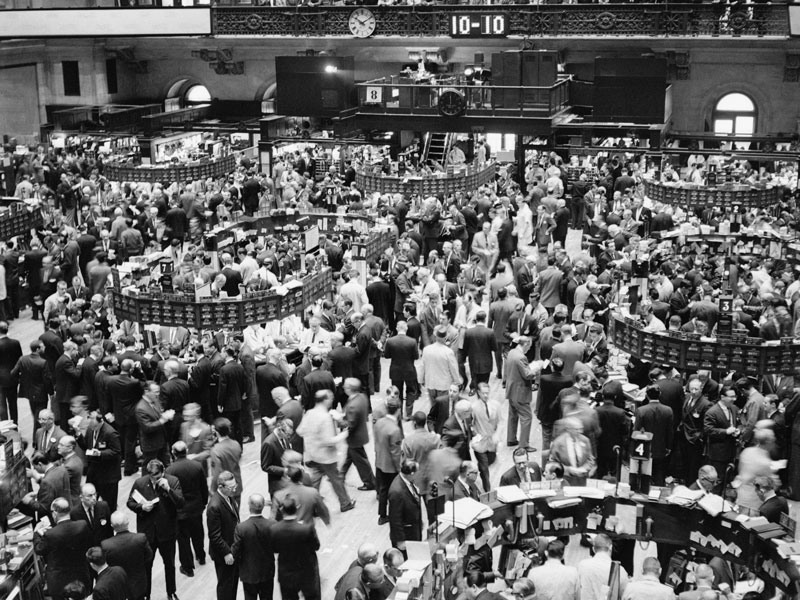
Despite the immense success and widespread adoption of these theories, the documentary acknowledges that the financial landscape remains imperfect. Critics argue that the very intellectual revolution that democratized investing also inadvertently laid the groundwork for future excesses. The elegance of the EMH, some contend, fostered an overconfidence in market infallibility, leading investors and regulators to underestimate the risks of asset bubbles and the necessity of robust oversight. A more recent concern is that the proliferation of passive investing has, paradoxically, begun to diminish market efficiency. With fewer active participants feeding new information into prices, some argue that the market’s ability to reflect all available data is being compromised.
Proponents, however, maintain the enduring relevance of the EMH. Robert Jarrow, an advisor at SAS and Professor of Investment Management at Cornell University, argues that "Many smart traders exist, and behavioral biases are not more or less than in the past. Hence, the impact of irrational traders on efficiency is unchanged. It can also be shown that bubbles are consistent with an efficient market." He elaborates, "There is a continuum of less efficient to more efficient markets. Markets with more pricing events, like U.S. large-cap stocks, are more efficient. The market for selling your house is much less efficient. The U.S. stock market is not perfectly efficient, but it is efficient enough that active managers are at a significant disadvantage."
The mathematical models that underpin many investment strategies have also faced scrutiny. The Black-Scholes model, a seminal contribution by Myron Scholes to financial economics, provided a sophisticated framework for risk management and portfolio diversification. While a theoretical triumph, it also became a justification for a surge in speculative trading in derivatives. Initially designed as hedging tools, derivatives evolved into highly leveraged instruments, amplifying both gains and losses. This financial engineering, while enriching some traders, also contributed to market instability, culminating in the 2008 global financial crisis. As one observer noted, the model became "an ingredient in a rich stew of financial irresponsibility, political ineptitude, perverse incentives, and lax regulation."
Ultimately, "Tune Out the Noise" offers more than just a historical account of financial theory. It presents a nuanced portrait of an America capable of profound self-examination and intellectual innovation, a characteristic that may be less prevalent today. The embrace of passive investing, which implies accepting average market returns, was initially at odds with the deeply ingrained "American way" of striving for exceptional individual achievement. Rex Sinquefield wryly notes this tension in the film. David Booth’s personal narrative further illustrates this point, recounting his desire to "feel good about myself" after a day’s work, evoking a sense of diligent effort and modest success that seems to have been overshadowed by the modern pursuit of rapid wealth accumulation through speculative ventures like cryptocurrency trading.
At its heart, the film is a profound exploration of information itself: the overwhelming deluge of data, the promise of algorithmic efficiency, and the enduring human challenge of discerning meaningful signals from the pervasive noise. The EMH rests on the assumption that data is inherently objective. However, in an era of hyper-fast algorithmic trading and the increasing dominance of artificial intelligence, this certainty feels more tenuous. As AI systems continue to advance and active management faces an existential threat, "Tune Out the Noise" leaves viewers with a lingering question: even the most sophisticated, rational systems are built upon fundamental human assumptions, and perhaps the next significant revolution in investing will involve a rediscovery and re-emphasis of human judgment.