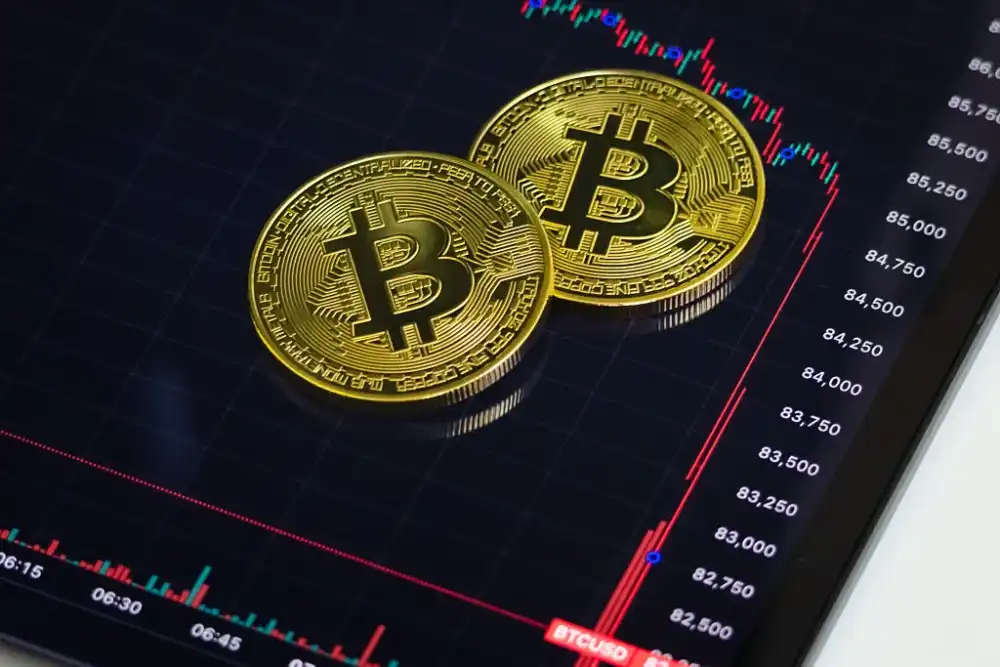
The digital asset market is currently navigating one of its most complex periods of volatility since the inception of the blockchain era. After reaching a historic peak of $126,279 in October, Bitcoin has faced a series of sharp retractions, recently tumbling below the $61,000 threshold—a level not seen in nearly a year and a half. This dramatic descent, representing a correction of more than 50% from its all-time high, has prompted intense scrutiny from institutional investors, retail traders, and economic analysts alike. While market participants often scramble to identify a single "black swan" event to explain such price action, the reality is a multifaceted convergence of cyclical mechanics, macroeconomic shifts, and evolving investor sentiment.
At the forefront of this analysis is the concept of the "four-year cycle," a phenomenon that has historically dictated the rhythmic pulse of the cryptocurrency market. Matt Hougan, Chief Investment Officer at Bitwise Asset Management—a firm overseeing more than $15 billion in assets—identifies this cyclicality as the primary driver of the current downward trajectory. This pattern, rooted in the "halving" events programmed into Bitcoin’s protocol, has repeated itself during three previous market epochs. Each cycle typically follows a predictable sequence: a period of exponential growth fueled by supply scarcity, followed by a parabolic peak, and ultimately, a significant "retracement" as the market resets and speculative excess is purged.
The current retracement is not occurring in a vacuum, however. The "self-fulfilling prophecy" of technical cycles is being compounded by a significant shift in capital allocation. For much of the past decade, Bitcoin was viewed as the premier "disruptive" play, capturing the lion’s share of speculative and venture capital. Today, that capital is facing stiff competition from two primary fronts: traditional safe-haven assets and the burgeoning artificial intelligence (AI) sector. As global economic uncertainty persists, institutional investors have shown a renewed preference for gold, which has maintained its status as a reliable store of value during inflationary periods. Simultaneously, the meteoric rise of AI stocks has provided an alternative high-growth narrative that has diverted billions of dollars away from the crypto ecosystem.
The macroeconomic environment has further complicated the recovery for digital assets. The potential for a shift in leadership at the Federal Reserve has introduced a layer of policy uncertainty that markets rarely tolerate well. Specifically, the mention of Kevin Warsh as a potential Fed nominee has sent ripples through the risk-asset community. Warsh, known for a historically hawkish stance on monetary policy, represents a potential future of tighter liquidity and higher-for-longer interest rates. In a high-interest-rate environment, the opportunity cost of holding non-yielding assets like Bitcoin increases, making traditional fixed-income instruments and dividend-paying stocks more attractive by comparison.
Beyond interest rate policy, the specter of "quantum risk" has begun to weigh on the long-term psyche of the market. While still largely theoretical in terms of immediate application, the rapid advancement of quantum computing poses a long-term existential question for blockchain technology. If quantum computers reach a level of sophistication where they can crack the cryptographic signatures that secure the Bitcoin network, the fundamental value proposition of the asset could be compromised. While most experts believe that "quantum-resistant" upgrades to the protocol are possible, the mere discussion of this risk during a bear market tends to amplify downward pressure, as investors become more sensitive to tail-end risks.
Despite the current price stagnation, the underlying infrastructure of the crypto market continues to evolve, particularly through the lens of "financialization." The introduction and proliferation of exchange-traded funds (ETFs) have fundamentally changed how Bitcoin is traded. While Bitwise’s own Solana Staking ETF has faced a challenging debut—dropping roughly 57% since its October launch—the broader trend toward institutional-grade wrappers for digital assets remains intact. Hougan argues that while ETFs might influence short-term trading dynamics and intraday volatility, they do not alter the fundamental scarcity of Bitcoin.

The supply-side economics of Bitcoin remain its most compelling long-term thesis. With a hard cap of 21 million coins, the asset’s scarcity is absolute, unlike fiat currencies which are subject to central bank expansion. The current market "noise"—ranging from derivative demand to short-term liquidations—must eventually pass through to the spot market. In this view, the "financialization" of Bitcoin through ETFs and other derivatives is merely a bridge that allows larger pools of capital to access this scarcity, even if the transition period is marked by extreme price swings.
Comparing the current crypto downturn to global equity markets reveals a stark divergence. While the S&P 500 and Nasdaq have shown resilience, buoyed by the "Magnificent Seven" and AI-related earnings, Bitcoin has decoupled from its traditional role as a high-beta proxy for tech stocks. This decoupling suggests that Bitcoin is currently undergoing a unique internal re-rating. It is no longer just a "risk-on" asset; it is being forced to compete for its identity as a legitimate alternative to the US dollar and gold.
The impact of this downturn is felt most acutely in the altcoin market, where assets like Solana have seen even steeper declines than Bitcoin. Solana, which had been positioned as a high-speed competitor to Ethereum, has seen its value drop more than 30% this year alone. This "flight to quality" within the crypto space is a hallmark of the four-year cycle’s contraction phase. During the exuberant "bull" phases, capital flows down the risk curve into smaller, more speculative assets. During the "bear" phases, that capital retreats back into the relative safety of Bitcoin or exits the ecosystem entirely for cash and gold.
Expert insights suggest that the current market malaise is a necessary "cleansing" of the system. The leverage that built up during the run to $126,000 is being systematically unwound. This process, while painful for those holding long positions, creates a healthier foundation for the next leg of the cycle. Market analysts often point to the "realized price" of Bitcoin—the average price at which all coins last moved—as a key support level. When the market price falls toward this realized price, it typically signals a period of accumulation by "long-term holders" or "whales" who view the asset in decades rather than days.
From a global perspective, the adoption of Bitcoin continues to show a bifurcated reality. In developed economies, it is increasingly treated as a sophisticated financial instrument for portfolio diversification. In emerging markets with volatile local currencies, however, the "store of value" argument remains a matter of economic survival, regardless of the four-year cycle’s current phase. This geographic diversity in use cases provides a floor for the asset that didn’t exist during the previous crashes of 2014 or 2018.
As the market looks toward the future, the primary question remains: when will the "good news underneath the surface" materialize into price appreciation? The integration of blockchain technology into traditional finance, the potential for clearer regulatory frameworks in the United States, and the continued halving-induced supply squeeze all point toward an eventual recovery. However, the path to that recovery is likely to be tempered by the broader economic landscape. If the Federal Reserve continues to prioritize fighting inflation over stimulating growth, the "risk-off" sentiment may persist longer than previous cycles would suggest.
In summary, the current plunge in Bitcoin is a product of a "perfect storm" of factors. The primary catalyst is the exhaustion of the four-year cycle, a mechanical reality of the Bitcoin protocol that dictates periods of boom and bust. This cyclical downturn has been exacerbated by a shift in institutional interest toward AI and gold, a hawkish shift in Federal Reserve expectations, and emerging technological anxieties. Yet, for those who manage billions in digital assets, the fundamental thesis of scarcity remains unchanged. The current volatility is viewed not as a failure of the asset class, but as a standard, albeit painful, chapter in the ongoing financialization of the world’s first decentralized digital currency. The transition from a speculative experiment to a global reserve asset is rarely a straight line; it is a series of peaks and valleys, and the market is currently navigating one of its deepest valleys to date.