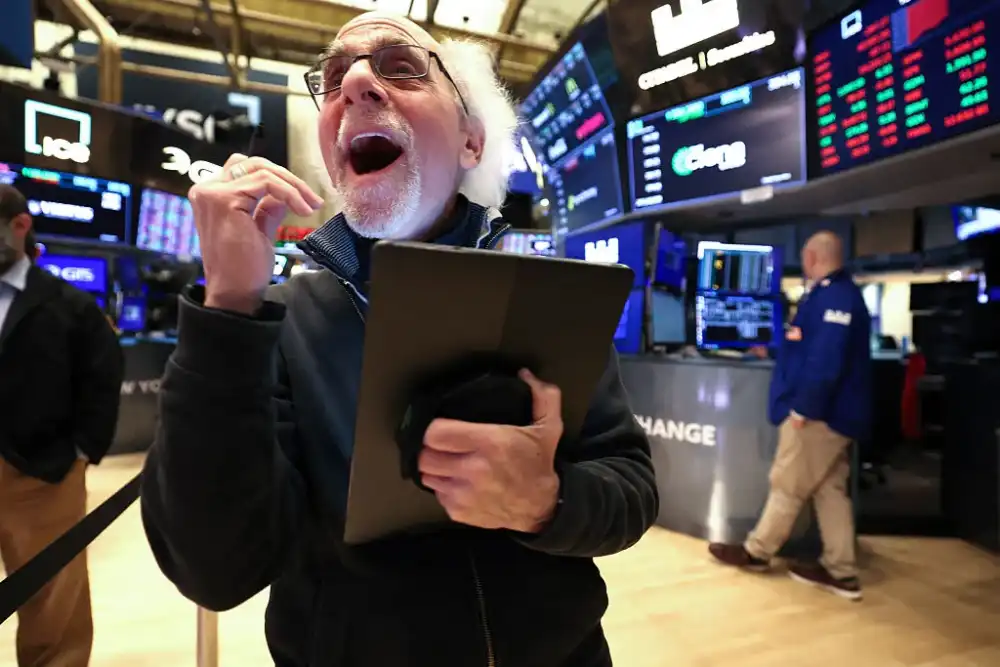
The financial landscape of the past week has been characterized by a remarkable transition from systemic anxiety to a disciplined, broad-based rally, as Wall Street successfully navigated a gauntlet of macroeconomic hurdles to post its most significant gains in months. This "comeback week" was not merely a reflexive bounce from oversold conditions, but rather a calculated recalibration of investor expectations driven by three distinct yet interconnected forces. As the S&P 500, the Nasdaq Composite, and the Dow Jones Industrial Average moved in concert to erase previous losses, market participants found themselves analyzing a complex tapestry of cooling inflation data, robust corporate earnings, and a shifting narrative regarding the Federal Reserve’s monetary trajectory. To understand the sustainability of this upward momentum, one must dissect the underlying mechanics of this recovery and the economic signals that prompted institutional and retail investors alike to move back into risk assets.
The first and arguably most potent driver of the week’s optimism was the release of cooling inflation metrics, which provided the much-needed "Goldilocks" scenario that markets had been craving. For much of the current fiscal year, the specter of "sticky" inflation has haunted equity valuations, forcing the Federal Reserve to maintain a restrictive "higher-for-longer" interest rate stance. However, recent data points, including the Consumer Price Index (CPI) and Producer Price Index (PPI), suggested that the inflationary fever is finally breaking. When the headline inflation numbers came in slightly below consensus estimates, it triggered a massive relief rally. This deceleration in price growth is critical because it validates the theory that the economy is achieving a "soft landing"—a state where inflation returns to the 2% target without the collateral damage of a deep recession. For investors, this data served as a green light to re-enter sectors that are sensitive to interest rates, such as real estate and utilities, while providing a tailwind for the broader growth-oriented tech sector.
Complementing the macro-inflationary narrative was the second major force: a surprisingly resilient corporate earnings season. While top-line revenue growth remained a point of scrutiny, the focus during this comeback week shifted toward bottom-line efficiency and the transformative potential of artificial intelligence (AI). Major technology behemoths and industrial stalwarts alike reported profit margins that defied the pressures of increased labor costs and supply chain normalization. The "Magnificent Seven" continued to play a disproportionate role in sentiment, but the rally notably broadened to include mid-cap and small-cap stocks, suggesting a healthier internal market structure than witnessed in previous quarters. Expert analysis indicates that companies have successfully pivoted from a "growth at all costs" mentality to one of "operational excellence," utilizing automation and strategic cost-cutting to preserve capital. This fundamental strength provided a floor for the market; even as geopolitical tensions simmered in the background, the sheer gravity of corporate profitability acted as an anchor for bullish sentiment.
The third pillar of the market’s resurgence was a palpable shift in the psychological and technical positioning of the Federal Reserve. Throughout the week, various Fed officials offered a series of carefully calibrated remarks that the market interpreted as increasingly dovish. While the central bank remains officially "data-dependent," the tone of the discourse has moved from debating the necessity of further hikes to discussing the appropriate timing and magnitude of future rate cuts. This subtle pivot in rhetoric had an immediate impact on the bond market, where the 10-year Treasury yield—a benchmark for everything from mortgages to corporate debt—began to stabilize and retreat from its recent peaks. The inverse relationship between yields and equity prices was on full display; as the "risk-free" rate of return softened, the relative attractiveness of stocks surged. Furthermore, the stabilization of the bond market reduced the volatility that had previously paralyzed institutional asset allocators, allowing for a more predictable environment for capital deployment.
Beyond these three primary drivers, the comeback was further fueled by a technical "short squeeze" and a reversion to the mean. Heading into the week, sentiment indicators like the CNN Fear & Greed Index had dipped into "Extreme Fear" territory, and put-call ratios suggested that many traders were heavily hedged against a market crash. When the expected downturn failed to materialize following the positive inflation data, those holding short positions were forced to buy back shares to cover their bets, creating a self-reinforcing loop of upward price pressure. This technical phenomenon often characterizes the early stages of a market bottom, as the "pain trade" shifts from the bulls to the bears. Additionally, global market comparisons reveal that Wall Street’s recovery outpaced its European and Asian counterparts, reinforcing the United States’ position as a "safe haven" for capital amidst ongoing economic stagnation in the Eurozone and property-sector woes in China.
The economic impact of this recovery extends far beyond the digital tickers of the New York Stock Exchange. A rising stock market generates a "wealth effect," where increased portfolio values boost consumer confidence and, by extension, household spending. This is particularly relevant in an economy where consumer discretionary spending accounts for nearly 70% of Gross Domestic Product (GDP). If the market can sustain these levels, it may mitigate the dampening effects of high consumer credit interest rates, providing a buffer for the retail and automotive sectors. However, economists warn that this recovery is not without its risks. The "lag effect" of previous interest rate hikes has yet to fully permeate the economy, and many small businesses are struggling with the cost of refinancing debt. There is also the lingering concern that if the market rallies too aggressively, it could inadvertently loosen financial conditions to a degree that reignites inflationary pressures, forcing the Fed to remain restrictive for longer than the market currently anticipates.
From a global perspective, the resilience of the U.S. market acts as a double-edged sword. On one hand, a strong Wall Street supports global liquidity and provides a demand engine for international exporters. On the other hand, the continued strength of the U.S. dollar—often a byproduct of American economic outperformance—places immense pressure on emerging market economies that hold significant amounts of dollar-denominated debt. During this comeback week, we saw a slight softening of the greenback as rate-cut expectations rose, offering a temporary reprieve to these developing nations. This interconnectedness highlights why global investors watch the interplay of U.S. inflation and Fed policy with such intensity; the ripple effects of a 1% move in the S&P 500 can be felt from the boardrooms of London to the trading floors of Tokyo and Singapore.
As we look toward the coming months, the sustainability of this comeback will likely depend on the consistency of the data. One week of gains does not constitute a permanent trend, and the market remains sensitive to "shocks"—be they geopolitical escalations in the Middle East or unexpected spikes in energy prices. Nevertheless, the three forces identified—cooling inflation, corporate earnings resilience, and a softening Fed stance—have created a blueprint for a potential year-end rally. Investors are no longer merely "hoping" for a turnaround; they are reacting to a tangible shift in the economic landscape. The narrative has moved from "how much will it hurt?" to "how quickly can we recover?" While the path forward remains fraught with the complexities of a post-pandemic global economy, the events of the past week have demonstrated that Wall Street possesses a remarkable capacity for adaptation. The "comeback week" may ultimately be remembered as the moment when the market stopped fearing the shadow of a recession and began pricing in the reality of a durable, albeit slower, expansion.