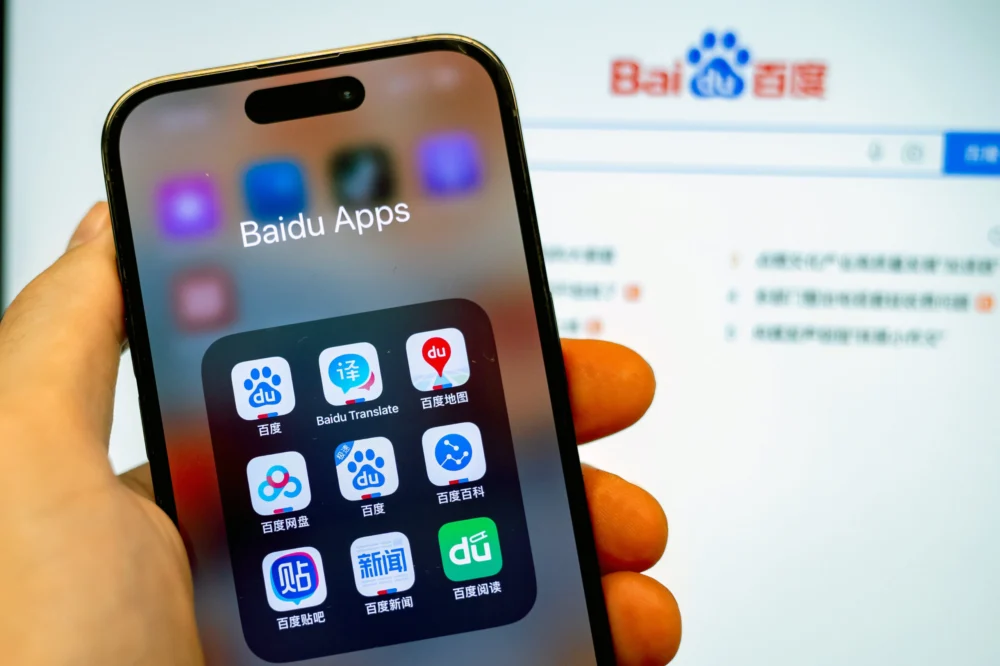
In a strategic move to solidify its dominance in the Chinese mobile ecosystem, Baidu has announced the full integration of the OpenClaw artificial intelligence agent into its primary search application, granting its 700 million monthly active users direct access to advanced automation capabilities. This deployment, finalized just days before the peak of the Lunar New Year travel and spending season, marks a significant shift in the competitive landscape of the world’s second-largest economy. By transitioning from a traditional search engine to an "agentic" platform, Baidu is betting that the future of the internet lies not in providing links to information, but in executing complex tasks on behalf of the user.
The integration allows users who opt in to interact with OpenClaw—an Austrian-developed, open-source AI agent—directly through the Baidu interface. Unlike standard chatbots that primarily provide text-based responses, OpenClaw is designed for "action." It can manage calendars, organize digital files, write and debug code, and navigate third-party services to complete transactions. This represents a fundamental evolution in consumer software, moving away from passive information retrieval toward active digital assistance. For Baidu, the goal is to transform its flagship app into an indispensable "super-agent" that manages the friction of daily digital life.
The timing of the rollout is meticulously calculated. The Lunar New Year is traditionally the most critical window for Chinese internet companies to capture new users and drive engagement. During this period, hundreds of millions of people travel across the country, creating a surge in demand for travel booking, entertainment, and digital gifting. By embedding OpenClaw’s automation features into its ecosystem now, Baidu aims to capture the high-velocity data generated during the holiday, while simultaneously showcasing its technological parity with global rivals.
This move comes as the broader Chinese tech sector undergoes a rapid transformation driven by "Agentic AI." While the first wave of generative AI was characterized by large language models (LLMs) like Baidu’s Ernie Bot or Alibaba’s Qwen, the current frontier is defined by agents that can "use" a computer or smartphone much like a human does. Previously, OpenClaw was primarily accessible through decentralized messaging platforms such as WhatsApp or Telegram. However, the decision by Chinese heavyweights—including Alibaba and Tencent—to host OpenClaw on their respective cloud infrastructures has paved the way for this week’s consumer-facing integration.
Baidu is not alone in this pursuit. The competition for AI-driven commerce has reached a fever pitch, with Alibaba Group recently reporting significant success with its own AI integration. Alibaba’s Qwen chatbot, which is now deeply embedded in the Taobao e-commerce platform and the Fliggy travel site, reportedly facilitated over 120 million consumer orders in the first half of February. The breakthrough for Alibaba was removing the "click-away" friction; users can now compare products, receive personalized recommendations, and finalize payments via Alipay without ever leaving the chat interface. Baidu’s integration of OpenClaw into its e-commerce and search verticals is a direct response to this trend, aiming to create a seamless "prompt-to-purchase" pipeline.
The economic implications of this shift are profound. For years, the primary revenue model for search engines has been advertising based on keywords and user intent. However, as AI agents begin to curate information and perform tasks autonomously, the traditional "cost-per-click" model faces an existential threat. If an agent books a flight or buys a gift for a user without the user ever seeing a results page, the opportunity for visual advertising diminishes. In response, Baidu and its peers are racing to monetize the "agentic" experience itself, either through subscription models, transaction fees, or prioritized API integrations for merchants.

Furthermore, the choice of OpenClaw highlights a fascinating trend in the global AI supply chain. Despite the intense geopolitical competition surrounding proprietary AI models, open-source tools remain a bridge between Western innovation and Chinese implementation. OpenClaw’s origins in Austria and its open-source license allowed Chinese firms to bypass some of the barriers associated with proprietary U.S. technologies. By layering their own proprietary data and localized services on top of an open-source agentic framework, companies like Baidu can accelerate their development cycles while maintaining compliance with domestic regulations.
However, the rapid adoption of autonomous agents has not occurred without significant pushback from the global cybersecurity community. Experts have raised alarms regarding the "agentic" nature of tools like OpenClaw, which require deep permissions to function effectively. Cybersecurity firm CrowdStrike has specifically cautioned against granting such AI agents unfettered access to enterprise systems or sensitive personal data. Because an agent like OpenClaw can theoretically read emails, modify files, and execute scripts, the potential for "prompt injection" attacks—where malicious actors trick the AI into performing unauthorized actions—is a growing concern.
In the Chinese context, these security risks are compounded by strict data governance laws. Baidu must navigate a complex regulatory environment where the Cyberspace Administration of China (CAC) requires strict oversight of generative content and data export. The integration of an open-source tool like OpenClaw into a platform with 700 million users necessitates a robust "sandbox" environment to ensure that the AI does not overstep its bounds or violate privacy mandates. Baidu has indicated that the rollout is currently on an opt-in basis, likely as a means to gather telemetry data and refine safety protocols before a mandatory or broader deployment.
From a market perspective, Baidu’s stock has remained under intense scrutiny as investors weigh its AI leadership against the backdrop of a cooling domestic economy. While Baidu was an early mover in the LLM space with Ernie Bot, it has faced fierce competition from agile startups like Moonshot AI and DeepSeek, both of which have released highly efficient models that challenge the dominance of the established tech giants. By integrating OpenClaw, Baidu is attempting to pivot the conversation from "who has the best model" to "who has the most useful application."
The broader economic context of China’s AI race is also defined by a desperate need for productivity gains. As the country faces demographic shifts and a shrinking labor force, the government has placed "new productive forces"—a term frequently used by leadership to describe high-tech innovation—at the center of its economic strategy. Autonomous AI agents are seen as a key component of this strategy, offering the potential to automate administrative tasks, enhance software development, and streamline the service economy.
As the Lunar New Year festivities begin, the performance of Baidu’s new AI-integrated app will serve as a bellwether for the future of the consumer internet in China. If users embrace the ability to delegate their digital chores to OpenClaw, it could signal the end of the "app-switching" era and the beginning of a unified, agent-driven user experience. Conversely, if security concerns or technical glitches mar the experience, it may give rivals a window to capture disillusioned users.
In the long term, the success of Baidu’s AI strategy will depend on its ability to move beyond mere integration and toward true innovation. While OpenClaw provides a powerful framework, the real value lies in how Baidu connects that agent to its vast proprietary data on Chinese consumer habits, local services, and mapping. As 700 million users begin to experiment with these new tools, the data generated will likely fuel the next generation of domestic AI, further decoupling the Chinese tech ecosystem from global standards and creating a unique, agent-centric digital reality.