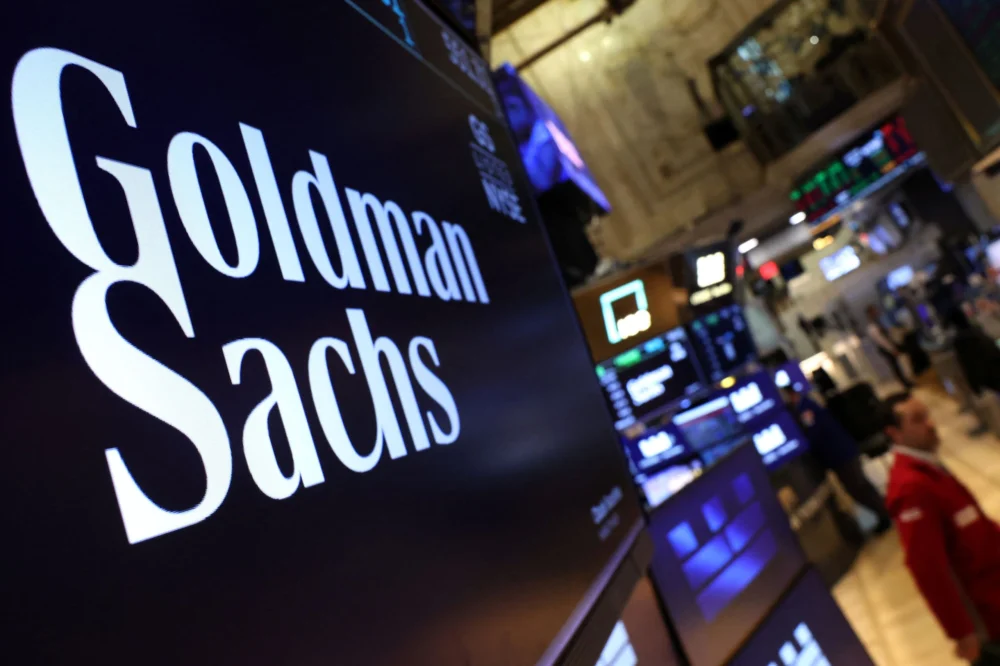
The architectural foundations of global finance are undergoing a seismic shift as Goldman Sachs, one of the world’s most influential investment banks, moves beyond experimental generative AI to the deployment of sophisticated autonomous agents. In a strategic collaboration with the artificial intelligence startup Anthropic, Goldman Sachs is integrating the Claude large language model into its core operational fabric. This initiative, spearheaded by Chief Information Officer Marco Argenti, marks a transition from simple productivity tools to "digital co-workers" capable of managing high-stakes roles in accounting, compliance, and client onboarding.
For the past six months, a specialized team of Anthropic engineers has been embedded within Goldman’s technical divisions. This close-quarters partnership is focused on co-developing agents that do not merely suggest text or summarize documents but actively execute complex, process-intensive workflows. The move represents a critical component of CEO David Solomon’s multiyear vision to reorganize the Wall Street giant around generative AI, a strategy aimed at maximizing operational efficiency while strictly managing the growth of the firm’s human workforce.
The initial deployment of these autonomous agents targets two of the most labor-intensive and risk-sensitive areas of the bank: trade reconciliation and client vetting. In the world of institutional finance, accounting for trades and transactions is an immense undertaking, involving the verification of thousands of daily movements across global markets. Traditionally, this requires vast teams of human professionals to parse through disparate data sets, identify discrepancies, and ensure regulatory compliance. By deploying Claude-based agents, Goldman aims to collapse the time required for these essential functions from hours or days to mere minutes.
Similarly, the process of client onboarding—encompassing Know Your Customer (KYC) and Anti-Money Laundering (AML) protocols—is a notorious bottleneck for major banks. These procedures require the synthesis of massive amounts of unstructured data, from legal filings to global sanctions lists, while applying nuanced judgment to satisfy stringent regulatory standards. Argenti noted that the firm was "surprised" by Claude’s ability to reason through these complex problems step-by-step. While the bank initially utilized AI for coding—employing the autonomous coder Devin—it quickly realized that the same logic-driven reasoning required to write software could be applied to the rigors of financial compliance.
The economic implications of this technological pivot are profound. The global banking sector spends an estimated $270 billion annually on compliance and regulatory obligations. By automating the "middle office"—the engine room of the bank that sits between client-facing roles and back-end infrastructure—Goldman Sachs is positioning itself to significantly lower its cost-to-income ratio. This is not merely a play for marginal efficiency; it is a fundamental redesign of the labor model in high-finance. During a recent address to investors, David Solomon emphasized that as the bank experiences surging revenue from its advisory and trading desks, it will seek to "constrain headcount growth," signaling that the future of Wall Street expansion may be digital rather than human.
This shift has sent ripples through the broader technology and software sectors. The rise of autonomous agents like those being developed by Goldman and Anthropic has contributed to what some analysts describe as a "SaaSapocalypse." For years, banks relied on a suite of third-party Software-as-a-Service (SaaS) providers for specialized accounting and compliance tools. However, as financial institutions build proprietary agents capable of performing these tasks natively, the value proposition of traditional enterprise software is being called into question. Investors have begun a sharp sell-off of software firms that may find themselves bypassed by the direct integration of large language models into corporate workflows.

The choice of Anthropic as a primary partner is also a calculated move in the competitive AI landscape. Founded by former OpenAI executives with a focus on "AI safety" and "constitutional AI," Anthropic’s Claude model is often cited by enterprise leaders for its superior reasoning capabilities and its ability to handle large "context windows"—the amount of data the model can process at once. In a field like institutional accounting, where a single missed decimal point or a misunderstood regulatory clause can result in millions of dollars in fines, the precision and logic of the model are more critical than the creative flair often associated with other AI platforms.
Goldman’s internal testing has already shown that the jump from "AI-assisted" to "AI-autonomous" is closer than many industry experts anticipated. The bank’s tech chief highlighted that the success seen in autonomous coding is now being replicated in business logic. The agents being developed are designed to function with a degree of agency, meaning they can identify a problem, determine the necessary steps to solve it, access the required databases, and execute the solution without constant human prompting. Argenti described this as "injecting capacity," allowing the firm to handle a higher volume of business and provide a faster client experience without the proportional increase in overhead.
However, the rapid integration of AI agents raises inevitable questions regarding the future of the financial workforce. Goldman Sachs currently employs thousands of people in the very compliance and accounting roles that these agents are designed to augment. While Argenti maintains that it is "premature" to predict widespread job losses, the long-term trajectory suggests a transformation of the entry-level analyst role. If an AI agent can perform the data gathering and reconciliation tasks that typically occupy a junior associate’s first three years, the career path for future bankers may need to be entirely reimagined.
Beyond the immediate focus on accounting and onboarding, Goldman is already eyeing the next frontier for automation. This includes the development of agents for employee surveillance—a critical requirement in highly regulated trading environments—and the creation of investment banking "pitchbooks." The latter has long been a rite of passage for junior bankers, involving the grueling manual assembly of market data, charts, and company profiles to win new business. Automating this process could fundamentally alter the work-life balance and productivity of the bank’s prestigious investment banking division.
The global context of this move reveals an escalating AI arms race among the world’s "Bulge Bracket" banks. JPMorgan Chase, for instance, has been developing its own "IndexGPT" to assist in investment decisions, while Morgan Stanley has partnered deeply with OpenAI to create a wealth management assistant for its financial advisors. Goldman’s approach, however, appears uniquely focused on the deep integration of autonomous agents into the firm’s operational core, aiming to transform the "plumbing" of the bank rather than just the "storefront."
As Goldman Sachs nears the official launch of these agents, the financial industry is watching closely. The success of this initiative could provide a blueprint for how legacy institutions can modernize their operations to compete with more agile, tech-native fintech challengers. For the broader economy, it serves as a high-profile test case for the "agentic" era of AI—a period where software no longer just assists humans but acts on their behalf.
In the final analysis, Goldman’s strategy is a bet on the idea that the most successful firms of the next decade will be those that can most effectively blend human judgment with machine autonomy. By reducing the friction of administrative and regulatory processes, the bank hopes to free its human talent to focus on high-value activities like relationship building, strategic advisory, and complex deal-making. While the immediate goal is speed and efficiency, the long-term result may be a complete redrawing of the boundaries between human labor and machine intelligence in the global capital markets. For now, the "digital co-worker" is moving from the experimental lab to the trading floor, and the implications for the future of work in finance are only beginning to be understood.