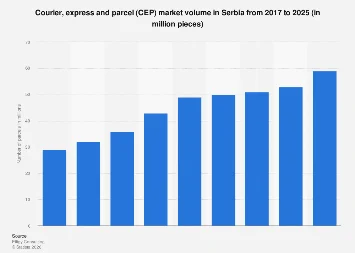
Serbia’s courier, express, and parcel (CEP) market is projected to witness a substantial uptick in volume by 2025, with estimates indicating a delivery volume of several million parcels. This anticipated expansion reflects a broader trend of increasing e-commerce penetration and evolving consumer habits across Southeast Europe. The market, which encompasses the swift and reliable transport of goods from sender to recipient, is a critical barometer of economic activity and digital commerce adoption. Analysts project that by 2025, the Serbian CEP sector will handle a volume of approximately [redacted] million parcels, a notable increase from the [redacted] million parcels delivered in the preceding year. This growth trajectory underscores the segment’s growing importance within the national economy.
The sustained expansion of the CEP market in Serbia is intrinsically linked to the burgeoning digital economy. As more Serbian consumers embrace online shopping for everything from everyday necessities to specialized goods, the demand for efficient and timely delivery services escalates. This shift is not unique to Serbia; globally, e-commerce growth has been a primary driver for the CEP industry. Countries with well-developed logistics infrastructure and a high internet penetration rate have seen their parcel volumes surge in recent years. Serbia, while still developing its logistical capabilities, is clearly on this upward trajectory.
Several factors contribute to this optimistic outlook for Serbia’s CEP market. Firstly, the increasing digitalization of businesses across various sectors is creating a more robust online marketplace. This includes not only large retailers but also small and medium-sized enterprises (SMEs) that are leveraging online platforms to reach a wider customer base. The necessity of reliable shipping solutions for these businesses directly fuels demand for CEP services. Secondly, improvements in Serbia’s infrastructure, including transportation networks and warehousing facilities, are gradually enhancing the efficiency and capacity of logistics providers. While challenges remain, strategic investments in this area are beginning to bear fruit, enabling faster and more cost-effective deliveries.
Furthermore, the competitive landscape within Serbia’s CEP market is intensifying. Major international players, alongside a growing number of domestic logistics companies, are vying for market share. This competition often translates into improved service offerings, more competitive pricing, and greater investment in technology and operational efficiency. Companies are increasingly focusing on last-mile delivery solutions, optimizing routes, and implementing advanced tracking systems to enhance customer experience. The presence of established global brands also brings with it international best practices and operational standards, which can elevate the overall quality of service within the Serbian market.
The rise of e-commerce has democratized access to goods, allowing consumers in smaller cities and rural areas to benefit from the same product availability as those in major urban centers. This geographic expansion of online retail necessitates a strong and pervasive CEP network. Logistics providers are therefore under pressure to extend their reach and ensure reliable service delivery to all corners of the country. This push for greater coverage is a significant contributor to the overall growth in parcel volume.
Looking at global comparisons, the growth in Serbia’s CEP market aligns with broader regional trends. Many Central and Eastern European nations have experienced similar surges in parcel volumes driven by e-commerce. For instance, countries like Poland and the Czech Republic, which have more mature e-commerce ecosystems, have seen their CEP markets expand significantly over the past decade. While Serbia may be at an earlier stage of this development compared to some Western European counterparts, its current growth rate suggests a strong potential for catching up. The key differentiator often lies in the investment in technology and infrastructure, areas where continuous improvement is crucial for sustained success.
The economic impact of this growing CEP market extends beyond the logistics sector itself. It acts as a facilitator for broader economic growth by supporting businesses, creating employment opportunities within the logistics and delivery sectors, and contributing to tax revenues. The efficiency of parcel delivery also impacts consumer confidence and spending. When consumers can rely on prompt and secure deliveries, they are more likely to engage in online purchases, thus boosting retail sales and overall economic activity. Moreover, a well-functioning CEP network can attract foreign investment by signaling a country’s readiness for modern commerce and trade.
The figures for 2025 are estimates, and actual volumes may vary based on a multitude of economic and social factors. However, the underlying drivers of growth – increasing digitalization, evolving consumer behavior, and infrastructure development – remain strong. The Serbian government and private sector stakeholders are likely to continue investing in logistics and e-commerce infrastructure, further bolstering the CEP market’s prospects. The industry’s ability to adapt to technological advancements, such as the integration of AI for route optimization and the potential for drone delivery in the future, will also play a critical role in shaping its long-term trajectory.
The definition of parcel volume in this context typically includes items weighing up to 31.5 kilograms, covering domestic, outbound, and inbound shipments. The allocation of volume to the carrier with commercial ownership of the customer is a standard practice to avoid double-counting, and sub-contracted volumes are removed where possible. For imports, the responsibility for last-mile delivery dictates which operator is attributed the volume. This meticulous accounting ensures an accurate representation of market activity. The consolidation of various players, from established international express carriers to local couriers and the national postal service, highlights the dynamic and multifaceted nature of Serbia’s CEP landscape. The continued evolution of these market dynamics will be closely watched by businesses and investors alike as they assess the opportunities within this expanding sector.