Second-hand shopping has undergone a remarkable metamorphosis, transcending its origins in modest charity shops and informal car boot sales to emerge as one of the most dynamic and rapidly expanding sectors within the global retail landscape. This evolution has given rise to a sophisticated, technology-infused marketplace, driven by a discerning consumer base increasingly prioritizing both economic value and environmental responsibility. This burgeoning sector represents the practical application of the circular economy, a paradigm that emphasizes the design, utilization, and subsequent reuse of products to maximize their lifespan and minimize waste.
Across a diverse spectrum of categories, from high fashion to consumer electronics, the acquisition of pre-owned goods has transitioned from a niche activity to a mainstream consumer behavior. This shift is fundamentally reshaping perceptions of product ownership, consumption patterns, and waste management among individuals and corporate entities alike. For e-commerce platforms, investment firms, and brands themselves, this evolving market presents a wealth of opportunities, while simultaneously posing complex challenges as they navigate an increasingly intricate and competitive resale ecosystem.
A comprehensive analysis by Retail Economics and MPB, titled "Second-Hand, First Choice: The Psychology of Recommerce," has placed the global recommerce market, excluding automotive sales, at an estimated $220 billion. Projections indicate a substantial growth trajectory, with an anticipated increase of nearly 80 percent by 2028 across key markets including the United States, the United Kingdom, France, and Germany. This forecast underscores the significant economic potential inherent in the circular economy.
The contemporary consumer’s heightened focus on value is undeniably amplified by escalating living costs. However, the current boom in resale transcends mere financial prudence. It is indicative of a profound cultural and generational recalibration. Younger demographics, particularly Millennials and Generation Z, are demonstrating a discernible move away from the ephemeral nature of fast fashion and disposable technology. Instead, they are gravitating towards items that not only reflect personal style and individuality but also align with their ethical convictions. The act of purchasing pre-owned items has thus become an assertion of lifestyle, a deliberate choice to engage in commerce with purpose and to express unique identities.
Beyond its economic appeal, the resale market delivers tangible environmental benefits. Each pre-owned purchase directly contributes to extending the operational life of an existing product, thereby mitigating the demand for new manufacturing processes. This reduction in new production translates into a significant decrease in carbon emissions and the conservation of valuable natural resources. For consumers actively seeking to adopt a more conscious and sustainable lifestyle, the resale market offers an accessible and rewarding avenue to actively support a more responsible and less wasteful global economy.
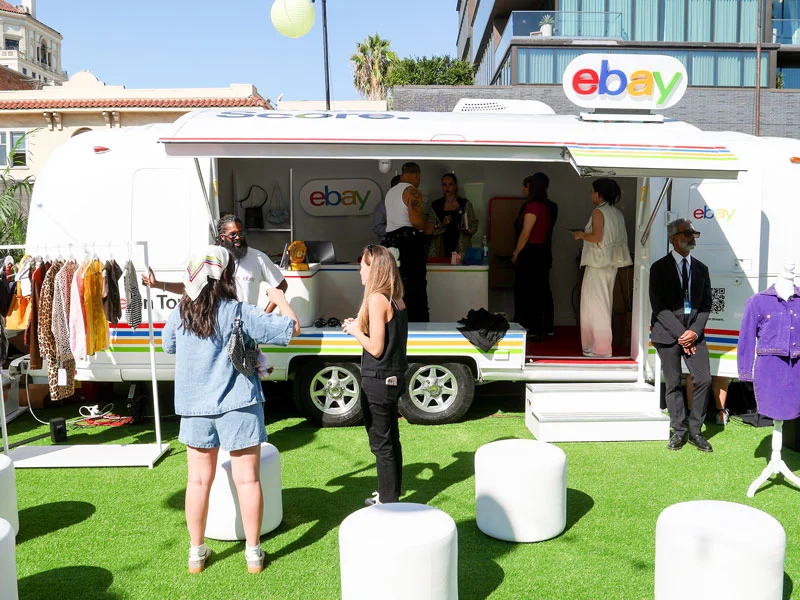
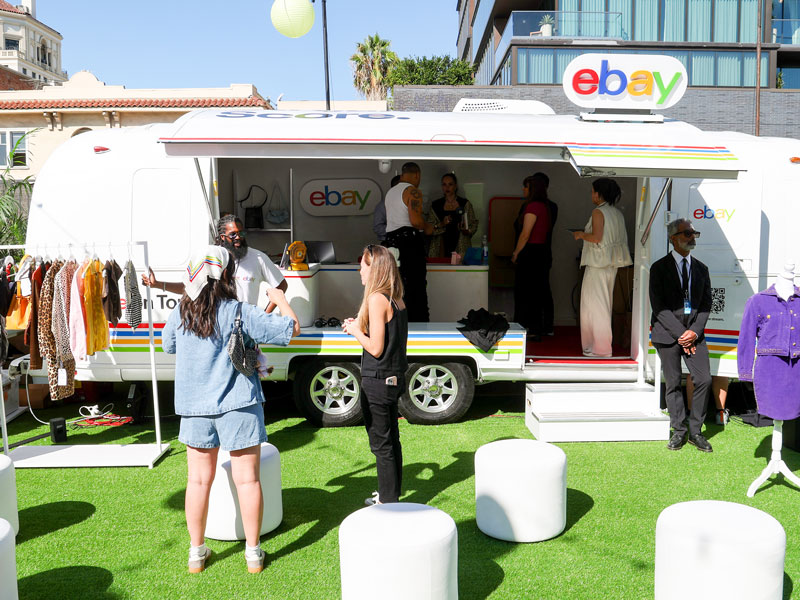
The professionalization of the resale sector is a key driver of its current success. Today’s recommerce marketplaces are characterized by sophisticated, technology-driven platforms that seamlessly integrate convenience with robust trust mechanisms. Platforms such as Depop have revolutionized the fashion resale landscape by merging social media-style discovery features with e-commerce functionalities. Similarly, Vestiaire Collective has cultivated a strong reputation for its rigorous authentication processes for luxury fashion items. Complementing these innovators, established players like Vinted, ThredUp, and eBay have bolstered their offerings with expanded certified pre-owned programs, further cementing the integration of resale into the broader retail ecosystem.
At the vanguard of this transformative movement is technology, but it is the strategic application of these advancements that truly differentiates the modern resale experience. Artificial intelligence (AI) is now instrumental in enhancing the consumer search experience, enabling users to pinpoint desired items with remarkable accuracy. AI algorithms are also employed to suggest relevant products, facilitate dynamic pricing strategies, and curate highly personalized shopping journeys. Sophisticated logistics systems streamline the entire buying and selling process, encompassing integrated solutions for shipping, returns, and the efficient management of reverse supply chains. Moreover, a significant number of platforms leverage the expertise of dedicated authentication teams or, in some cases, employ blockchain technology to provide verifiable provenance for high-value goods. Collectively, these technological innovations have effectively addressed and mitigated many of the inherent friction points and lingering doubts that historically deterred consumers from engaging with second-hand purchases, bestowing upon the resale market a level of polish and professionalism on par with traditional retail channels.
From an investor’s perspective, the ascendant resale and circular economy represents a compelling market opportunity with considerable long-term value potential. The sector’s attractiveness is amplified by its dual appeal of robust growth prospects and strong Environmental, Social, and Governance (ESG) credentials. Venture capital and private equity firms are increasingly channeling investments into businesses that prioritize extending product lifecycles through refurbishment and repair models. These ventures not only generate healthy financial returns but also actively contribute to the achievement of overarching sustainability objectives. The investment rationale is fundamentally straightforward: as global resources become increasingly constrained and regulatory frameworks governing waste and emissions become more stringent, circular business models are inherently positioned for superior performance. The demonstrated resilience of the resale sector during economic downturns, underpinned by consistent consumer demand for value, further enhances its appeal, presenting a rare combination of defensive and growth investment characteristics.
Investment capital is now strategically directed towards scalable, technology-driven platforms that optimize the efficiency of circularity across diverse industries, including fashion, electronics, and home furnishings. For investors, supporting these forward-thinking companies offers a tangible pathway to future-proof their portfolios against evolving consumer expectations and intensifying regulatory pressures. The circular economy is increasingly proving that profitability and corporate responsibility are not mutually exclusive objectives, a compelling proposition that the global financial sector is embracing with growing enthusiasm.
Established retailers are increasingly recognizing that the resale revolution presents both a significant challenge and a substantial opportunity. Traditional linear business models, characterized by a cycle of selling, discarding, and repeating, are becoming increasingly misaligned with evolving consumer expectations and corporate ESG commitments. In response, a growing number of brands are proactively integrating resale and repair services directly into their operational frameworks.
Illustrative examples include Patagonia’s "Worn Wear" program, IKEA’s product buy-back initiatives, and the certified pre-owned collections offered by luxury houses like Gucci and Burberry. These endeavors signal a clear shift towards more circular retail practices, extending product lifespans and unlocking new revenue streams. By facilitating resale within their own branded ecosystems, companies can exercise greater control over product quality and capture residual value that might otherwise be lost to third-party marketplaces. Furthermore, this strategic approach empowers retailers to demonstrate measurable progress against their sustainability targets, an increasingly critical factor for both investors and consumers.
Despite the sector’s impressive growth, the enduring success of the resale market fundamentally hinges on the establishment and maintenance of consumer trust. The persistent threat of counterfeit goods and instances of misrepresentation remains a significant challenge, particularly within the high-value segments of luxury fashion and consumer electronics. Consequently, the platforms poised for long-term viability are those that are making substantial investments in advanced authentication and verification technologies.
The deployment of AI algorithms capable of identifying subtle anomalies in product imagery, the utilization of blockchain-based provenance records, and the establishment of specialist teams dedicated to inspecting and certifying items prior to listing are rapidly becoming industry benchmarks. These rigorous measures serve not only to protect consumers but also to safeguard the brand integrity of retailers venturing into the pre-owned market. The integration of insurance solutions further strengthens this framework by providing financial recourse against issues such as counterfeiting, misrepresentation, or product defects.
Consumers increasingly demand assurance that their purchases, whether they be refurbished electronics, pre-owned luxury handbags, or vintage furniture, are adequately protected. Insurers are responding by developing tailored products designed to address these specific needs, covering risks including authenticity verification, accurate product description, and potential faults.
Companies such as Bolttech, Cover Genius, and Embri are collaborating with marketplaces and retailers to offer embedded insurance solutions, thereby simplifying the process of accessing coverage at the point of sale. Platforms like Oyster are integrating protection plans directly into their online checkout processes, ensuring buyers receive essential reassurance without encountering additional complexities. By providing this critical safety net, insurance providers play a vital role in legitimizing the resale sector, thereby encouraging consumers to confidently purchase higher-value items. For marketplaces, the provision of embedded insurance has emerged as a pivotal strategy for fostering trust and establishing a competitive advantage, offering unparalleled peace of mind to their user base.
In the United Kingdom, Back Market offers comprehensive coverage for refurbished mobile devices against accidental damage. Katy Medlock, the company’s General Manager, notes, "While the refurbished tech movement is gaining traction in the UK, many individuals still perceive pre-loved gadgets as inherently risky. Our insurance coverage represents a commitment to addressing these concerns, and we are hopeful that it will provide greater reassurance to customers that their refurbished device is protected, empowering them with the confidence to choose a ‘like new’ option over a brand new one."
The environmental benefits derived from the resale of goods are indisputable. Extending the functional life of products significantly reduces the imperative for new manufacturing, thereby conserving precious raw materials and curtailing greenhouse gas emissions. This positive impact is particularly pronounced in industries characterized by substantial resource footprints, such as fashion, which is estimated to be responsible for approximately 10 percent of global carbon emissions, and electronics, where production processes are inherently energy-intensive and rely on the extraction of finite mineral resources. Opting for a refurbished smartphone or laptop, for instance, effectively bypasses the carbon expenditure associated with the production of a new device, a compelling advantage that resonates strongly with environmentally conscious consumers.
However, the inherent sustainability of the resale sector is not an automatic outcome. The emergence of "fast resale," characterized by the rapid turnover of second-hand goods driven by transient trends and the influence of social media, can inadvertently foster a culture of overconsumption rather than genuinely displace new purchases. In such scenarios, the purported environmental benefits may be significantly diluted. Genuine sustainability within the resale framework necessitates a commitment to high-quality refurbishment processes and the implementation of systems that prioritize long-term reuse over cyclical replacement. The most ethically minded participants in the sector are actively addressing this imperative by investing in transparent supply chains and low-carbon logistics solutions. Their ongoing challenge lies in ensuring that the circular economy remains authentically circular, rather than evolving into a new iteration of rapid consumption adorned with superficial green branding.
As the resale market continues its trajectory toward becoming a dominant global industry, increased regulatory scrutiny is an inevitable development. Variations in warranty regulations and return policies across different international markets can introduce confusion and potentially impede cross-border trade. A move towards greater standardization in these areas would undoubtedly benefit both consumers and resale platforms by simplifying compliance requirements and fostering a more robust sense of trust. Another significant operational hurdle lies within logistics. The intricate processes of managing returns, inspecting items, and restocking them introduce considerable costs and complexity. The development of efficient reverse supply chains, capable of collecting and redistributing products at scale, is therefore critical to maintaining profitability. The companies that ultimately prevail in this competitive landscape will be those that master operational efficiency in conjunction with effective consumer engagement strategies.
The trajectory of the resale market strongly suggests a continued acceleration of its growth. A convergence of heightened consumer awareness and increasing technological sophistication is making the acquisition of second-hand goods increasingly desirable. For online marketplaces, the primary opportunity lies in achieving responsible scalability: harmonizing convenience with credibility, and profit with purpose. For traditional retailers, the imperative is to embed circularity as a fundamental and structural component of their business models.
Those entities that successfully navigate this paradigm shift will redefine the very essence of ownership, transforming products from disposable commodities into enduring assets capable of supporting multiple lifecycles. The future of consumption is unlikely to be defined by relentless replacement, but rather by a continuous process of renewal. The dramatic rise of the resale market clearly demonstrates that extending the lifespan of products is not only an environmentally responsible choice but also an economically advantageous one.
With global clothing resale sales reaching an estimated $197 billion in the past year and projections indicating a surge to $350 billion by 2028, alongside the multi-billion-dollar valuations achieved by refurbished technology platforms, the quantitative evidence is compelling. Beyond these impressive figures lies a more profound transformation: a fundamental reimagining of the consumer economy that places a premium on longevity over disposability and champions purpose alongside profit. Companies that recognize and proactively adapt to this paradigm shift are poised to define the next significant wave of retail innovation and success.