The rapid advancement of artificial intelligence has sparked widespread debate, with many organizations now citing AI-driven efficiencies as a primary driver for workforce restructuring. This has fueled speculation about the future of employment, positing a scenario where AI’s ultimate trajectory is one of human replacement. However, a more nuanced and perhaps more profound transformation is unfolding: AI’s burgeoning capacity to understand the human dimension, the intricate tapestry of intent, emotion, and context that underpins every human action. This pursuit of genuine understanding, rather than mere automation, represents the true frontier of artificial intelligence, promising to augment human connection rather than diminish it.
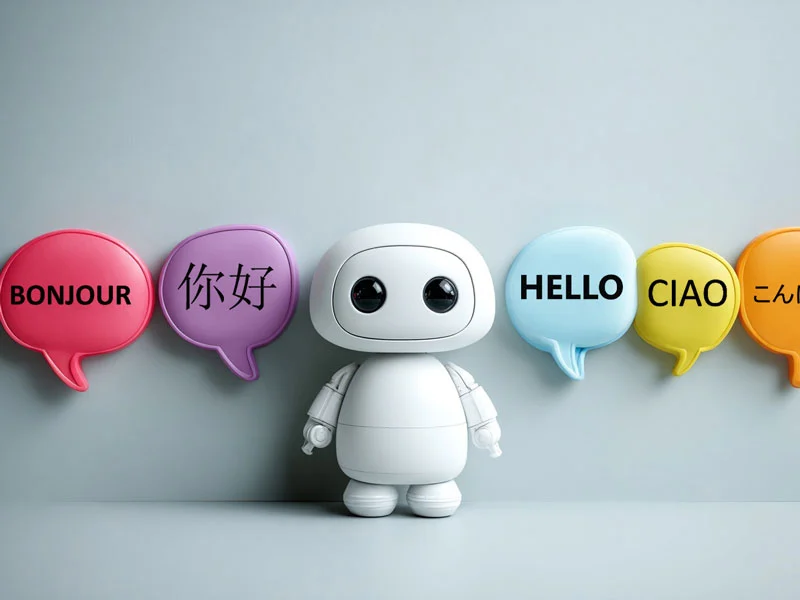
Language, the very bedrock of human evolution and interaction, offers a unique lens through which to observe this unfolding paradigm. Founded on the principle that language bridges cultures and fosters understanding, the translation sector has become an unexpected yet ideal vantage point for observing AI’s deeper impact. The initial mass adoption of AI was, in fact, inextricably linked to language processing, epitomized by the advent of sophisticated large language models capable of answering complex queries and personalizing responses. This progress is the direct result of decades of intensive research in machine translation and linguistics. While AI has dramatically accelerated the speed and accuracy of translation, a critical insight has emerged: it does not, and likely cannot, replicate human sensitivity. Instead, AI excels at automating repetitive and mundane tasks, thereby liberating skilled professionals to focus on the more intricate, emotionally resonant, and quintessentially human aspects of their work.
The prevailing discourse surrounding AI in business circles often fixates on productivity gains and the specter of labor displacement, posing questions such as, "Which jobs will be eliminated?" and "How many will remain?" These are undeniably crucial inquiries, demanding thoughtful answers for those facing potential obsolescence and for future generations charting their career paths. Yet, a more pertinent line of questioning might be, "What are humans uniquely capable of?" and "How can AI empower us to amplify these innate abilities?" The true potential of AI lies not in its capacity to perform tasks, but in its ability to elevate human potential, fostering a symbiotic relationship between human and machine.
The next evolutionary leap for AI, therefore, hinges on its ability to develop a more profound understanding of human beings. This ambition is being actively pursued through pioneering projects, such as DVPS (Diversibus Viis Plurima Solvo). This initiative, backed by a substantial €29 million in European seed funding across 20 partners in nine countries, aims to move beyond models that merely process historical text and image data. Instead, DVPS is focused on developing AI systems that can perceive and interpret vision, audio, and sensor inputs, engaging with the physical world in real-time and possessing a far greater degree of contextual awareness. Such advancements are critical for AI to transcend its current limitations and become a more integrated and intuitive partner in human endeavors.
The ethical and societal implications of this rapidly evolving AI landscape necessitate robust global dialogue and careful management. Discussions held at high-profile events, such as the World Meeting on Human Fraternity in Rome, underscore the urgency of this conversation. The gathering brought together leading AI scientists, including Nobel Laureate Geoffrey Hinton, the highly cited Yoshua Bengio, and Professor Stuart Russell, to engage with Pope Leo XIV on the social, cultural, and ethical dimensions of artificial intelligence. The consensus was clear: AI must be developed and deployed in service of humanity, preserving human dignity and guided by principles of dialogue and care. It is unsurprising that this distinguished group identified "scientific discovery" and "global human understanding" as the two most significant potential positive impacts of AI.
For leaders and organizations navigating this new era, a fundamental shift in perspective is imperative. The focus must transition from identifying tasks AI can perform to understanding how AI can amplify human capabilities. The companies poised for success will be those that prioritize investment in understanding and context, rather than solely in raw efficiency. True leadership in the age of AI involves deeply embedding empathy and ethical considerations into the very fabric of innovation. The goal is to ensure that technology serves to amplify our most human attributes: our capacity for care, our interpretive skills, and our innate drive to connect.
The coming decade will not be characterized by a reduction in jobs or a relentless acceleration of machine capabilities. Instead, it will be defined by machines that possess a sophisticated understanding of context, emotion, and human values. This, in turn, will empower humans to excel in the domains where they are uniquely suited: building relationships, fostering cultural innovation, and leading with purpose and meaning. When machines finally grasp that a sentence is not merely a collection of words but an expression of human intent, when they can discern not just the literal meaning but also the tone, gesture, and cultural nuances embedded within communication, we will witness a profound transition from automation to augmentation. This is the moment when AI will truly emerge as a powerful partner in human progress. Ultimately, the true measure of AI’s advancement will not be the number of jobs it displaces, but the number of new forms of human value and understanding it helps to create.