As the global sporting world pivots toward the spectacle of Super Bowl 60, a parallel drama is unfolding within the burgeoning sector of prediction markets. Kalshi, a leading federally regulated exchange for event contracts, has unveiled an expansive suite of new surveillance and enforcement initiatives designed to fortify the platform against market manipulation and insider trading. This strategic pivot comes at a critical juncture for the industry, as trading volumes reach unprecedented heights and regulatory bodies intensify their oversight of "event-based" financial derivatives.
The scale of the current market is underscored by the massive liquidity flowing into Super Bowl-related contracts. According to internal data, the upcoming championship game has already generated more than $160 million in trading volume on Kalshi alone. These contracts allow participants to take positions on a vast array of outcomes, ranging from the winner of the game and the performance of individual athletes to more niche "pop culture" indicators, such as which major corporations will debut advertisements during the broadcast. However, the very nature of these markets—where outcomes are often decided by corporate boardrooms or private decisions rather than public athletic performance—has sparked a fierce debate over the potential for illicit information advantages.
The announcement of these new safeguards follows a period of heightened tension between prediction market operators and state-level regulators. Recently, New York Attorney General Letitia James issued a public warning regarding what she characterized as "unregulated prediction markets," signaling that the legal landscape remains fraught with complexity even as the industry seeks mainstream legitimacy. Kalshi’s proactive response appears aimed at distinguishing itself as a transparent, compliant alternative to offshore or decentralized platforms that often operate outside the reach of U.S. federal law.
To lead this institutional fortification, Kalshi has established an independent surveillance advisory committee. This body is tasked with providing rigorous quarterly analyses to the company’s outside legal counsel and publishing detailed statistics regarding investigations into suspicious platform activity. The committee is not merely a symbolic gesture; it is backed by high-level partnerships with the Wharton Forensic Analytics Lab and Solidus Labs, a firm specializing in crypto-native and electronic trade surveillance. By integrating academic rigor with cutting-edge technological monitoring, Kalshi is attempting to replicate—and perhaps exceed—the integrity standards found in traditional equities markets.
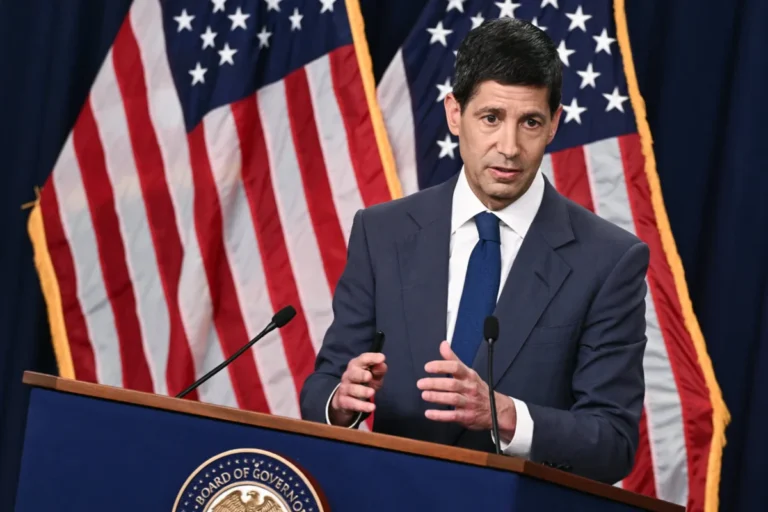
Further bolstering its compliance pedigree, Kalshi has recruited the former Under Secretary of the Treasury for Terrorism and Financial Intelligence to serve as a high-level advisor. This role focuses on market integrity, financial compliance, and the prevention of money laundering. The inclusion of a former top-tier Treasury official suggests that the company is bracing for a future where prediction markets are treated with the same systemic gravity as the New York Stock Exchange or the Nasdaq.
In tandem with these external advisors, the company has elevated Robert DeNault to the position of Head of Enforcement. DeNault, a lawyer with deep experience in the sector, will oversee the identification and prosecution of insider trading and market manipulation. His mandate includes coordinating with the advisory committee to ensure that any anomalies in trading patterns are swiftly investigated. CEO Tarek Mansour recently emphasized the gravity of this mission, noting that in the past calendar year, the platform conducted over 200 investigations, resulting in the freezing of multiple accounts and the referral of several active cases to the Department of Justice (DOJ) and the Commodity Futures Trading Commission (CFTC).
The economic rationale for prediction markets is rooted in the "wisdom of the crowd" and the Hayekian theory of price discovery. Proponents argue that by allowing individuals to "put their money where their mouth is," these markets provide a more accurate forecast of future events than traditional polling or expert punditry. However, the economic utility of these markets is predicated entirely on their integrity. If a market is perceived as being rigged by insiders—such as a marketing executive betting on their own company’s Super Bowl ad placement—the price signal is corrupted, and the market’s value as a forecasting tool evaporates.
To combat this, Kalshi’s surveillance systems utilize advanced pattern recognition models similar to those employed by major stock exchanges. These models are designed to flag trades that deviate significantly from historical norms or occur in suspicious proximity to the public release of information. For example, a sudden, massive influx of capital into a specific "halftime show" contract moments before an official announcement would trigger an immediate audit. The company’s "Know-Your-Customer" (KYC) and Anti-Money Laundering (AML) protocols are also central to this effort, ensuring that every participant is verified and that the flow of funds can be traced by federal authorities if necessary.
The rise of these markets represents a significant shift in the American financial landscape. For decades, the CFTC and other regulators viewed event-based betting with skepticism, often conflating it with illegal gambling. However, a series of legal victories and a shifting regulatory philosophy have allowed platforms like Kalshi to offer "event contracts" as legitimate financial instruments. These contracts are now used by institutional investors to hedge against specific risks and by retail traders to speculate on everything from Federal Reserve interest rate hikes to the outcomes of presidential elections.
The global context for this expansion is equally telling. While the United States has historically maintained a restrictive stance toward such markets, jurisdictions in Europe and the United Kingdom have long permitted various forms of event-based wagering and financial spread betting. By adopting a high-compliance, federally regulated model, Kalshi is attempting to create a "gold standard" for the industry that could serve as a template for other nations looking to modernize their financial frameworks.
The economic impact of this sector’s growth extends beyond the trades themselves. The data generated by prediction markets is increasingly being utilized by hedge funds, news organizations, and corporate strategists as a real-time sentiment indicator. When millions of dollars are at stake, the market price often reacts faster to breaking news than traditional media outlets. By investing heavily in enforcement and surveillance, Kalshi is essentially protecting the quality of this data, ensuring that it remains a reliable metric for the broader economy.
Despite these efforts, the industry faces an uphill battle in the court of public opinion. Critics argue that prediction markets can incentivize bad behavior, such as corporate leaks or even the manipulation of real-world events to ensure a specific payout. The NY Attorney General’s warning reflects a broader concern that these platforms could become a "Wild West" of financial speculation if not kept under tight control. Kalshi’s response—launching dedicated consumer resource hubs and committing to daily reporting of all trades to the CFTC—is a direct attempt to counter this narrative.
As Super Bowl 60 approaches, the eyes of the financial world will be on Kalshi’s ability to maintain a fair and orderly market. With $160 million on the line and the threat of federal prosecution looming for "bad actors," the stakes have never been higher. The success or failure of these new surveillance measures will likely determine whether prediction markets are embraced as a permanent pillar of the global financial system or relegated to the periphery as a high-risk experiment.
Ultimately, Kalshi’s "integrity offensive" is a recognition that in the world of high-stakes finance, trust is the only currency that truly matters. By aligning itself with academic experts, former government officials, and sophisticated surveillance technology, the company is betting that transparency will be the key to its long-term survival. As Tarek Mansour noted, while no system is perfect, the commitment to iterative improvement and rigorous enforcement is the only path forward for an industry that sits at the volatile intersection of sports, culture, and economics.