The Federal Reserve’s Federal Open Market Committee (FOMC) concluded its first policy meeting of the year by voting to maintain the benchmark federal funds rate at a range of 3.5% to 3.75%, a move that signals a tactical pause in its recent easing cycle. This decision, which met the broad expectations of Wall Street analysts and global economists, marks a significant shift in the central bank’s posture as it attempts to balance resilient economic growth against persistent inflationary pressures and an increasingly complex political environment. By halting a streak of three consecutive quarter-percentage-point reductions, the Fed has effectively pivoted from a "maintenance" phase—designed to protect the labor market—to a "wait-and-see" approach, prioritizing the stabilization of price growth over further stimulus.
The committee’s revised policy statement reflected a notably more optimistic assessment of the American economy than was seen in late 2024. Policymakers upgraded their description of economic activity, noting that it has been expanding at a "solid pace." This optimism is backed by robust data: the third quarter of the previous year saw Gross Domestic Product (GDP) expand at a 4.4% annualized rate, while real-time trackers, such as the Atlanta Fed’s GDPNow model, suggest the final months of the year could see growth accelerating to a 5.4% clip. This level of expansion is particularly striking when compared to other major economies; while the Eurozone and Japan have struggled with stagnant growth and structural headwinds, the United States continues to exhibit a level of "American Exceptionalism" fueled by strong consumer spending and industrial resilience.
However, this economic vigor has come with a caveat: inflation remains the "sticky" problem that refuses to vanish. While the Consumer Price Index (CPI) has retreated significantly from its 40-year peaks of over 9% in 2022, it remains entrenched near the 3% mark, stubbornly above the Federal Reserve’s long-term 2% target. In a critical change to its official communique, the FOMC erased a specific clause that had previously suggested the risks to the labor market were greater than the risks of renewed inflation. By removing this language, the Fed has telegraphed to the markets that its dual mandate—maximum employment and price stability—is now back in a state of equilibrium. This suggests that the "downside risks" to the economy have faded, replaced by a concern that cutting rates too quickly could reignite a wage-price spiral.
The labor market, meanwhile, presents a paradox for policymakers. While job gains have slowed in absolute terms, the unemployment rate has shown clear signs of stabilization. This cooling of the labor market is occurring against a backdrop of shifting federal policy, including a more restrictive approach to immigration that has begun to impact labor supply in sectors such as agriculture, construction, and hospitality. Despite these shifts, layoffs remain historically low. Initial jobless claims—a proxy for the health of the corporate sector—are currently hovering at two-year lows, suggesting that while companies are hiring more cautiously, they are not yet moving toward widespread workforce reductions.
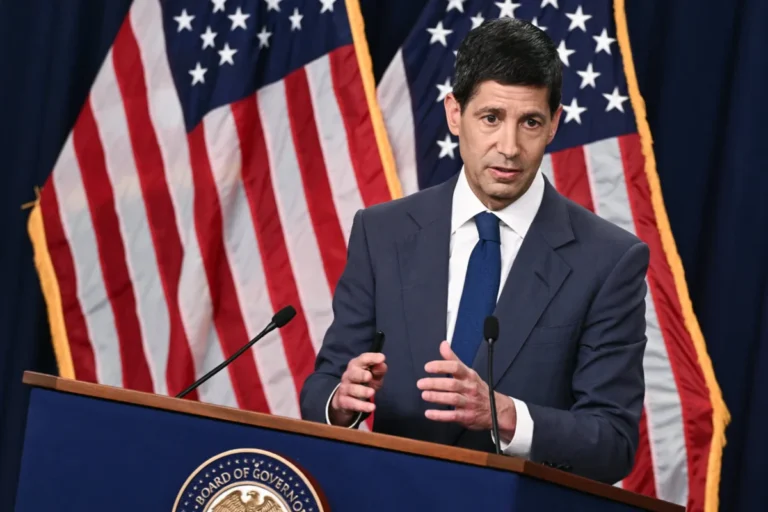
Internal dynamics within the Fed remain unusually fractious, reflecting broader national divisions. The decision to hold rates was not unanimous, passing with a 10-2 vote. Governors Stephen Miran and Christopher Waller emerged as the two dissenters, both advocating for an additional 25-basis-point cut. Miran’s dissent was his fourth in as many meetings, though his stance has moderated from his previous calls for deeper, 50-basis-point reductions. Both Miran and Waller were appointed by President Donald Trump—Miran to fill an unexpired term that ends this week, and Waller during Trump’s first administration. These dissents underscore a growing philosophical rift within the board regarding how much "insurance" the economy needs to avoid a hard landing.

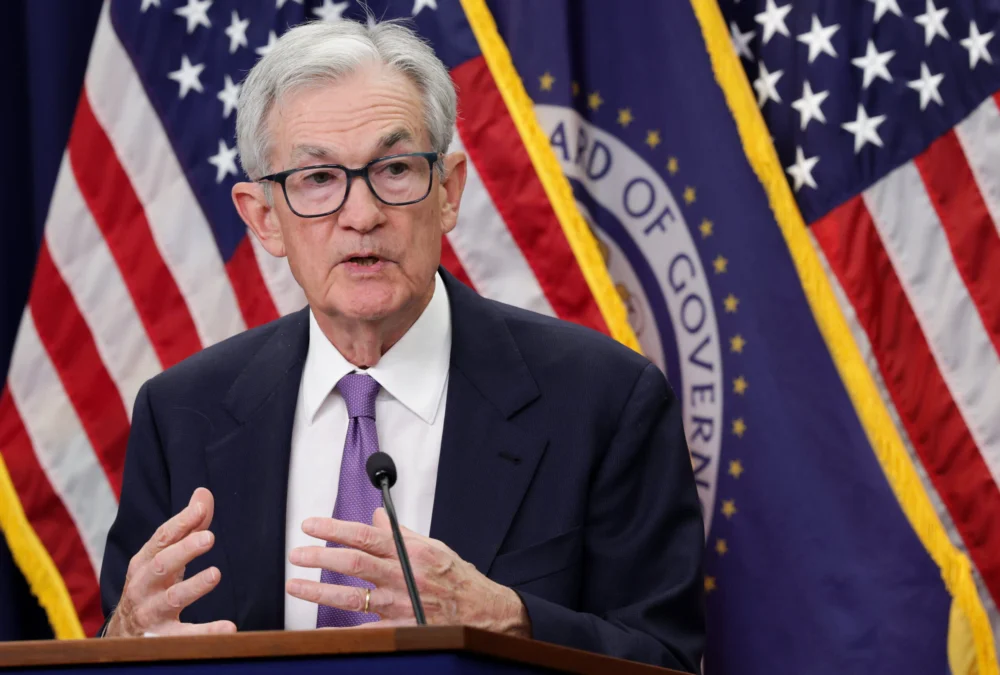
The meeting took place against a backdrop of unprecedented political tension, as the central bank finds itself in the crosshairs of both the executive and judicial branches. Federal Reserve Chair Jerome Powell is entering the final months of a tumultuous eight-year tenure characterized by a global pandemic, the highest inflation in a generation, and a persistent battle to maintain the institution’s independence. Most recently, the Department of Justice issued a subpoena to Powell regarding high-profile and costly renovations at the Fed’s Washington, D.C., headquarters. This investigation is viewed by many institutional observers as a manifestation of the friction between the administration and a central bank that refuses to yield to political pressure for lower interest rates.
Further complicating the landscape is a looming Supreme Court decision regarding the removal of Governor Lisa Cook. The administration’s attempt to sack Cook has triggered a constitutional debate over whether the President has the authority to fire Fed governors without cause—a move that would fundamentally dismantle the central bank’s shield from partisan politics. Powell, in a rare moment of public candor during his post-meeting press conference, described the case as "perhaps the most important" in the Fed’s 113-year history. He framed the struggle as a fight for the Fed’s ability to make data-driven decisions without the interference of electoral cycles, noting that historical precedents in other nations show that central banks under political control almost invariably suffer from higher long-term inflation and lower economic stability.
Market reaction to the Fed’s "hawkish hold" was immediate. Treasury yields climbed as investors recalibrated their expectations for the remainder of the year. The bond market, which had previously hoped for a more aggressive easing path, is now pricing in a much slower trajectory, with futures markets suggesting no further cuts until at least June. Despite the prospect of higher-for-longer borrowing costs, equity markets remained resilient. The S&P 500 hovered near the historic 7,000-point milestone, a testament to the fact that investors currently view strong economic growth as a more powerful driver of corporate earnings than the headwind of elevated interest rates.
Looking ahead, the Fed must also account for the potential inflationary impact of shifting trade policies. The administration’s aggressive stance on tariffs is viewed by Fed economists as a "supply-side shock" that could add temporary upward pressure to consumer prices. While the central bank generally tries to "look through" one-time price adjustments caused by trade policy, the cumulative effect of tariffs on imported goods could complicate the path back to 2% inflation. If businesses pass these costs directly to consumers, the Fed may find itself forced to maintain higher rates for an even longer duration to dampen demand.
The focus of the financial world is now shifting toward the question of succession. With Powell’s term ending soon, speculation is mounting over who will lead the world’s most powerful financial institution next. Prediction markets and institutional whispers have increasingly pointed toward Rick Rieder, the Chief Investment Officer of Global Fixed Income at BlackRock, as a frontrunner. A transition to a new chair often brings a period of volatility as markets attempt to decipher the new leader’s "reaction function." Regardless of who takes the gavel, they will inherit an economy that is growing at a remarkable pace but remains vulnerable to the twin threats of geopolitical instability and domestic political encroachment.
Ultimately, the Federal Reserve’s decision to stand pat reflects a central bank that is confident in the current strength of the U.S. economy but wary of the shadows lurking on the horizon. By choosing stability over further stimulus, Powell and the majority of the FOMC have signaled that they are prepared to let the current restrictive rates work their way through the system. For consumers, this means mortgage rates and credit card interest are unlikely to drop significantly in the near term. For the global economy, it means the U.S. dollar is likely to remain strong, continuing to act as a magnet for international capital. As the Fed enters this period of transition and legal scrutiny, its commitment to data-dependency remains its primary defense against an era of profound uncertainty.