The landscape of American retirement planning and wealth redistribution underwent a seismic shift this week as the nation’s largest financial institutions threw their collective weight behind a burgeoning federal savings program. JPMorgan Chase, Bank of America, and Wells Fargo—the three pillars of the American banking sector—announced in a series of coordinated releases that they will match the federal government’s $1,000 seed contribution to specialized savings accounts for the children of their eligible employees. This move, which effectively doubles the initial investment for thousands of families, marks a significant escalation in corporate America’s role in addressing long-term wealth inequality through private-public partnerships.
At the heart of this movement are the "Trump accounts," a pilot program designed to instill a culture of investment from birth. Under the current framework, the U.S. Treasury deposits a one-time $1,000 sum into tax-advantaged accounts for eligible children born in the United States between January 1, 2025, and December 31, 2028. By committing to match this $1,000 federal grant, the banking giants are not only providing a direct fringe benefit to their workforce but are also signaling a broader commitment to the concept of "baby bonds"—a policy tool long debated by economists as a means to narrow the persistent racial and economic wealth gaps in the United States.
The program’s origins trace back to a unique coalition of high-finance strategists and philanthropists. Brad Gerstner, the founder of Altimeter Capital, is widely credited as a primary architect of the initiative. Gerstner’s vision was to create a "nation of shareholders" by ensuring that every child, regardless of their socioeconomic background, has a stake in the American economy from day one. This vision has resonated across a diverse spectrum of the American elite. Beyond the corporate boardrooms of Wall Street, the program has secured financial commitments and public endorsements from billionaire philanthropists like Michael and Susan Dell and Bridgewater Associates founder Ray Dalio, as well as cultural icons such as Nicki Minaj. The involvement of such varied figures suggests a rare moment of alignment between the federal government, the financial sector, and popular culture regarding the necessity of early-life capital accumulation.
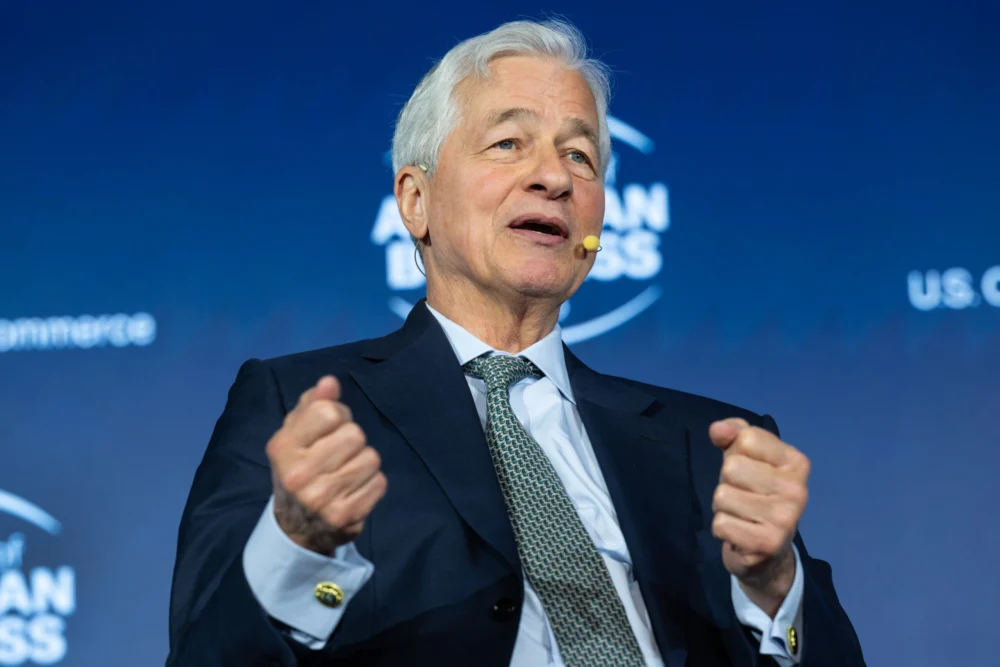
Jamie Dimon, Chairman and CEO of JPMorgan Chase, framed the decision as a natural extension of the bank’s internal social responsibility mandates. In a statement addressing the firm’s 190,000 U.S.-based employees, Dimon emphasized that the match is designed to bolster the financial health of the workforce’s next generation. By facilitating early-life saving and wise investment, the bank aims to mitigate the "financial fragility" that often plagues American households. Bank of America echoed this sentiment in an internal memo, praising the government’s "innovative solutions" for long-term savings. Wells Fargo followed suit shortly thereafter, solidifying a unified front among the "Big Three" of American retail banking.
The economic implications of these accounts are profound when viewed through the lens of compound interest. A $2,000 initial investment—comprising the $1,000 federal grant and the $1,000 corporate match—growing at an average annual market return of 7% would swell to approximately $162,000 by the time the child reaches the age of 65, without any further contributions. If the account is managed aggressively in low-cost index funds, the potential for wealth creation is even higher. For many families in the lower and middle-income brackets, this represents a significant foundation for retirement security that was previously unattainable.
This corporate trend is notably concentrated within the financial services sector. While JPMorgan, Bank of America, and Wells Fargo are the largest entities to join, they are part of a growing list of fintech and investment firms including BlackRock, BNY, Robinhood, SoFi, and Charles Schwab. The participation of these firms is strategic; they are the very institutions that will likely manage these assets over the coming decades. By incentivizing the opening of these accounts, they are effectively cultivating a future generation of investors who will be familiar with their platforms and services.

From a global perspective, the United States is late to the concept of state-sponsored child trust funds. Singapore has long operated the Child Development Account (CDA), a co-savings scheme where the government matches dollar-for-dollar the savings parents contribute for their children. Similarly, the United Kingdom introduced the Child Trust Fund in 2002, though the program was eventually scaled back due to fiscal constraints. The American "Trump accounts" differ in their pilot nature and their heavy reliance on private sector matching, a hallmark of the U.S. model of "stakeholder capitalism" where corporations are expected to fill gaps left by the public safety net.
Critics and market analysts, however, point to several challenges that could determine the long-term success of the initiative. The first is the issue of "leakage"—the risk that funds might be withdrawn prematurely for non-retirement purposes, despite the tax penalties. The second is the "investment gap," where families with higher levels of financial literacy may choose more aggressive, high-performing assets, while those with less experience might default to lower-yield, "safer" options, potentially exacerbating the very wealth gap the program intends to close. Furthermore, the fiscal sustainability of the program remains a point of debate in Washington, as the $1,000 Treasury contribution represents a significant federal expenditure if expanded beyond the initial pilot phase.
Despite these concerns, the immediate impact on corporate culture is undeniable. The decision by these banks to match federal funds is a powerful recruitment and retention tool in an increasingly competitive labor market. In an era where "environmental, social, and governance" (ESG) metrics are closely scrutinized by investors, these matching programs provide a tangible, data-driven example of "S" (social) initiatives. It allows banks to move beyond traditional charitable giving and toward a model of direct investment in the financial stability of their own employees’ families.
The wealth gap in the United States remains one of the most daunting economic challenges of the 21st century. Data from the Federal Reserve indicates that the wealthiest 1% of American households hold more than 30% of the country’s total wealth, while the bottom 50% hold less than 3%. Proponents of the new savings accounts argue that the only way to disrupt this concentration of capital is to democratize the ownership of assets. By providing a "nest egg" at birth, the program attempts to give every child a "head start" that was once the exclusive domain of the wealthy.
As the 2025-2028 window for the pilot program approaches, the financial industry’s role will likely expand from mere matching to education. Financial literacy remains a major hurdle; without the knowledge of how to manage these accounts, the initial $2,000 could stagnate. Industry experts expect that the next phase of this rollout will involve the development of specialized educational tools and "set-it-and-forget-it" investment vehicles designed specifically for these accounts.
The move by JPMorgan Chase, Bank of America, and Wells Fargo may well be the tipping point for other sectors. If the "Big Three" can demonstrate that these matches improve employee morale and long-term loyalty, it is likely that tech giants and manufacturing conglomerates will follow. For now, the banking sector has set a new standard for corporate participation in federal social policy. By turning a $1,000 government grant into a $2,000 investment, Wall Street is betting that the future of the American economy depends on making every citizen a capitalist from the cradle. The success of this experiment will not be known for decades, but the commitment of billions in corporate capital suggests that the financial elite believe this is a risk worth taking for the sake of national economic stability.