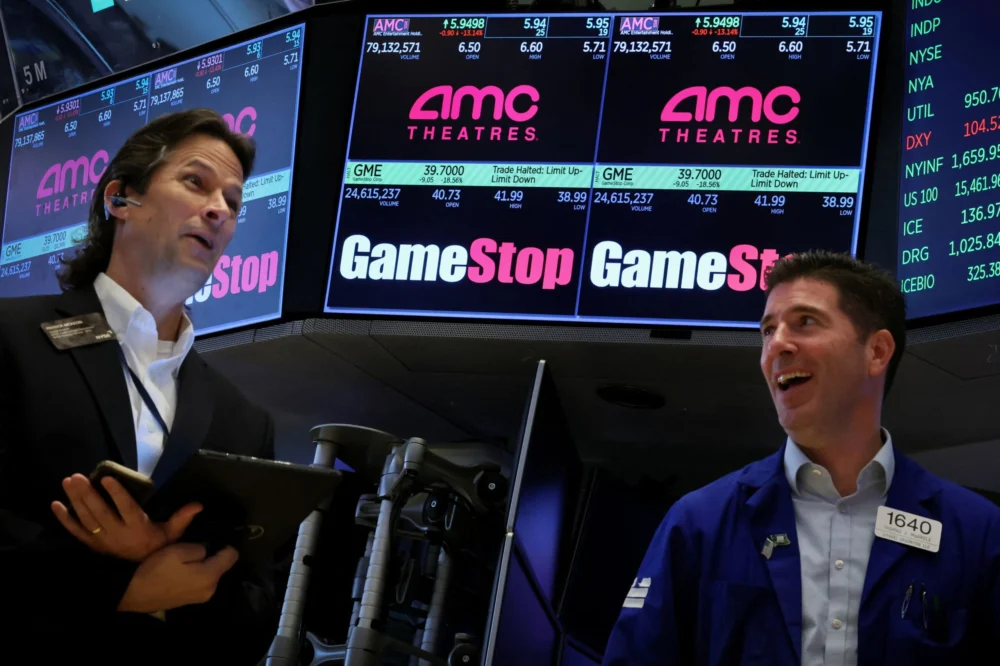
Five years after a decentralized collective of online traders orchestrated a historic short squeeze on GameStop, the architectural foundations of Wall Street have undergone a profound and likely permanent transformation. What was initially dismissed by institutional veterans as a transient "meme stock" phenomenon—a speculative fever fueled by pandemic boredom and government stimulus—has instead matured into a sophisticated, structural pillar of the modern financial ecosystem. The "dumb money" moniker, once used pejoratively to describe individual investors, has been largely retired, replaced by a grudging respect for a demographic that now dictates market sentiment, provides critical liquidity during downturns, and commands a growing share of global equity volumes.
The evolution of the retail investor from a peripheral participant to a market-moving force represents one of the most significant shifts in economic history. Prior to 2020, individual trading accounted for a negligible fraction of daily equity turnover in the United States, often hovering in the low single digits. Today, that figure has stabilized at approximately 20% of daily volume, according to data from BlackRock. During periods of heightened volatility or specific sector rotations, this participation can surge to nearly 40% of equity trades and upwards of 50% in the options market. This is no longer a fringe movement; it is the institutionalization of the individual.
The catalysts for this shift were both technological and sociological. The pivot to zero-commission trading in late 2019, led by disruptors like Robinhood and eventually adopted by legacy powerhouses such as Charles Schwab and Fidelity, removed the primary friction to entry. The subsequent introduction of fractional share trading further lowered the barriers, allowing investors to deploy small sums into high-priced technology stocks that were previously out of reach. When the global pandemic hit in 2020, millions of individuals found themselves with the time, the tools, and the capital to engage with the markets directly.
However, the endurance of this trend has defied the expectations of many economists who predicted a mass exodus of retail capital once lockdown restrictions eased and "normalcy" returned. Instead, the retail cohort has become more entrenched. The sophistication of these investors has risen in tandem with their participation. Armed with advanced charting tools, real-time data feeds, and decentralized research networks on platforms like Reddit and Discord, the modern retail trader often operates with a level of information parity that was once the exclusive domain of Bloomberg terminal subscribers.
This democratization of information has forced a radical shift in institutional strategy. Hedge funds and short sellers, once the undisputed predators of the trading floor, have had to recalibrate their risk management frameworks. The GameStop saga illustrated that crowded bearish positions now carry an asymmetric risk profile; a sufficiently motivated retail community can mobilize capital with a speed and coordination that can break even the most well-capitalized institutional thesis. Consequently, many hedge funds now employ sentiment analysis AI to monitor social media forums, treating retail chatter not as noise, but as a primary lead indicator of market direction.
The economic impact of this "new retail" goes beyond simple price action. Individual investors have increasingly acted as a stabilizing force during market drawdowns. In early April, when concerns over international trade tariffs triggered a sharp institutional sell-off, it was the retail dip-buyers who stepped in to provide a floor for the market. This contrarian behavior—buying when the "smart money" is selling—has been a recurring theme over the past three years. Analysts note that retail flows into exchange-traded funds (ETFs) and individual equities have provided a steady stream of capital that has helped underpin the resilience of the current bull market.

The scope of retail interest has also diversified significantly since the early days of the meme stock craze. While the 2021 era was defined by a narrow focus on distressed retailers and cinema chains, today’s individual investors are increasingly sophisticated macro traders. In 2025 and early 2026, retail capital flowed aggressively into energy stocks following geopolitical shifts in South America and into precious metals as a hedge against currency fluctuations. The recent surge in silver, which saw the metal cross the $100 per ounce threshold for the first time, was driven in large part by a coordinated retail pivot toward hard assets.
Furthermore, the rise of "retail-focused" financial products has accelerated. Firms like Direxion have observed that while retail traders are increasingly using leveraged and inverse ETFs, they are doing so with surprising prudence. Data suggests that these high-risk instruments are typically used as satellite positions within a broader, more conservative portfolio. This contradicts the narrative of the retail trader as a reckless gambler, suggesting instead a demographic that is learning to use sophisticated hedging tools to navigate an increasingly volatile global economy.
The shift is also being reinforced by a massive demographic tailwind: the Great Wealth Transfer. Over the next two decades, an estimated $120 trillion in assets is expected to pass from the Baby Boomer generation to Millennials and Gen Z. This transfer represents a sum roughly four times the size of the U.S. economy. Unlike their predecessors, these younger cohorts are digital natives who favor self-directed investing over traditional, high-fee managed accounts. As this capital shifts hands, the influence of the individual investor is poised to grow exponentially.
Brokerages are already racing to capture this future wealth. The industry is moving toward a 24/7 trading model to mimic the "always-on" nature of the cryptocurrency markets, which served as a gateway for many young investors. The integration of prediction markets, private equity access for accredited retail investors, and the proliferation of spot crypto ETFs are all symptoms of a financial system that is being rebuilt to cater to the individual rather than the institution.
From a global perspective, the American retail phenomenon is serving as a blueprint for other markets. While the U.S. remains the epicenter of this movement due to its deep capital markets and culture of equity ownership, similar trends are emerging in Europe and parts of Asia. Regulatory bodies are now tasked with a delicate balancing act: protecting retail investors from the inherent risks of the market without stifling the democratization that has provided millions of people with a path to wealth creation.
The psychological shift among the younger generation is perhaps the most durable legacy of the GameStop era. For many, the pandemic-era volatility was not a deterrent but an education. Case studies of young professionals moving significant portions of their savings from low-interest checking accounts into brokerage accounts are becoming the norm. The data from JPMorgan showing a six-fold increase in the percentage of 25-year-olds making significant market investments compared to a decade ago underscores a fundamental change in how the youth view capital.
As the financial world moves further away from the chaotic weeks of January 2021, it is clear that the retail investor is no longer a guest in the house of Wall Street—they are one of its primary architects. The market is no longer a closed-loop system where a handful of banks and funds set the price of every asset. It has become a vast, transparent, and often unpredictable arena where the collective will of millions of individuals can outweigh the mandates of the world’s largest institutions. In this new era, the ability to understand, track, and respect retail sentiment is not just an advantage for professional investors; it is a requirement for survival. The "dumb money" has grown up, and it is here to stay.