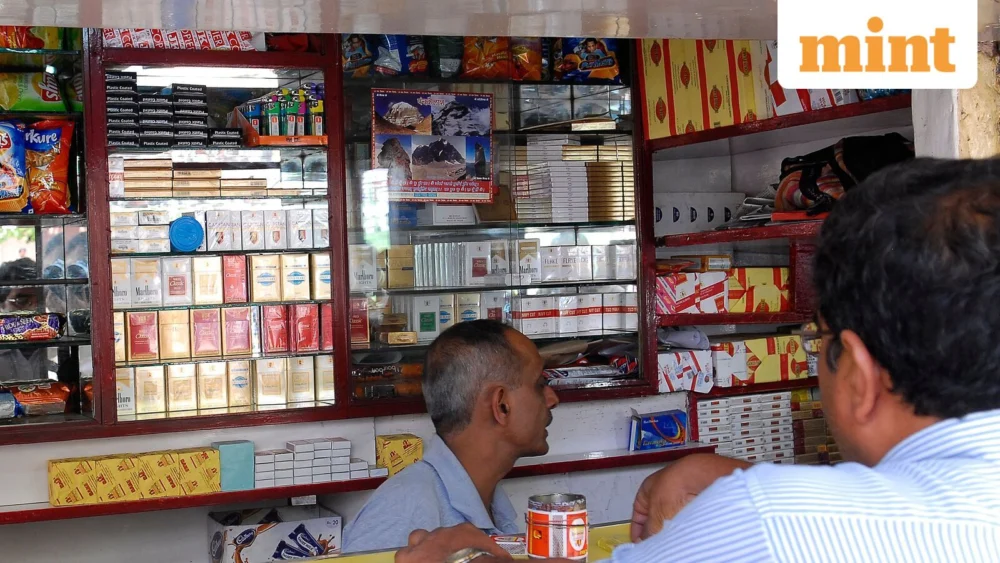
India’s tobacco landscape is undergoing a significant transformation as new excise duties and a health cess take effect, immediately translating into substantial price increases for cigarette packs across the board. This regulatory shift, implemented on Sunday, has ignited a complex discussion encompassing public health objectives, government revenue generation, and the potential for a burgeoning illicit market. High-end cigarette variants, particularly those measuring 76 mm, are experiencing the most dramatic hikes, with a 10-stick pack now costing an additional ₹50-₹55, varying by brand. Even mid-range and shorter filter options have seen prices climb by at least ₹22-₹25 per 10-stick pack, marking one of the steepest increases in recent memory.
The immediate impact has been felt throughout the distribution network. While manufacturers are yet to release updated Maximum Retail Price (MRP) labels, wholesale distributors have already begun invoicing existing inventory to retailers at rates reflecting the higher 40% Goods and Services Tax (GST) alongside the new levies. With wholesale hubs typically closed on Sundays, the full effect of these revised prices is anticipated to ripple through the retail sector as new stock, bearing the updated MRPs, starts moving into shops from Monday onwards. This logistical lag, though temporary, underscores the swiftness of the policy change and the challenge for the supply chain to adapt instantly.
Specific brands offer a clearer picture of the magnitude of these adjustments. A 10-stick pack of Wills Navy Cut (76 mm), a widely popular mid-sized brand previously retailing around ₹95, is now projected to hit approximately ₹120. Similarly, premium 84 mm cigarettes like Gold Flake Lights and Wills Classic, which were priced at ₹170 for a 10-stick pack, are expected to command between ₹220 and ₹225. Slimmer variants, such as Classic Connect (97 mm), previously sold at ₹300 for 20 sticks, are likely to see their MRPs climb to ₹350. Manufacturers are reportedly working to print and deliver new packaging with the revised MRPs, a process that suppliers anticipate will be completed by the end of the current month.
These new levies supersede the previous 28% GST and compensation cess structure that had been applied to tobacco products and pan masala since the nationwide GST rollout on July 1, 2017. Under the revised framework, the additional duty is meticulously calibrated based on stick length and type. Short non-filter sticks (up to 65 mm) now attract an added duty of ₹2.05 per stick, while their filtered counterparts of the same length incur an extra ₹2.10. Medium cigarettes (65-70 mm) face a duty ranging from ₹3.6 to ₹4 per stick, with premium 70-75 mm sticks incurring approximately ₹5.4. The highest duty of ₹8.50 per stick is reserved for non-standard designs, which most mainstream brands largely avoid. This granular approach to taxation aims to capture different segments of the market more effectively, aligning tax burden with product specifications.
The policy’s primary drivers are twofold: to bolster government revenue and, crucially, to serve as a public health intervention. India faces a significant burden from tobacco-related diseases, with millions of lives lost annually to conditions like cancer, heart disease, and respiratory illnesses. According to the Global Adult Tobacco Survey (GATS) India, nearly 28.6% of adults (266.8 million) aged 15 and above currently use tobacco in some form. Health economists widely acknowledge that increasing the price of tobacco products through taxation is one of the most effective strategies to reduce consumption, especially among younger populations and lower-income groups who are more price-sensitive. By making cigarettes less affordable, the government hopes to deter initiation and encourage cessation, thereby alleviating the immense strain on the public healthcare system.

However, the All India Consumer Products Distributors Federation (AICPDF), representing a vast network of over 4.5 lakh distributors and 1.3 crore retail shops, has voiced significant concerns. With an estimated 8,000 to 9,000 tobacco stockists operating nationwide, the federation warns that such steep price increases could inadvertently fuel the proliferation of smuggled and counterfeit goods. D. Patil, President of the AICPDF, highlighted the delicate balance between taxation and market realities. "Tobacco products are among the few categories where small shopkeepers are still relevant," Patil stated. "If this too is pushed into the hands of illicit networks, what will be left for honest retailers? This is not just about taxation – it is about survival." The federation argues that excessive taxation on legal "sin products" risks eroding the traditional retail infrastructure, which is already grappling with fierce competition from quick commerce and online platforms.
The threat of illicit trade is a formidable challenge globally. When legitimate products become prohibitively expensive due to high taxes, a black market often emerges, offering cheaper, untaxed alternatives. These smuggled or counterfeit products not only deprive the government of crucial tax revenue but also pose additional health risks due to unregulated manufacturing processes and unknown ingredients. Estimates suggest that illicit tobacco trade costs governments billions of dollars annually worldwide. In India, a flourishing illicit market could undermine both the revenue generation and public health objectives of the new duties, as consumers might simply switch to cheaper, unregulated sources rather than quitting. This scenario creates a vicious cycle where higher taxes lead to lower legal sales, reduced tax collection, and an increase in harmful, untracked products.
Comparing India’s approach to global standards reveals a mixed picture. Countries like Australia and the United Kingdom have implemented extremely high tobacco taxes, leading to some of the highest cigarette prices globally, and have seen significant declines in smoking rates. For instance, a pack of cigarettes in Australia can cost upwards of AUD 40 (approximately ₹2,200). However, these nations also grapple with varying levels of illicit trade. The effectiveness of price hikes is often tied to robust enforcement mechanisms to curb smuggling and a comprehensive public health campaign that supports cessation. Without adequate enforcement, the revenue gains can be partially offset by losses to the black market, and public health benefits might be diluted.
The economic implications extend beyond retailers and government coffers. Tobacco manufacturers, such as ITC Ltd., Godfrey Phillips India, and VST Industries, are likely to face pressure on their sales volumes and profitability. While these companies often absorb some portion of tax hikes or innovate with product mixes, sustained increases can lead to shifts in consumer preferences towards cheaper brands or alternative tobacco products like bidis, which are taxed at a much lower rate, or even smokeless tobacco. Furthermore, the tobacco farming sector, which supports millions of livelihoods, could also feel the downstream effects if overall demand for legal tobacco leaf diminishes.
Looking ahead, the success of these new excise duties will hinge on several factors. First, the government’s ability to effectively combat illicit trade will be paramount. This requires enhanced surveillance, cross-border cooperation, and stricter penalties for those involved in smuggling and counterfeiting. Second, the impact on consumer behavior needs to be closely monitored. Will the price hikes genuinely lead to reduced consumption, or merely a shift to alternative, potentially more harmful, unregulated products? Third, the revenue generated from these duties must be carefully tracked and, ideally, earmarked for public health initiatives and tobacco cessation programs to reinforce the policy’s primary objective.
The current adjustments represent a bold move by the Indian government to leverage fiscal policy for public health and revenue generation. While the immediate impact is a clear increase in cigarette prices, the long-term consequences will unfold through a complex interplay of market dynamics, consumer choices, enforcement efficacy, and the broader socio-economic landscape. The delicate balance between maximizing revenue, safeguarding public health, and protecting legitimate trade networks will define whether these new duties achieve their intended outcomes or inadvertently create new challenges.