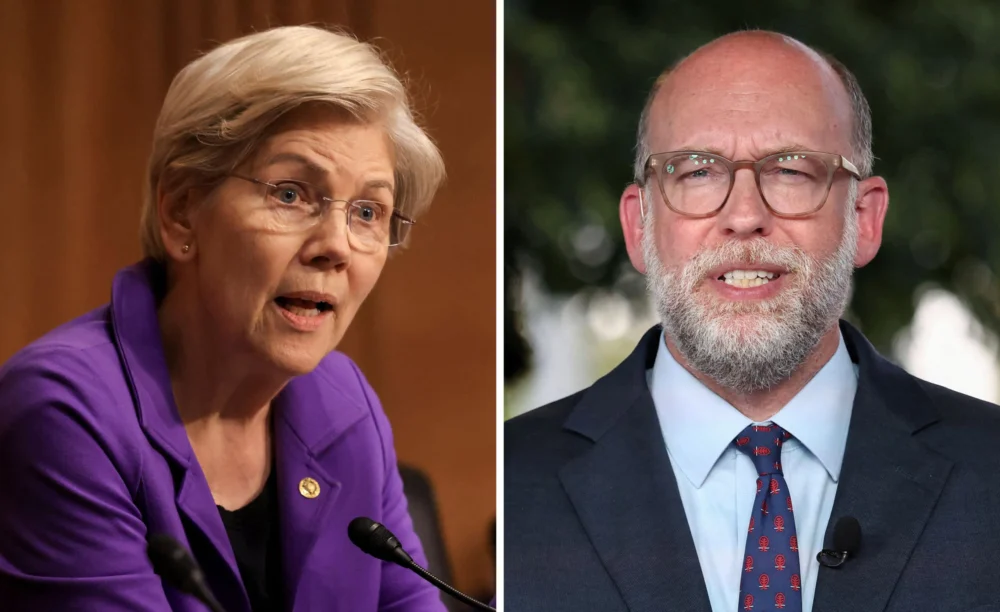
The landscape of American consumer finance has become the latest battleground for a high-stakes political paradox, as Senator Elizabeth Warren (D-MA) leverages President Donald Trump’s populist rhetoric on credit card affordability to challenge the deregulatory agenda of his own administration. In a sharply worded letter to Russell Vought, the acting director of the Consumer Financial Protection Bureau (CFPB), Warren accused the agency’s leadership of actively undermining the President’s public demands for lower interest rates. This escalation marks a significant moment in the ongoing struggle over the future of the CFPB, an agency Warren helped conceive in the wake of the 2008 financial crisis, and which now faces an existential threat from the very administration whose stated goals it is purportedly failing to meet.
At the heart of the dispute is a fundamental tension between the Trump administration’s broad deregulatory objectives and the President’s recent, highly publicized campaign to cap credit card interest rates at 10%. Currently, the average credit card annual percentage rate (APR) in the United States hovers near record highs, often exceeding 21%, according to Federal Reserve data. This surge in borrowing costs has coincided with a historic spike in total household debt, which surpassed $17.9 trillion in late 2024, with credit card balances accounting for more than $1.1 trillion of that figure. Against this backdrop, President Trump’s call for a one-year voluntary cap by banks—and his subsequent pivot toward seeking legislative intervention when lenders refused to comply—has created a unique political opening for progressive advocates of consumer protection.
Senator Warren’s intervention seeks to exploit what she characterizes as a glaring inconsistency between the President’s "affordability" platform and the CFPB’s recent regulatory retreats. In her communication to Vought, Warren highlighted a series of actions taken by the bureau that she argues favor the banking industry at the expense of struggling households. Chief among these is the suspension of a landmark rule intended to cap credit card late fees at $8. The rule, originally finalized under the previous administration, was estimated to save American consumers approximately $10 billion annually by curbing what regulators described as "junk fees" that disproportionately affect low-income borrowers. Under Vought’s stewardship, the CFPB has effectively sidelined this measure, allowing banks to continue charging late fees that frequently exceed $30 per occurrence.
The friction between Warren and Vought is not merely a disagreement over policy but a clash over the very legitimacy of the CFPB. Vought, who also serves as the Director of the Office of Management and Budget, has been a vocal proponent of dismantling the bureau, which he and other conservative critics view as an unconstitutional and overreaching "rogue" agency. Reports from within the CFPB suggest the organization is currently operating in a state of managed decline, with leadership pursuing mass layoffs and attempting to freeze funding mechanisms. This internal dismantling, Warren argues, is a form of "insubordination" against the President’s stated desire to protect consumers from predatory lending.
"While Congress considers legislation to address the issue, your own actions are directly undermining the President’s stated goals," Warren wrote, framing the issue as a choice between the President’s populist promises and the bureau’s pro-business trajectory. She contended that if the President were truly serious about making credit cards more affordable, his administration would be strengthening the CFPB’s enforcement capabilities rather than hollowing them out.
The economic implications of a 10% interest rate cap are profound and have sparked intense debate among market analysts. Industry advocates and some economists warn that a hard cap on interest rates could lead to a severe contraction in credit availability. Banks use high APRs to price in the risk of lending to consumers with lower credit scores; if the return on that risk is capped at 10%, lenders might simply stop issuing cards to millions of "subprime" or "near-prime" borrowers. This "credit crunch" could inadvertently drive consumers toward even more expensive and less regulated alternatives, such as payday loans or title lenders.
Conversely, proponents of the cap argue that the current spread between the federal funds rate and average credit card APRs is historically wide, suggesting that banks are extracting excessive profits from a captive consumer base. They point to the "stickiness" of credit card rates, which tend to rise quickly when the Federal Reserve hikes interest rates but remain elevated even when the cost of capital for banks decreases. Warren’s letter demands that the CFPB resume its role in monitoring these rate increases and ensuring that they are justified by market conditions rather than deceptive practices.

Beyond the headline issue of interest rate caps, Warren’s critique extends to more nuanced industry practices that she believes require urgent regulatory scrutiny. She called for a crackdown on "deferred interest" promotions—often marketed as "0% interest for 12 months"—which can result in massive retroactive interest charges if a balance is not paid in full by the end of the promotional period. Furthermore, she urged the bureau to address "bait-and-switch" tactics in credit card rewards programs, where banks may unilaterally devalue points or change terms after a consumer has committed to a specific card product.
The CFPB’s defense, articulated by agency spokespeople, rests on a strict interpretation of the Dodd-Frank Wall Street Reform and Consumer Protection Act. The agency maintains that it is legally barred from setting a direct cap on interest rates, a power that resides solely with Congress. However, Warren counters that the bureau possesses broad authority to address "unfair, deceptive, or abusive acts or practices" (UDAAP). She argues that by failing to utilize this authority to investigate how interest rates and fees are marketed and applied, the CFPB is choosing to ignore its mandate.
The political theater surrounding this issue is further complicated by the role of the Department of Government Efficiency (DOGE), a non-governmental advisory body tasked with identifying ways to slash federal spending and regulation. The CFPB has been identified as a primary target for DOGE-led reforms, with plans reportedly in motion to fire a significant portion of its staff. This move is seen by consumer advocates as a direct assault on the only federal agency dedicated solely to protecting the financial interests of ordinary citizens.
Globally, the U.S. approach to credit card regulation remains an outlier. In many European Union member states, interest rates are subject to "usury caps" that are tied to the central bank’s base rate, preventing the kind of 25% or 30% APRs common in the American market. In the United Kingdom, the Financial Conduct Authority (FCA) has implemented strict rules on "persistent debt," requiring lenders to intervene and help consumers who are paying more in interest and fees than toward their principal balance over an extended period. The absence of similar systemic protections in the U.S. has made the CFPB a vital, if controversial, pillar of the domestic financial system.
As the debate intensifies, the banking sector remains in a state of high alert. Major issuers such as JPMorgan Chase, Citigroup, and Capital One have significant exposure to any regulatory shift regarding late fees or interest caps. A return to the $8 late fee rule alone would represent a multi-billion dollar hit to the industry’s non-interest income. Market data indicates that credit card companies have become increasingly reliant on these fees to bolster profit margins as delinquency rates begin to creep up from their pandemic-era lows.
The resolution of this conflict will likely depend on whether President Trump chooses to align with his populist rhetoric or his deregulatory advisors. Senator Warren’s strategy of using the President’s own words as a weapon against his appointees has placed the administration in a difficult position. If the CFPB continues to roll back consumer protections, it risks alienating the very voters who were drawn to the President’s promises of economic relief. If it reinstates the late fee cap and pursues aggressive enforcement, it will clash with the "pro-growth" deregulatory mission that is a cornerstone of the administration’s broader economic policy.
Ultimately, the standoff between Senator Warren and Director Vought is about more than just credit card fees; it is a battle over the soul of federal regulation in a populist era. As consumer debt continues to climb and the cost of living remains a primary concern for the American public, the actions—or inactions—of the CFPB will have a tangible impact on the financial health of millions. Whether the bureau survives its current leadership or is fundamentally transformed, the questions raised by this clash will resonate throughout the halls of Congress and the boardrooms of Wall Street for years to come.