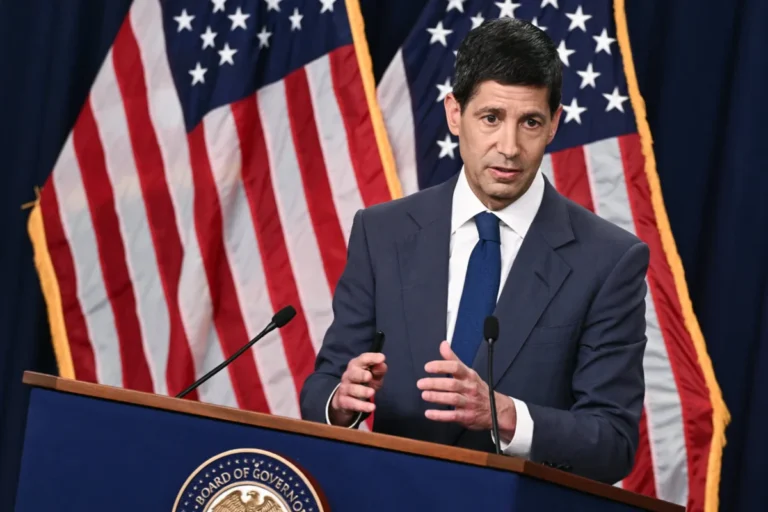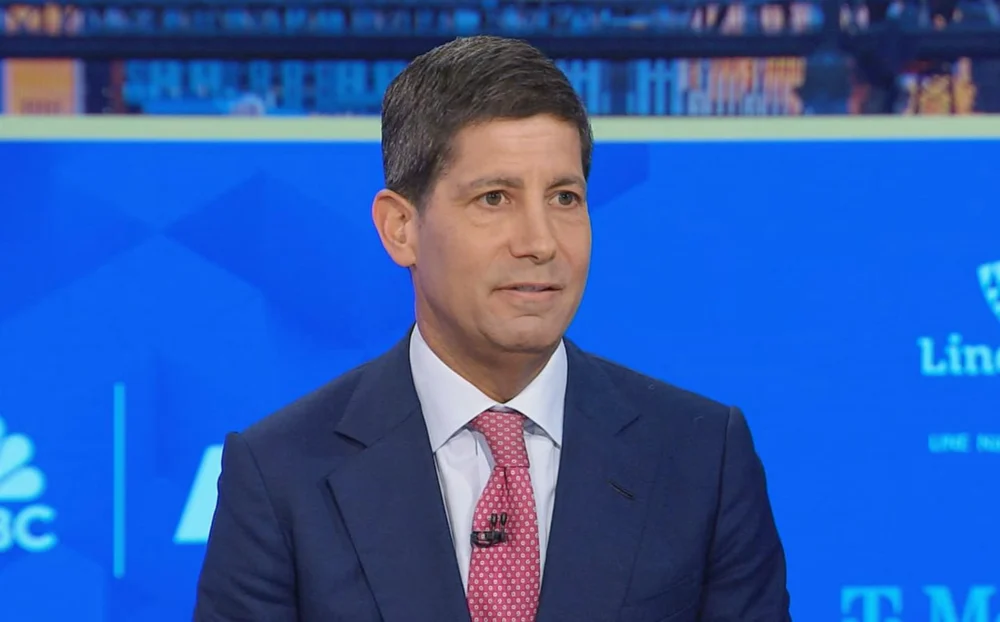
The nomination of Kevin Warsh to lead the Federal Reserve marks a pivotal moment in the intersection of American politics and global finance, signaling a profound shift in how the world’s most influential central bank may operate over the coming decade. President Donald Trump’s selection of the former Fed governor and Morgan Stanley veteran suggests an administration determined to move away from the cautious, data-dependent pragmatism of the Jerome Powell era toward a more assertive, supply-side-oriented monetary regime. By tapping a figure who has spent the last decade as one of the central bank’s most articulate internal and external critics, the White House is signaling that the era of "business as usual" at the Eccles Building is coming to a close.
Kevin Warsh is far from a newcomer to the corridors of power. His career trajectory has been defined by an early arrival at the highest levels of economic policymaking. A graduate of Stanford University and Harvard Law School, Warsh transitioned from a successful career in investment banking to the George W. Bush White House, where he served as a special assistant to the president for economic policy. In 2006, at the age of 35, he was appointed to the Federal Reserve Board of Governors, becoming one of the youngest individuals ever to hold such a position. This tenure placed him at the epicenter of the 2008 global financial crisis, a period during which he served as a critical liaison between the Fed and Wall Street, helping to architect the emergency lending facilities that prevented a total systemic collapse.
During those tumultuous years, Warsh worked alongside then-Chairman Ben Bernanke and Treasury Secretary Timothy Geithner to navigate the disintegration of Lehman Brothers and the subsequent bailouts of the insurance giant AIG. He was instrumental in the creation of the Troubled Asset Relief Program (TARP), collaborating with figures like Neel Kashkari, who now serves as the president of the Minneapolis Fed. However, as the initial fires of the crisis were extinguished and the Fed moved toward unprecedented interventions—specifically large-scale asset purchases known as quantitative easing (QE)—Warsh began to distance himself from the prevailing consensus. His 2011 resignation from the Board was punctuated by his growing skepticism regarding the long-term consequences of "easy money" and the potential for these policies to distort market signals and fuel future instability.
The philosophical divide between Warsh and the current Fed leadership is rooted in his belief that the central bank has succumbed to "mission creep." In recent years, Warsh has argued that the Fed has strayed too far from its primary mandate of price stability and maximum employment, involving itself in social and environmental issues that he believes are the purview of elected officials rather than unelected technocrats. This critique aligns perfectly with the Trump administration’s broader agenda of deregulation and institutional streamlining. By calling for "regime change" at the Fed, Warsh has positioned himself as a reformer who intends to return the institution to a more limited, disciplined role in the economy.
One of the most significant shifts expected under a Warsh-led Federal Reserve involves the interpretation of economic growth and its relationship to inflation. For much of the last decade, the Fed has operated under the assumption that a rapidly growing economy and a tight labor market inevitably lead to rising prices—a concept known as the Phillips Curve. Warsh, however, has frequently championed a supply-side view, suggesting that booming productivity can allow for robust economic expansion without triggering an inflationary spiral. This perspective is music to the ears of a White House that is prioritizing 3% or higher GDP growth through tax cuts and trade reorganization. If Warsh can convince the Federal Open Market Committee (FOMC) that the "neutral" interest rate is lower than currently estimated due to productivity gains, it could pave the way for the aggressive rate cuts the President has demanded.
The stakes for such a shift are immense, particularly given the current state of U.S. fiscal health. With the national debt hovering around $37 trillion and interest payments on that debt becoming a significant portion of the federal budget, the White House has a vested interest in lower borrowing costs. Furthermore, the U.S. housing market remains in a state of paralysis, with high mortgage rates deterring buyers and keeping inventory low. The President has made no secret of his desire for a Fed Chair who will "never let him down" in the quest for lower rates. Yet, the paradox of Warsh’s appointment is that while he is seen as an ideological ally of the administration, he also maintains a reputation as a "hawk" who is wary of debasing the currency.
This reputation may actually be Warsh’s greatest asset in navigating the internal politics of the Fed. The FOMC is a deliberative body where the Chair is "first among equals," but still requires consensus to enact policy. Currently, the committee is far from unified; recent meetings have seen a rise in dissenting votes as officials grapple with the "last mile" of the inflation fight. Market analysts, including those at Evercore ISI, suggest that Warsh’s background as a conservative central banker gives him a unique kind of "inflation-fighting" credibility. This could allow him to lead the committee toward rate cuts more effectively than a perceived "dove" might, as markets would be less likely to fear that he is simply succumbing to political pressure.
The global implications of a Warsh chairmanship are equally profound. As the steward of the world’s reserve currency, the Federal Reserve’s decisions dictate capital flows across the planet. A shift toward a more productivity-focused, pro-growth monetary policy could strengthen the U.S. Dollar in the long term, even if interest rates are lowered, provided that American economic dynamism outpaces that of the Eurozone or Japan. Conversely, if the transition is perceived as a loss of Fed independence, it could trigger volatility in the Treasury market and complicate the efforts of other central banks, such as the European Central Bank (ECB) and the Bank of England, to synchronize their own policy cycles.
Before Warsh can take the gavel, however, he must navigate a treacherous confirmation process in the United States Senate. Despite the Republican majority, the path is not without obstacles. Senator Thom Tillis has expressed reservations regarding Fed nominees until ongoing investigations into the central bank’s massive headquarters renovation project are resolved. This investigation, spearheaded by the Justice Department, has even seen the outgoing Chair, Jerome Powell, served with subpoenas for information. Furthermore, while prominent Democratic economists like Jason Furman have signaled early support for Warsh’s qualifications, he will likely face intense questioning from the left regarding his views on bank regulation and his past opposition to the Fed’s bond-buying programs.
Ultimately, the nomination of Kevin Warsh represents a gamble on the idea that the Federal Reserve can be both a partner in national economic renewal and a guardian of monetary integrity. If Warsh succeeds, he could redefine central banking for a new generation, moving away from the "fine-tuning" of the economy through complex models and toward a more transparent, rules-based framework that rewards productivity and investment. If he fails to build consensus or if his policies lead to a resurgence of inflation, the institutional credibility of the Federal Reserve could be damaged for decades to come.
As the financial world watches closely, the transition from the Powell era to the Warsh era promises to be one of the most consequential chapters in modern economic history. In the words of the President, Warsh is "central casting" for the role—a polished, experienced hand who understands both the mechanics of the markets and the requirements of the political stage. Whether he can harmonize these two often-conflicting worlds will determine the trajectory of the American economy and the stability of the global financial system in the years ahead.