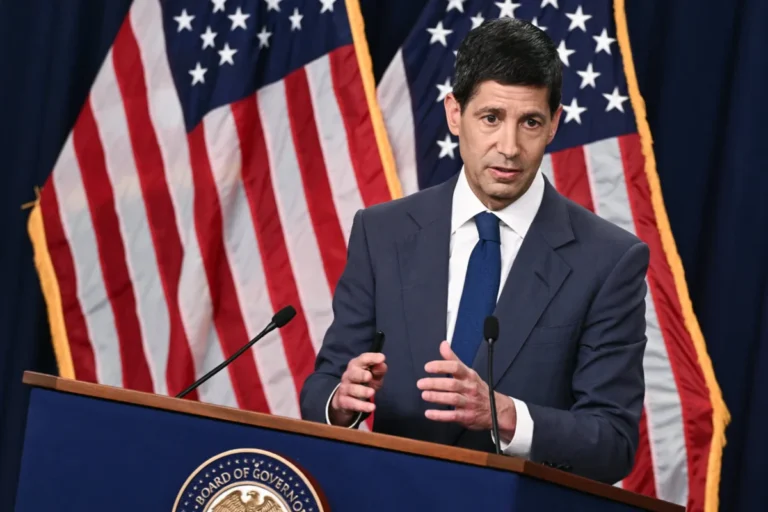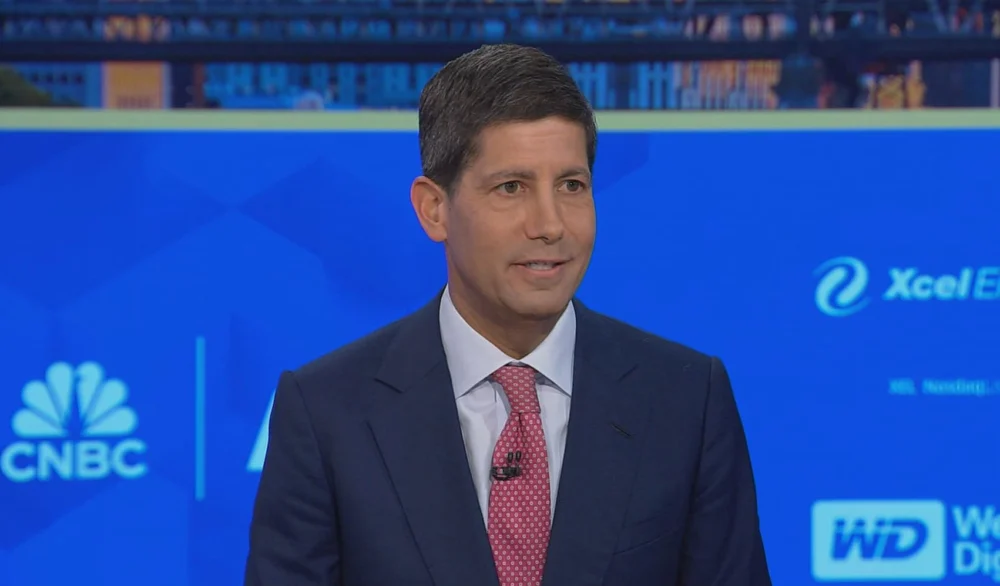
The selection of Kevin Warsh to succeed Jerome Powell as the Chair of the Federal Reserve marks the culmination of a protracted and often contentious search process, signaling a potential shift in the architectural framework of American monetary policy. President Donald Trump’s announcement on Friday ends months of speculation regarding the leadership of the world’s most influential financial institution, choosing a candidate who balances deep institutional experience with a vocal critique of the current Fed’s operational philosophy. By tapping the 55-year-old former Fed Governor and Morgan Stanley executive, the administration is seeking to install a leader who aligns with the executive branch’s desire for a "regime change" while maintaining the necessary credibility to prevent a volatile reaction from global bond markets.
The nomination concludes a high-stakes "derby" that initially considered 11 candidates, a field that was meticulously winnowed down under the guidance of Treasury Secretary Scott Bessent. The shortlist reportedly included prominent economists, Wall Street veterans, and current central bank officials, reflecting the administration’s search for a figure who could satisfy both populist demands for lower interest rates and the institutional requirement for stability. In his announcement, Trump expressed profound confidence in Warsh’s potential, suggesting the nominee could rank among the most consequential chairs in the history of the central bank. This endorsement follows years of public friction between Trump and Jerome Powell, whom Trump appointed in 2018 but later targeted with frequent criticisms regarding the pace of interest rate adjustments and the management of the Fed’s internal operations.
Kevin Warsh is no stranger to the inner workings of the Eccles Building. Appointed to the Board of Governors in 2006 at the age of 35, he was the youngest person ever to hold the position. During his tenure, which lasted until 2011, he served as a critical liaison between the Federal Reserve and Wall Street during the height of the 2008 financial crisis. His proximity to then-Chairman Ben Bernanke provided him with a front-row seat to the deployment of unconventional monetary tools, such as quantitative easing and emergency lending facilities. However, in the years following his departure, Warsh transitioned into a prominent critic of the "new normal" in monetary policy, arguing that the Fed had become too reactive to short-term market fluctuations and had allowed its balance sheet to expand to precarious levels.
The nomination arrives at a delicate juncture for the U.S. economy. While the aggressive tightening cycle initiated in 2022 has successfully pulled inflation down from its 9.1% peak, the "last mile" of returning to the 2% target has proven elusive. Consumer Price Index (CPI) data continues to show persistence in service-sector costs, even as the labor market shows signs of cooling. The current economic climate has been described by some analysts as a "no-fire, no-hire" environment—a stagnation where companies are reluctant to shed workers due to past labor shortages but are equally hesitant to expand payrolls amid high borrowing costs and regulatory uncertainty. Warsh will be tasked with navigating this "soft landing" while managing the fallout from a national debt that has surpassed $35 trillion, a figure that complicates the Fed’s ability to maintain high rates without significantly increasing the government’s debt-servicing costs.
A central theme of the Warsh nomination is the escalating debate over the independence of the Federal Reserve. For decades, the separation of monetary policy from political influence has been viewed as a bedrock of the U.S. dollar’s status as the global reserve currency. Proponents of this independence argue that it allows the Fed to make unpopular but necessary decisions—such as raising rates to combat inflation—without fear of electoral repercussions. However, the Trump administration has signaled a desire for more direct oversight. Proposals floated by administration officials include a requirement for the Fed Chair to consult with the President on interest rate decisions or even the implementation of a more formal White House role in the rate-setting process.
This tension reached a fever pitch recently when the Department of Justice issued a subpoena to Jerome Powell regarding a massive, multi-billion-dollar renovation of the Federal Reserve’s headquarters in Washington, D.C. Powell, in a rare display of public defiance, characterized the move as a "pretext" intended to exert political pressure on the bank’s policy decisions. Against this backdrop, Warsh’s previous calls for a "regime change" at the Fed take on added significance. In interviews leading up to his nomination, Warsh suggested that the incumbent leadership suffered from a "credibility deficit," arguing that the central bank had become too insular and disconnected from the broader economy.
Despite his critical stance, market participants generally view Warsh as a stabilizing force rather than a radical disruptor. David Bahnsen, Chief Investment Officer of The Bahnsen Group, noted that Warsh possesses the "respect and credibility" required to soothe investor anxieties. The prevailing view on Wall Street is that while Warsh may be more sympathetic to the administration’s growth-oriented agenda, he is unlikely to sacrifice the Fed’s long-term mandate of price stability for short-term political wins. Traders are currently pricing in a gradual reduction of the benchmark fed funds rate toward a "neutral" level of approximately 3%, a rate intended to neither stimulate nor restrain economic growth. Whether Warsh will accelerate this timeline or adopt a more hawkish posture to re-establish the Fed’s inflation-fighting credentials remains a primary concern for institutional investors.
The path to confirmation, however, is fraught with political obstacles. Republican Senator Thom Tillis has already signaled his intent to block any Federal Reserve nominees until the Justice Department concludes its investigation into the Fed’s construction projects. Furthermore, the transition of power at the Fed may not follow the traditional script. Historically, when a President declines to reappoint a sitting Chair, the incumbent resigns from the Board of Governors entirely. Jerome Powell, however, has two years remaining on his term as a Governor. There is significant speculation that Powell may choose to remain on the Board to serve as a check against executive overreach, creating a unique situation where a former Chair sits alongside his successor.
This potential friction is further complicated by ongoing legal challenges. The Supreme Court is currently weighing a case regarding the President’s authority to remove Fed Governors, specifically centered on the administration’s attempt to unseat Governor Lisa Cook. The ruling in this case could redefine the "for cause" protection that currently shields Fed officials from being fired over policy disagreements, a decision that would have profound implications for the future of central bank autonomy.
On the global stage, the nomination of Kevin Warsh will be scrutinized by central bankers from Frankfurt to Tokyo. As the steward of the world’s primary reserve currency, the Fed’s leadership influences global capital flows, exchange rates, and the borrowing costs of sovereign nations. Any perceived erosion of Fed independence could lead to a "political risk premium" being baked into U.S. Treasury yields, as investors demand higher returns to compensate for the possibility of politically motivated inflation. Conversely, if Warsh succeeds in modernizing the Fed’s communication and policy framework as he has suggested, it could provide a blueprint for other central banks grappling with the challenges of the post-pandemic economic era.
Ultimately, the nomination of Kevin Warsh represents more than just a change in leadership; it represents a contest of ideas regarding the role of the central bank in a modern democracy. Warsh will need to bridge the gap between a President who demands aggressive monetary easing and a financial system that requires a predictable, data-driven approach. As he prepares for what is likely to be a grueling confirmation process, the focus will remain on whether he can maintain the delicate balance of being a "team player" for the administration’s economic vision while remaining the "independent arbiter" that the global financial system expects the Federal Reserve Chair to be. The stakes could not be higher, as the transition occurs during a period of geopolitical volatility, shifting trade alliances, and a domestic economy at a critical crossroads.