The Federal Open Market Committee (FOMC) concluded its highly anticipated two-day policy meeting this Wednesday, delivering a decision that, while largely anticipated by global markets, carries profound implications for the trajectory of the American economy. By opting for a modest reduction in the federal funds rate, Chair Jerome Powell and his colleagues have signaled a transition from the aggressive tightening of years past toward a more calibrated, data-dependent stance. However, the accompanying rhetoric and economic projections suggest that this is far from a simple return to the era of "easy money." Instead, the central bank appears to be navigating a complex "neutral zone," where the risks of reigniting inflation must be balanced against the necessity of supporting a cooling labor market.
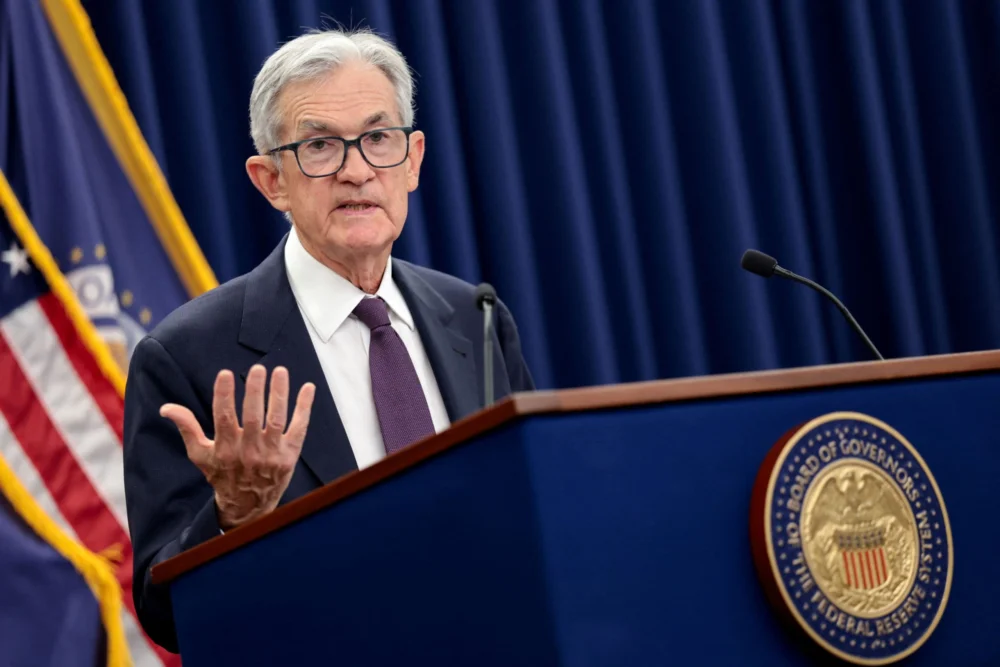
The market reaction to the decision was one of measured absorption. While equity indices initially flickered with volatility, the overarching sentiment settled into a realization that the Federal Reserve is executing what analysts call a "hawkish cut." This paradoxical term describes a scenario where the central bank lowers borrowing costs but simultaneously raises the threshold for future reductions. Jerome Powell’s performance at the post-meeting press conference reinforced this view. He managed to project an air of cautious optimism regarding growth while maintaining a disciplined guard against the possibility of an inflationary rebound. For investors who had hoped for a clear signal of a multi-cut cycle, the message was sobering: the bar for further action has been significantly raised.
Economic strategists are currently dissecting the nuances of the Fed’s updated economic outlook. Ellen Zentner, chief economic strategist for Morgan Stanley Wealth Management, observed that while the rate cut was delivered, it arrived in a "somewhat hawkish package." Zentner noted that while the Fed has not definitively slammed the door on future easing, the criteria for such moves have become more stringent. The central bank’s forecast for "solid growth" in the coming year is a double-edged sword; while it reflects the resilience of the U.S. consumer and corporate sectors, it also implies that the economy may not require the stimulus of lower rates to maintain its momentum. The critical variable remains the labor market. If the next round of employment data fails to show consistent job gains, the Fed’s current posture may be forced into a rapid reassessment.
The concept of the "neutral rate"—the theoretical interest rate that neither stimulates nor restrains economic growth—has become the focal point of the current monetary debate. Charlie Ripley, senior investment strategist for Allianz Investment Management, suggested that the Fed’s recent actions serve as an affirmation of what many in the institutional investment community had already suspected. With labor conditions stabilizing and growth accelerating beyond previous forecasts, the current policy rate is likely much closer to neutral than it was six months ago. From this perspective, the "long pause" that many economists have predicted may finally be at hand. The Fed is essentially attempting to find a cruising altitude where inflation remains anchored at its 2% target without causing an unnecessary contraction in industrial output.
This delicate balancing act is occurring against a backdrop of significant institutional transition. One of the most critical factors weighing on market sentiment is the impending change in leadership at the central bank. With a new Federal Reserve Chair set to take the helm in May, the current administration is operating in what some describe as a "détente" period. Heather Long, chief economist at Navy Federal Credit Union, pointed out that while the current policy path seems stable, a major shakeup is looming on the horizon. This transition period often introduces a layer of political and economic uncertainty, as markets attempt to price in the ideological leanings of a potential successor. Will the new leadership maintain Powell’s commitment to data-dependency, or will there be a shift toward a more preemptive or perhaps more dovish philosophy?

From a global perspective, the Federal Reserve’s cautious approach stands in contrast to several other major economies. While the U.S. continues to exhibit robust GDP growth, parts of the Eurozone and Asia are grappling with more pronounced stagnation. The European Central Bank (ECB) and the Bank of England have faced different pressures, often dealing with stickier service-sector inflation and weaker consumer demand. The Fed’s ability to maintain higher rates for longer—relative to historical norms—has kept the U.S. dollar strong, which in turn has implications for global trade balances and the debt-servicing costs of emerging markets. As the world’s primary reserve currency issuer, the Fed’s decision to pause or slow its cutting cycle creates a ripple effect that influences the policy leeway of central banks from Frankfurt to Tokyo.
Statistical indicators released alongside the Fed’s decision provide further context for this "hawkish" stance. Core inflation, while down significantly from its peak, has shown signs of "leveling off" in recent months, rather than continuing its downward slide toward the 2% target. Meanwhile, consumer spending remains surprisingly resilient, bolstered by a stock market that has reached record highs and a housing market that, despite high mortgage rates, remains constrained by a lack of inventory. These factors contribute to a "wealth effect" that can counteract the Fed’s efforts to cool the economy. If the Fed cuts rates too aggressively now, they risk fueling a renewed surge in asset prices that could eventually bleed back into consumer price inflation.
The labor market remains the ultimate wild card. For much of the past two years, the Fed’s primary concern was an overheated job market driving a wage-price spiral. Today, the concern has shifted toward the potential for a "hard landing" if the cumulative effects of previous rate hikes finally begin to bite. While the unemployment rate remains low by historical standards, recent "quit rates" and "hiring intentions" surveys suggest that the fervor of the post-pandemic labor market has cooled. The Fed’s challenge is to lower rates just enough to prevent a spike in unemployment without providing so much liquidity that the labor market tightens again to an unsustainable degree.
For corporate America, the Fed’s latest signal suggests a period of "wait and see." Capital expenditure (CapEx) plans, which were largely put on hold during the peak of the tightening cycle, may remain in limbo as businesses weigh the cost of financing against the outlook for demand. Small businesses, in particular, remain sensitive to the "higher for longer" environment, as they often rely on floating-rate debt and lack the deep cash reserves of multinational conglomerates. The divergence between large-cap companies, which have largely locked in low-interest long-term debt, and the rest of the economy continues to widen, creating a bifurcated economic landscape that complicates the Fed’s mission.
As the month of May approaches, the "lame duck" status of the current leadership may limit the Fed’s ability to make bold policy shifts. Markets dislike uncertainty, and the transition to a new Chair will likely be preceded by months of speculation, Senate confirmation hearings, and shifting rhetoric. During this interval, the FOMC is expected to lean heavily on the "neutral rate" narrative, avoiding any moves that could be perceived as overly political or disruptive. The goal is a seamless handoff, ensuring that the progress made in taming inflation is not lost during the leadership change.
In summary, Wednesday’s decision was less about the immediate 25-basis point move and more about the strategic fortification of the Fed’s position. The "hawkish cut" serves as a bridge between the era of crisis management and a new era of "normalized" monetary policy. By raising the bar for future cuts, Chair Powell has signaled that the central bank is prepared to be patient, even if it means tolerating a period of slower growth. The message to investors is clear: the path to lower rates is not a slide, but a staircase—one where each step down must be earned by a corresponding decline in economic volatility and a sustained alignment with the 2% inflation mandate. As the economy moves into the second quarter of the year, all eyes will remain fixed on the labor data and the evolving political landscape in Washington, both of which will determine whether this "long pause" is a temporary breather or the start of a new economic chapter.