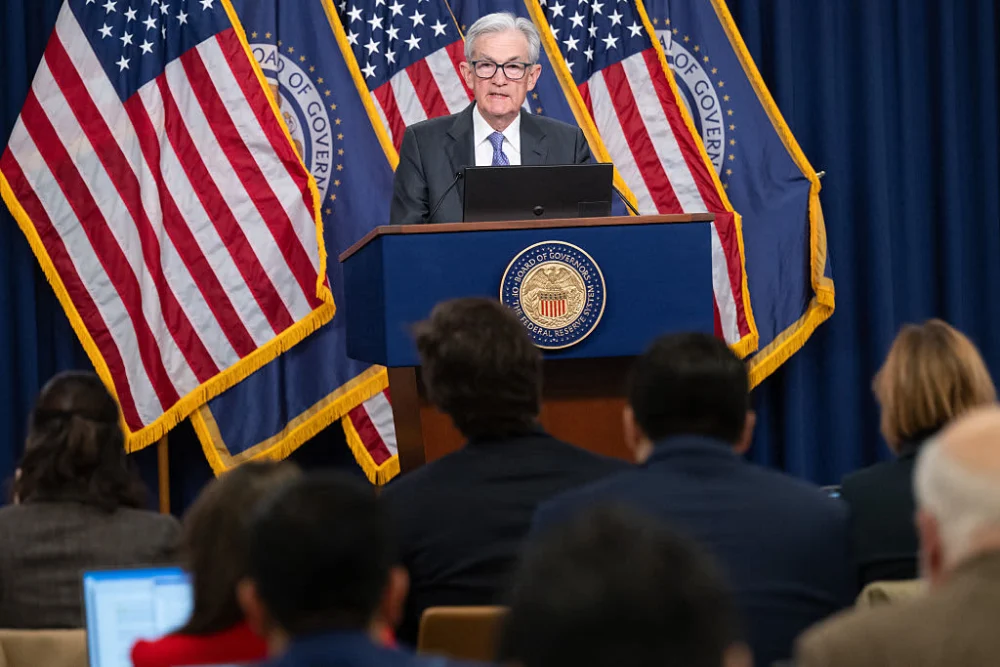
In a move that has sent shockwaves through the corridors of global finance and the hallowed halls of the United States judiciary, Federal Reserve Chair Jerome Powell has labeled a pending Supreme Court case regarding the tenure of Governor Lisa Cook as the most consequential legal challenge in the central bank’s 113-year history. Speaking during a high-stakes press conference following the January 2026 Federal Open Market Committee (FOMC) meeting, Powell broke with the traditional reticence of his office to defend his decision to attend the oral arguments in person. His presence at the Supreme Court was not merely a gesture of solidarity with a colleague, but a calculated stand against what many economists view as an unprecedented assault on the institutional autonomy of the American central bank.
The legal battle centers on President Donald Trump’s attempt to remove Governor Lisa Cook from her post. The administration has cited allegations of past mortgage fraud as the justification for her dismissal—claims that Cook has categorically denied and which critics argue are a pretext for a broader political agenda. By attempting to bypass the statutory "for-cause" protections that have historically shielded Federal Reserve governors from executive whims, the case strikes at the heart of the 1913 Federal Reserve Act. If the Supreme Court rules in favor of the President, it could grant the executive branch the power to fire central bankers over policy disagreements, effectively ending the era of independent monetary policy in the United States.
Powell’s decision to attend the hearing last week was met with sharp rebukes from within the administration. Treasury Secretary Scott Bessent publicly criticized the move, characterizing Powell’s attendance as a "mistake" that unnecessarily politicized the judiciary’s deliberations. However, Powell remained resolute on Wednesday, explaining that the stakes were too high for him to remain on the sidelines. "As I thought about it, I thought it might be hard to explain why I didn’t attend," Powell remarked, noting that the outcome of this case would define the boundaries of the Fed’s power for generations. He further invoked historical precedent, pointing to former Chair Paul Volcker—the man credited with breaking the back of 1970s stagflation—who also attended a Supreme Court hearing during his tenure to protect the institution’s prerogatives.
The concept of central bank independence (CBI) is not a mere bureaucratic preference; it is a fundamental pillar of modern macroeconomic stability. Economic literature has long established a direct correlation between independent central banks and lower inflation rates. When politicians control interest rates, the temptation is often to keep rates low to stimulate short-term growth and employment ahead of elections, leading to long-term inflationary pressures. By insulating the Federal Reserve from the electoral cycle, the U.S. system ensures that monetary policy is guided by data and long-term economic health rather than political expediency.
Global comparisons underscore the risks of eroding this separation. In countries where the executive branch has asserted control over monetary policy—such as Turkey or Argentina—the results have frequently been catastrophic, characterized by hyperinflation, currency devaluation, and a total loss of investor confidence. Powell alluded to this global consensus during his remarks, stating that every advanced democracy has gravitated toward the model of an independent central bank because it is the only proven way to maintain a stable currency and sustainable economic growth.
The current friction between the White House and the Federal Reserve comes at a sensitive time for the U.S. economy. While inflation has cooled from its post-pandemic peaks, the path to a "soft landing" remains narrow. Markets are hypersensitive to any sign that the Fed’s decision-making process is being compromised. The "independence premium"—the trust investors place in the Fed to do what is necessary regardless of political pressure—allows the U.S. to borrow at lower rates than it otherwise could. If that trust evaporates, bond yields could spike as investors demand a higher risk premium to compensate for the uncertainty of a politicized monetary regime.

The pressure on Powell is not limited to the Cook case. The Fed Chair himself is currently the subject of a federal investigation regarding renovations at the Federal Reserve’s headquarters. While the investigation is ostensibly focused on administrative and budgetary oversight, many veteran Fed watchers see it as part of a multi-pronged strategy to undermine Powell’s leadership. The President has been a vocal critic of Powell’s refusal to aggressively cut interest rates, frequently taking to social media to demand "lower rates now" to bolster the domestic manufacturing and housing sectors.
During the Supreme Court arguments, several justices appeared skeptical of the administration’s broad interpretation of executive power. The court’s conservative majority, while generally supportive of the "unitary executive" theory, seemed wary of the specific implications for the Federal Reserve. Justice Elena Kagan and others raised concerns about the potential for "at-will" firing to turn the Fed into an arm of the White House, a shift that would fundamentally alter the character of the U.S. financial system. The court previously allowed Cook to remain in her role pending the outcome of these arguments, a temporary reprieve that has kept the Fed board at full strength during a period of significant market volatility.
As Powell’s term as Chair nears its end in May, the shadow of his successor looms large. There is intense speculation that the administration will nominate a candidate more aligned with its "low-rate" philosophy, potentially bypassing the traditional vetting process that prioritizes academic and professional expertise in monetary economics. Powell’s advice to his eventual successor was blunt: "Don’t get pulled into elected politics. Don’t do it." This warning serves as a final plea for the preservation of the Fed’s technocratic mission.
The economic impact of a weakened Fed extends far beyond interest rate decisions. The central bank also serves as the lender of last resort and the primary regulator of the nation’s largest financial institutions. If the Fed’s regulatory decisions are seen as being influenced by political favoritism or retribution, the integrity of the entire banking system could be called into question. In the 113 years since President Woodrow Wilson signed the Federal Reserve Act into law, the institution has survived world wars, the Great Depression, and the 2008 financial crisis. Yet, the current legal and political challenge may represent its most existential threat yet.
For global markets, the Lisa Cook case is a litmus test for the rule of law in the United States. The U.S. dollar’s status as the world’s reserve currency is predicated on the belief that the Federal Reserve is a stable, predictable, and independent actor. Any ruling that significantly diminishes that independence could accelerate the global trend toward "de-dollarization" as foreign central banks seek safer harbors for their reserves.
As the financial world awaits the Supreme Court’s decision, the tension between the Eccles Building and the West Wing remains at an all-time high. Powell’s defense of Lisa Cook is, in essence, a defense of the Federal Reserve’s right to exist as a neutral arbiter of the economy. "The point of independence is not to protect policymakers," Powell concluded. "It is to ensure that the institution can serve the public interest without being swayed by the short-term pressures of the political arena." Whether the court agrees with this assessment will determine the trajectory of the American economy for the next century. If the walls between the Treasury and the Fed are breached, the cost to the nation’s credibility and economic stability may be a price far higher than any interest rate hike.